
Beauty Under the Sea
Some of the loveliest coral reefs in the world

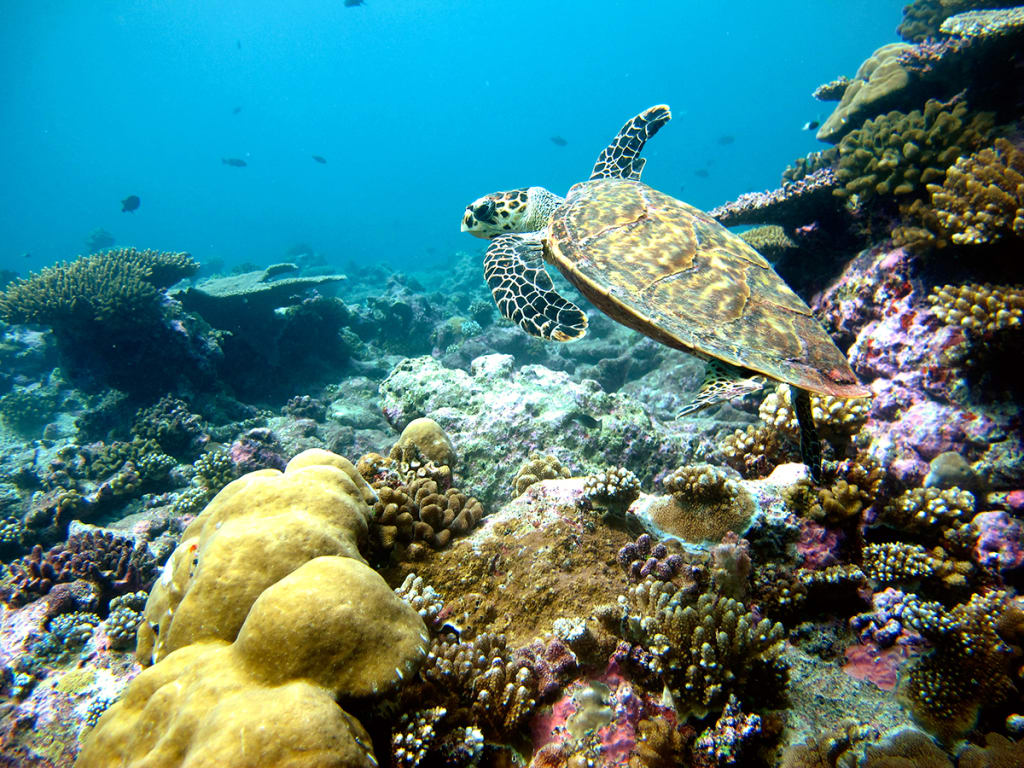
It is unfortunate that coral reefs have become threatened by many different things such as coastal development, boat anchors, recreational misuse, and many other factors. Pollution also has ways of getting into coastal waters and we can add on the great changes occurring in climate.
Asia
The Maldives is a small archipelagic state in South Asia in the Indian Ocean. Its location is southwest of Sri Lanka and India. The state consists of 1,200 islands and 26 atolls. Its corals have a great array of marine life. The coral reefs have been created by small creatures known as polyps. Polyps secrete the hard limestone skeleton that provides the framework of the reef. Near the surface, the coral reef is called a “thila”. A reef that is a bit exposed during low tide is known as a “faru”. The wide and diverse array of coral varieties here includes star, tree, brain, staghorn, and cup coral along with colorful sea fans.

The Philippines
The Tubbataha Reefs are known as one of the top diving sites in the world. They are located in the heart of the Sulu Sea. The reefs consist of two coral atolls with 600 species of fish, 360 species of coral, 11 species of sharks, 13 species of dolphins and whales as well as the Hawksbill and Green Sea turtles.

The best dive spot is Amos Rock with a wall covered with different species of corals, gorgonians, and purple sea fans and is home to large reef sharks. The Washing Machine offers the best visibility and is home to gray reef sharks and tropical reef fish, Black Rock has whitetip sharks, rays, groupers, and giant trevally. It is all a part of the Tubbataha Reef Natural Park which is a UNESCO World Heritage site.

Indonesia
The Raja Ampat Islands have 450 species of reef-building coral. There are 1,427 species of fish. The islands are an archipelago located at the northwest corner of the West Papua province.
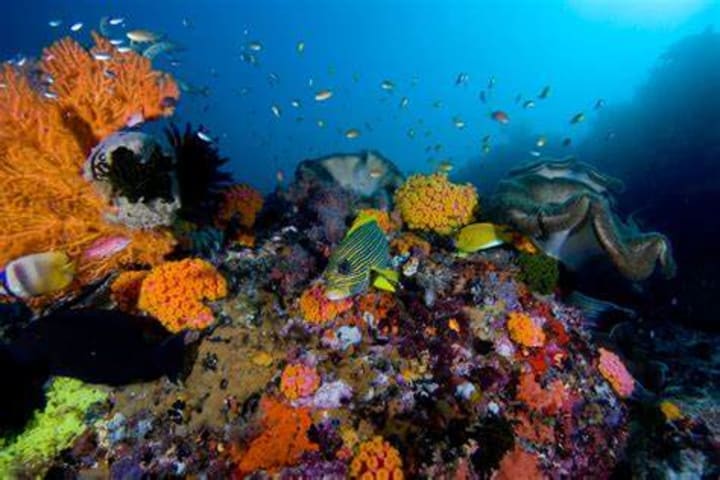
The reefs are very colorful and are home to soft corals, sea fans, sponges, tunicates, and crinoids. There are habitats for mollusks and crustaceans such as giant clams, urchins, and sea stars. Divers can see schools of colorful fish like parrotfish, tangs, and rainbow runners. Tuna and sharks swim by and there are sea snails, flatworms, crabs, and shrimp.

The Great Chagos Archipelago is located in the middle of the Indian Ocean. It consists of 55 islands and the Great Chagos Bank which is the largest coral atoll in the world. There are 300 species of coral and 800 different types of fish. Making their home here are rays, skates, and over 50 different types of sharks.

The islands are visited by around 175,000 pairs of seabirds to breed. The archipelago consists of turtles, coconut crabs, and tuna.

Africa
The Red Sea Coral Reef is located between two of the most arid and hottest deserts in the world, the Sahara and the Arabian. It extends along the coastline of Egypt, Sudan, and Eritrea. The reef is approximately 1,200 miles long and is more than 5,000 years old.

It is home to 300 hard coral species and about 1,200 fish and has 44 different species of shark.

Australia
The Great Barrier Reef is among the most beautiful reefs in the world. It’s also the largest one on Earth. This reef consists of more than 3,000 individual reef systems full of colorful marine life and 400 types of corals. The reef is located off the coast of Queensland and features hundreds of islands with pristine beaches. The reef is home to about 1500 species of fish, 4000 species of mollusks, and 400 kinds of coral all living in this diverse ecosystem. The Great Barrier Reef is one of the Seven Natural Wonders of the World and a UNESCO World Heritage site.

Lord Howe Island is a lovely island in the Pacific Ocean and a UNESCO World Heritage site. The island lies in the Tasman Sea between Australia and New Zealand and is part of the Australian state of New South Wales.

There are more than 90 coral species living with 500 different species of fish. Marine life includes dolphins, humpback whales, and sharks. It is also a bird-watching destination with 14 species of seabirds nesting and raising chicks here. There are bottlenose dolphins, humpback whales, and migratory whales like blue, fin, and sei whales.

New Caledonia is a sui generis collectivity of overseas France in the southwest Pacific Ocean. Its location is south of Vanuatu and east of Australia. The New Caledonia Barrier Reef is the second-largest double barrier reef in the world and a UNESCO World Heritage site. It is home to a large variety of marine life with the Green turtle and 1,000 fish species already classified. This reef is part of the larger Coral Sea Marine Park. It is home to more than 9,000 species of marine life among them over 1,700 species of fish, 473 species of coral, as well as a wide variety of sharks, whales, dolphins, and sea turtles.

Also endangered species like the dugong and the green sea turtle.

Fiji is an island country in Melanesia, part of Oceania in the South Pacific Ocean. The Rainbow Reef lies between the second and third largest islands of Fiji, Vanua Levu, and Taveuni. The reef consists of hard and soft corals in vibrant colors and abundant marine life. There are 230 hard and soft corals and about 1,200 exotic fish species. There is the amazing Great White Wall which consists of soft corals stretching down below 30 meters. The vertical zone has colonies of soft blue coral.

Majestic manta rays swim about as well as sharks.

North America
The Caribbean
Bonaire is a Dutch Island in the Leeward Antilles in the Caribbean Sea. The Bonaire Reef is part of the Bonaire National Marine Park, one of the oldest marine reserves in the world. The park includes a coral reef, seagrass, and mangrove vegetation. The Bonaire Reef is home to 60 different coral species and a variety of marine life. Among the marine life making their homes here are surgeonfish, parrotfish, reef perch, and wrasses. There are many invertebrates like crayfish, shrimp, and squid.

The lagoon Lac Bay has red, black, and white mangroves and is home to endangered species like the green sea turtle and the queen conch.

Mexico
The Palancar Reef is located off the coast of Cozumel Island in Mexico. It is part of a bigger reef system, the Mesoamerican reef system, and is the second-largest on Earth. The reef is part of the Arrecifes de Cozumel National Park. There are five dive sites – Palancar Horseshoe, Palancar Caves, Palancar Gardens, Palancar Shallows, and Palancar Deep.

The Plancar Reef is home to angelfish, barracudas, crabs, groupers, Moray eels, nurse sharks, ocean sunfish, parrotfish, sea turtles, spiny lobsters, toadfish, and yellowtail amberjacks.

Central America
Off the coast of the Central American country of Belize is the Belize Barrier Reef Reserve System, a UNESCO World Heritage site. This is the largest barrier reef in the northern hemisphere. The reef consists of 106 hard and soft coral species and 500 species of fish. There are offshore atolls, many sand cays, mangrove forests, coastal lagoons, and estuaries.

This is known as a habitat for threatened species like the marine turtle, the manatee, and the American marine crocodile.
About the Creator
Rasma Raisters
My passions are writing and creating poetry. I write for several sites online and have four themed blogs on Wordpress. Please follow me on Twitter.
Keep reading
More stories from Rasma Raisters and writers in Earth and other communities.
Living on the Wild Side
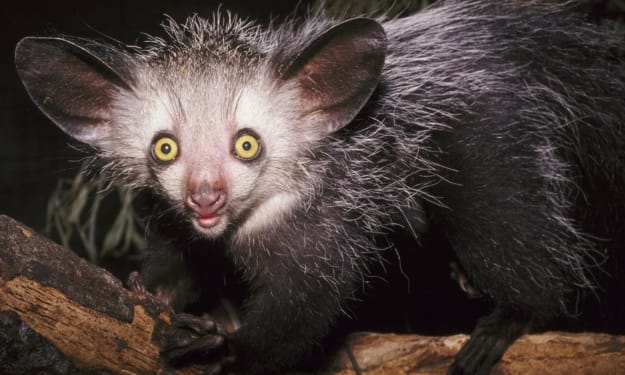
Living on Land and in Trees Aye-Ayes have large eyes and are rare lemurs native to Madagascar. They are the largest nocturnal primates in the world. These creatures have rodent-like teeth that grow perpetually. They have special middle fingers that are long and thin. These fingers are needed for their unusual feeding ritual known as “percussive foraging”. The aye-ayes tap on trees to locate grubs, chew a hole into the wood, and with their long middle fingers pull the grubs out.
By Rasma Raisters3 years ago in Earth
Is the Ukraine–Russia War Pushing the World Toward World War III?
Is the Ukraine–Russia War Pushing the World Toward World War III? The war between Ukraine and Russia began as a regional conflict, but over time it has grown into something much larger. While it is not officially World War III, many experts, analysts, and ordinary citizens are asking the same question: is the world moving dangerously close to a global war?
By Wings of Time about 11 hours ago in Earth
When Immigration Enforcement Crosses the Threshold: ICE’s Controversial 2025 Memo
In 2025, the U.S. Immigration and Customs Enforcement (ICE) agency released a new internal memo outlining updated guidelines for immigration enforcement. The memo, which has since become highly controversial, addresses the use of force, detention practices, and enforcement priorities, and has drawn scrutiny from lawmakers, human rights advocates, and legal experts alike.
By Aarif Lashariabout 4 hours ago in Earth



Comments
There are no comments for this story
Be the first to respond and start the conversation.