



The Argentine Giant Cactus is an amazing cactus that bursts forth in gigantic white flowers that open at night and waft a strong, sweet scent. This cactus is extremely drought-tolerant; it prefers full sun and sandy or gravelly soil.

The Blue Torch Cactus is known for its bluish-green outside and bright yellow spines. This cactus blossoms forth with large, white night-blooming flowers pollinated by bats. It is native to Brazil thriving in hot, dry conditions with well-draining soil. It is a fast-growing cactus requiring little water.

The Easter Lily Cactus is a small cactus that bursts forth with the largest and most lovely blooms in white, pink, or lavender, releasing a sweet fragrance. This cactus is incredibly resilient, growing in poor soils with little water and prefers full sun.
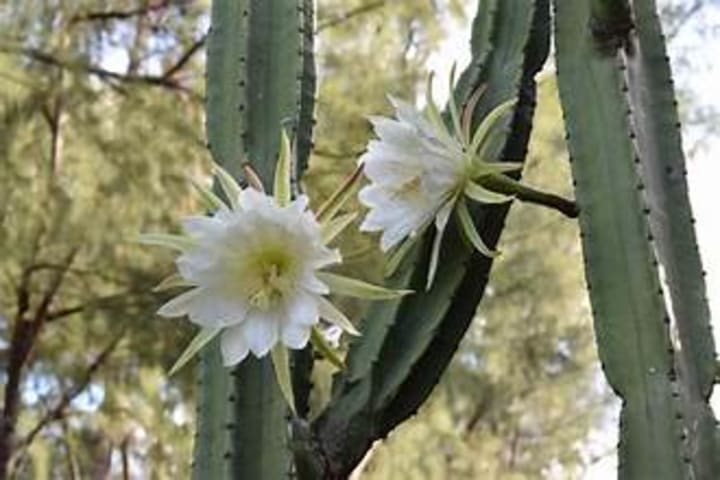
The Night Blooming Cereus is an epiphytic cactus that can be grown in hanging baskets or trained along trellises. This amazing climbing cactus is known for its large, white, very fragrant flowers that bloom for only one night and wilt by morning. The night-blooming cereus is pollinated by bats and moths. Native to Central America and the Caribbean, it thrives in warm, humid environments, preferring well-drained, sandy soil with partial shade.

The Parodia Cactus is small and globular with ribbed, green stems and soft, golden spines. It blooms with lovely bright yellow flowers in the summer. This cactus prefers slightly more moisture and thrives in well-drained, lightly watered soil. It grows well in pots and rock gardens.

The Peanut Cactus is a low-growing, trailing cactus with thin, segmented stems resembling a cluster of peanuts. It bursts forth with bright orange-red flowers in spring and summer. This cactus is native to Argentina, thriving in warm climates with well-draining soil.

The Peruvian Apple Cactus is a tall, tree-like cactus that produces huge white flowers blooming at night. It get pollinated by bats and moths. After the blooms, the cactus develops edible fruit called Peruvian apples that are sweet and refreshing.

The Prickly Pear Cactus is among the most recognizable and widely grown. It has flat, paddle-like pads with small spines. In the springtime and summertime the cactus blossoms with bright yellow, orange, or red blooms that later become edible, sweet-tasting fruit. These cacti thrive in dry, well-draining soils and full sunlight. The plant can store water in its thick pads.

The Scarlet Ball Cactus is a small, round cactus native to South America. It blossoms forth with a bright red, woolly crown with stunning orange-red flowers. It blooms in late spring and summer, thriving in rocky, well-drained soil and preferring full sun.

The Star Cactus is a small, spineless cactus that resembles a green sea urchin with a round, flat body and white speckling. This cactus bursts forth in bloom with bright yellow flowers with orange centers in late spring and summer. It is native to Texas and Mexico and prefers dry, sandy soil so it is great for desert gardens that are well-draining.

The Strawberry Hedgehog Cactus is a small clumping cactus that is known for its magenta-pink flowers that bloom in spring and early summer. The flowers last for several days, attracting bees and butterflies. This cactus is native to the deserts of the southwestern US and Mexico. It prefers full sun and rocky, well-draining soil. It gets its name because of the dense spines and a hedgehog-like appearance. It does well in desert gardens and rock landscapes.
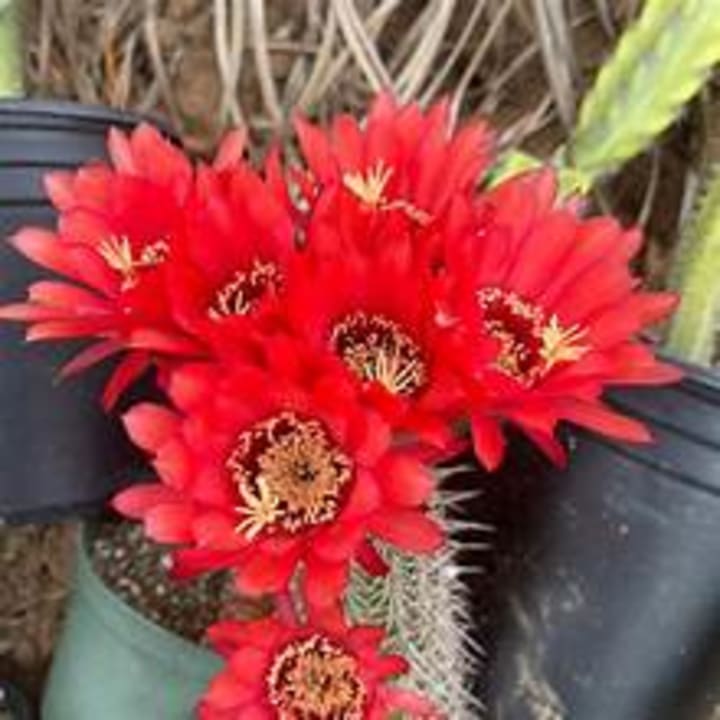
The Torch Cactus is lovely with blooms in shades of red, pink, orange, and white. This cactus prefers full sun and well-draining soil. It loves growing in desert gardens.
About the Creator
Rasma Raisters
My passions are writing and creating poetry. I write for several sites online and have four themed blogs on Wordpress. Please follow me on Twitter.
Keep reading
More stories from Rasma Raisters and writers in Earth and other communities.
The Beautiful Birds of Canada
Barnacle geese are rare Canadian birds known for their black plumage. They are medium-sized birds that, when migrating, fly in a V-shaped formation. They build their nests in mountainous and rocky regions. Barnacle geese are herbivorous, feeding mainly on leaves, herbs, grass, roots, mosses, sedges, and aquatic vegetation. During the winter they feed on agricultural grain and occasionally vegetables.
By Rasma Raistersabout a month ago in Earth
Primary Teachers Strike Over ‘Knives and Assaults’: Safety Crisis Sparks Nationwide Action
Primary school teachers across the country have taken a stand, walking out of classrooms in a strike that highlights an alarming issue: violence in schools. Reports of knives, assaults, and threats against staff have reached a tipping point, prompting educators to demand immediate action from authorities. The strike, now capturing national attention, is more than a labor dispute—it’s a wake-up call about safety, mental health, and the well-being of the country’s youngest learners. The Crisis Behind the Strike Educators have long faced challenges beyond teaching, but recent incidents have made clear that violence in schools is escalating. Primary teachers have reported assaults by students, including cases involving knives, physical attacks, and threatening behavior. These events, once considered rare, are becoming increasingly common, creating fear and uncertainty in classrooms. According to union representatives, teachers have reached their breaking point. “We can no longer continue teaching under constant threat,” one spokesperson said. “Our students deserve safe schools, and we deserve protection and respect.” The strike is a direct response to the government’s perceived failure to act decisively on school safety, leaving teachers feeling unsupported and exposed to dangerous situations. The Scope of the Problem National education authorities admit that incidents of violence in primary schools have been rising. While precise numbers vary, studies suggest that a significant percentage of teachers experience physical or verbal abuse during their careers. Knives and weapons: Incidents of students bringing knives to school, while still a minority, have grown enough to raise alarm among staff and parents. Physical assaults: Teachers report being pushed, hit, or grabbed by students. Verbal threats: Daily exposure to threats and aggressive language is taking a mental toll on educators. For primary school teachers, the stakes are particularly high. They work with children aged 5–11—an age group that requires constant supervision. The presence of weapons or aggressive behavior adds layers of risk that teachers feel ill-equipped to manage. Teachers Speak Out Teachers participating in the strike have shared harrowing stories. Some describe students brandishing knives during disputes, while others report being physically attacked while trying to de-escalate conflicts. Many express frustration that administrators and local authorities fail to respond adequately to these incidents. One teacher, who requested anonymity, said: “We love our students, but we also need to feel safe. Carrying the weight of constant threats is exhausting. It’s not just about us—it’s about protecting children too.” Teachers’ unions argue that strikes are a last resort. They have attempted dialogue with education departments and policymakers for months, seeking measures such as improved security, mental health support, and stricter enforcement against violent behavior in schools. When those discussions failed to yield meaningful results, the strike became the only avenue left to demand urgent change. Parents and Community Reactions The strike has prompted mixed reactions from parents and the wider community. Many parents support teachers, acknowledging the dangerous situations they face and applauding the courage to demand safer schools. They argue that students learn best in secure environments, and that striking teachers are drawing attention to a problem that affects everyone. Others express frustration, especially parents who rely on schools for childcare during work hours. They worry about disruption to students’ education and the practical challenges of organizing alternative care. Despite these concerns, there is broad recognition that the underlying safety issue cannot be ignored. Community discussions have increasingly focused on finding solutions that protect both teachers and students while minimizing disruption. Government and Administrative Response Government officials have promised action, but details remain sparse. Proposed measures include: Increased presence of school safety officers Implementation of anti-violence policies and stricter consequences for students who threaten or harm staff Expanded mental health and counseling support for students at risk of aggressive behavior Training for teachers in conflict de-escalation and crisis management Critics argue that these proposals are reactive rather than proactive, emphasizing the need for long-term solutions that address the root causes of school violence, such as social inequality, family instability, and inadequate support for students with behavioral challenges. The Broader Context School violence is not limited to one city or district; it reflects wider societal challenges. Rising tensions in communities, limited mental health resources, and pressures on families all contribute to the environment in which children act out aggressively. Experts say that addressing violence in primary schools requires holistic solutions: Support for educators: Safe working conditions, clear reporting procedures, and access to protective measures. Student support: Mental health counseling, behavior intervention programs, and social skills education. Community engagement: Parents, local authorities, and social services working together to address root causes. Striking teachers are drawing attention to these issues in ways that cannot be ignored, emphasizing that safety in schools is a societal responsibility. What the Strike Means for Education The strike is a clear warning that teachers cannot be expected to manage escalating violence without adequate support. If governments fail to act decisively, there is a risk of: Teacher burnout and attrition, leaving schools understaffed Declining educational quality, as safety concerns overshadow learning Erosion of trust, between teachers, parents, and policymakers The strike is also sparking conversations about the value society places on educators. Teachers are advocating not only for physical safety but also for respect, resources, and recognition of the challenges they face every day. Looking Ahead Negotiations between unions and government officials continue, but many teachers are clear: they will not return to classrooms until concrete safety measures are implemented. The strike may be temporary, but the issues it highlights are long-term, requiring sustained attention and investment. As the nation watches, the primary teachers’ strike serves as a powerful reminder that safe schools are fundamental to both education and society. Protecting teachers means protecting children, communities, and the future of learning itself.
By Muhammad Hassan6 days ago in Earth
UK Weather Live: Ice Warnings Issued Across Country as Britain Braces for Storm Goretti to Bring Heavy Snow
Britain is preparing for a significant weather event as Storm Goretti approaches, bringing forecasts of heavy snow, freezing temperatures, and widespread ice warnings. The UK Met Office has issued alerts across much of the country, urging residents to take precautions and prepare for potentially disruptive conditions over the coming days. From schools to transport networks, authorities are bracing for the impact of the storm, which is expected to hit both urban and rural areas with equal intensity. Storm Goretti: What We Know Meteorologists describe Storm Goretti as a winter system with strong winds and the potential for significant snow accumulation. The storm is forecast to sweep across the UK, starting in the northern regions before moving southwards, leaving a trail of icy roads and hazardous conditions. Snowfall could reach several inches in higher altitudes, while temperatures are expected to drop below freezing in many parts of the country. The Met Office has issued severe weather warnings, including amber alerts for ice, highlighting the risks to both drivers and pedestrians. “We are expecting treacherous conditions on roads and pavements, with black ice forming in the early hours and throughout the day,” warned a spokesperson. “Residents should avoid unnecessary travel where possible and take extra care if venturing outside.” Impact on Travel and Transport Transport services are already feeling the effects of the impending storm. Rail operators have warned of potential delays and cancellations, particularly in northern England and Scotland, where snow is expected first. Airports across the UK are on high alert, with staff preparing to de-ice aircraft and manage potential flight disruptions. Road networks are particularly vulnerable, with authorities advising motorists to plan ahead, drive cautiously, and carry essential winter supplies. Gritting teams have been deployed across the country, but with widespread ice warnings, officials emphasize that caution is still paramount. Emergency services have also increased staffing in anticipation of weather-related accidents and incidents. Public transport users are urged to check service updates regularly, as bus routes and train lines may be altered or suspended depending on local conditions. For commuters, remote working arrangements are recommended where feasible, and schools are considering closures or delayed openings to ensure student safety. Preparing for Storm Goretti Experts recommend that residents take proactive measures to prepare for the storm. This includes checking heating systems, ensuring adequate food and water supplies, and keeping mobile devices charged in case of power outages. Walking and driving in icy conditions can be dangerous, so wearing appropriate footwear, using handrails, and avoiding unnecessary journeys is strongly advised. Local councils and community groups are also mobilizing to support vulnerable populations, including the elderly and those with mobility issues. Volunteers are being organized to deliver essential supplies and check on residents who may be isolated due to snow or ice. The Broader Context: UK Winter Patterns Storm Goretti is part of a pattern of increasingly erratic winter weather affecting the UK in recent years. While Britain typically experiences snow and frost in winter, the intensity and unpredictability of storms have grown, challenging emergency services and infrastructure alike. Climate experts suggest that shifting weather patterns, influenced by global climate change, are contributing to more extreme and sudden weather events across Europe. The combination of heavy snow, ice, and cold temperatures poses risks not only to travel but also to public health. Hypothermia, slips, and falls become more likely, and hospitals often report higher numbers of winter-related injuries during periods of severe weather. Health authorities are therefore reminding the public to stay warm, stay safe, and seek medical attention if needed. Looking Ahead: What to Expect Forecasts indicate that Storm Goretti will continue to affect the UK for several days, with snow accumulation and ice risks persisting into the weekend. The Met Office will continue to issue live updates, with warnings potentially upgraded or extended as conditions evolve. Authorities stress that public vigilance is crucial. Staying informed, taking precautionary measures, and avoiding unnecessary risks are essential to minimizing the storm’s impact. Residents are encouraged to follow official guidance, heed transport updates, and check in on vulnerable neighbors or family members during the storm. In conclusion, Storm Goretti serves as a stark reminder of the challenges that winter weather can bring to Britain. With heavy snow, freezing temperatures, and widespread ice warnings, preparation and caution are key. By staying informed and following official advice, Britons can navigate the storm safely, protecting themselves and their communities as the country weathers yet another severe winter event.
By Fiazahmedbrohi 6 days ago in Earth




Comments
There are no comments for this story
Be the first to respond and start the conversation.