


The banyan tree (Ficus benghalensis) is a species of tree native to the Indian subcontinent and parts of Southeast Asia. It is a member of the fig family and is known for its large, spreading canopy and extensive aerial roots.
Banyan trees are considered sacred in Hinduism and are often planted near temples and other holy sites. They are also important in Buddhism and Jainism, and are associated with longevity, wisdom, and stability.
The banyan tree is notable for its unique growth habit, in which it sends down aerial roots from its branches that eventually become additional trunks. This can result in the tree having multiple trunks and covering a wide area. In some cases, banyan trees have been known to cover several acres of land.
Banyan trees provide shade and habitat for a variety of animals, including birds, bats, and monkeys. They also have cultural and religious significance, and are often used in traditional medicine.
additional facts about banyan trees:
The banyan tree is the national tree of India.
In Hindu mythology, the god Shiva is said to have meditated under a banyan tree.
The largest banyan tree in the world is located in Kolkata, India. It covers an area of about 14,500 square meters (about 1.5 hectares) and has more than 3,000 aerial roots.
Banyan trees are often used in traditional medicine to treat a variety of ailments, including diarrhea, dysentery, and respiratory infections.
The wood of the banyan tree is soft and not commonly used for timber. However, the bark and leaves can be used to make paper, and the fruit can be eaten or used to make a type of vinegar.
Banyan trees are able to withstand droughts and floods, making them well-suited to their native environments.
The banyan tree is also an important symbol in many works of literature and art, including Rudyard Kipling's "The Jungle Book" and the painting "Under the Banyan Tree" by the Indian artist Raja Ravi Varma.
interesting facts about banyan trees:
Banyan trees are often used in landscaping and as ornamental trees in parks and gardens because of their unique and attractive appearance.
The aerial roots of banyan trees can reach lengths of up to 100 feet (30 meters).
The banyan tree has been designated as an invasive species in some parts of the world, including Hawaii, where it can crowd out native plants and disrupt ecosystems.
The figs produced by the banyan tree are an important food source for many animals, including birds and monkeys.
Banyan trees are culturally significant in many parts of Southeast Asia, and are often associated with village life and community gatherings.
Banyan trees are also important in traditional Ayurvedic medicine, where they are used to treat a variety of ailments, including respiratory problems, skin diseases, and digestive disorders.
Banyan trees have a long lifespan and can live for several hundred years.
The banyan tree is often referred to as the "strangler fig" because it has the ability to grow around and eventually "strangle" other trees. This is because its aerial roots can grow down to the ground and eventually envelop the host tree, cutting off its access to sunlight and nutrients.
Banyan trees are sometimes used as a natural air purifier, as they can absorb pollutants and harmful gases from the air.
In Hindu mythology, the banyan tree is said to represent the Trimurti, the three main gods of Hinduism: Brahma, Vishnu, and Shiva.
Banyan trees have played a role in many historical events. For example, during the Indian Rebellion of 1857, rebels in the city of Lucknow took refuge under a banyan tree, which became known as the "Shah Najaf Imambara" and was later used as a memorial to those who died in the rebellion.
Banyan trees are often associated with spiritual and philosophical concepts such as rebirth, interconnectedness, and the cycle of life and death.
The banyan tree is also known for its ability to adapt to changing environmental conditions, making it a symbol of resilience and strength.
Banyan trees have been used in various ways by indigenous communities in Southeast Asia, including as a source of food, medicine, and fiber for clothing and other textiles.
About the Creator
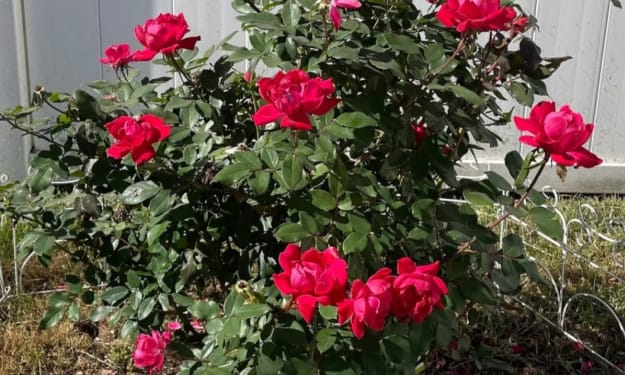
Do Not Touch the Roses
There is a quiet power in the phrase “Do Not Touch the Roses.” It sounds like a warning, but it feels like an invitation — one that asks us to pause, admire, and respect something without claiming it. Roses have long symbolized love, beauty, and passion, yet they are also guarded by thorns. That contradiction makes them the perfect metaphor for many of life’s most meaningful things.
By Aarif Lashari2 days ago in Earth



Comments (1)
They shelter so many creatures.