
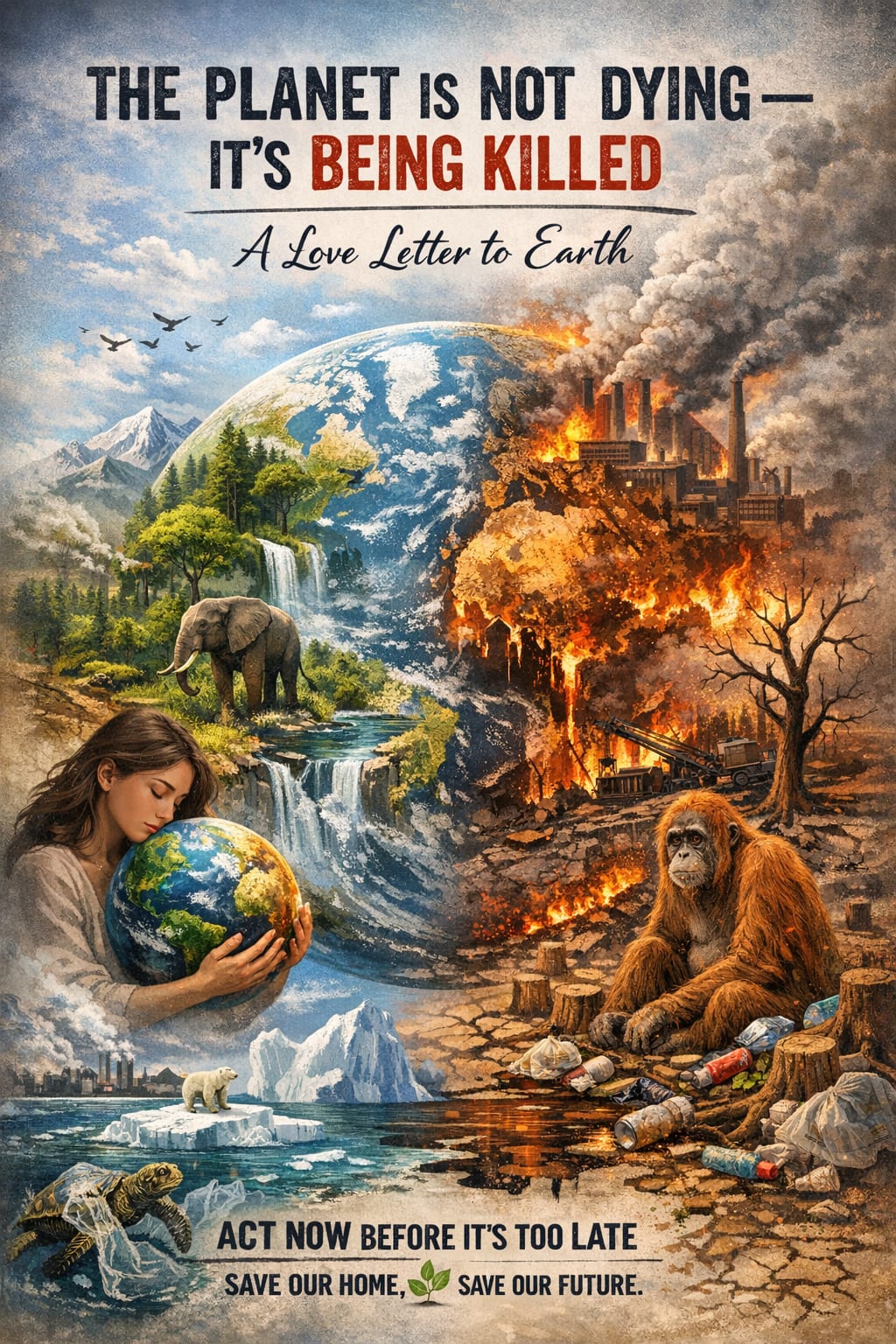
🌍 The Planet Is Not Dying — It’s Being Killed
A Love Letter to Earth
Introduction
Earth is our only home. It is the place where life began, where rivers flow, forests grow, birds sing, and humans dream. For thousands of years, Earth has provided everything we need—air to breathe, water to drink, food to eat, and land to live on. Yet today, we often hear people say, “The planet is dying.”
But the truth is more painful.
The planet is not dying on its own—it is being killed by human actions.
This article is a love letter to Earth. It is also a reminder, a warning, and a call to action. Earth does not need sympathy; it needs responsibility. If we truly love our planet, we must understand what we are doing to it, why it matters, and how we can still change our future.
Earth: A Living, Giving Planet
Earth is not just a ball of rock floating in space. It is a living system. Every part of it is connected. Oceans control the climate, forests clean the air, soil grows food, and animals keep nature balanced.
For millions of years, Earth has survived natural changes—volcanoes, ice ages, floods, and storms. These are part of nature’s cycle. Earth knows how to heal itself when damage is natural and slow.
What Earth cannot survive easily is constant, careless destruction caused by humans.
We cut forests faster than they can grow back.
We pollute water faster than it can clean itself.
We release gases faster than the atmosphere can balance them.
Earth keeps giving, but we keep taking.
The Difference Between “Dying” and “Being Killed”
When something is dying, it usually happens naturally or because of age.
When something is being killed, it happens because of violence, neglect, or greed.
Earth is not dying naturally.
Climate change is caused mainly by burning fossil fuels.
Deforestation happens to make space for cities, farms, and industries.
Pollution comes from factories, vehicles, plastic waste, and chemicals.
Species extinction is speeding up because habitats are destroyed.
These are not accidents.
These are choices.
Human choices are pushing Earth toward collapse.
Climate Change: A Fever Caused by Us
Climate change is one of the clearest signs that Earth is being harmed. The planet’s temperature is rising because of greenhouse gases like carbon dioxide and methane.
These gases come mainly from:
Cars and trucks
Factories
Power plants
Deforestation
The result is:
Melting glaciers
Rising sea levels
Stronger storms
Heat waves
Droughts
Floods
Earth is reacting like a sick body with a fever. The fever is not the disease—it is a reaction to harm.
And the harm is human-made.
Pollution: Poisoning Our Own Home
Pollution is another silent killer.
Air Pollution
Smoke from vehicles and industries fills the air with harmful chemicals. This causes:
Breathing problems
Heart disease
Acid rain
Damage to plants and animals
Water Pollution
Rivers, lakes, and oceans are filled with:
Plastic waste
Industrial chemicals
Oil spills
Sewage
Millions of sea animals die every year because of polluted water. Even the water we drink is no longer safe in many places.
Plastic Pollution
Plastic does not disappear. It breaks into smaller pieces called microplastics, which enter:
Fish
Animals
Human bodies
We are poisoning Earth—and ourselves.
Deforestation: Cutting the Lungs of the Planet
Forests are often called the “lungs of the Earth.” They absorb carbon dioxide and release oxygen. They also:
Control temperature
Protect soil
Provide homes for animals
Support human life
Yet every minute, large areas of forests are destroyed.
Trees are cut for:
Wood
Paper
Farming
Urban expansion
When forests disappear:
Carbon dioxide increases
Animals lose homes
Weather becomes extreme
Indigenous communities suffer
We are cutting down the very systems that keep us alive.
Loss of Wildlife: A Silent Tragedy
Animals and plants are disappearing at a frightening speed. Scientists say we are living in a mass extinction period, mostly caused by humans.
Reasons include:
Habitat destruction
Pollution
Climate change
Illegal hunting
Overfishing
When one species disappears, it affects many others. Nature is like a chain—break one link, and the whole system weakens.
This loss is not just sad.
It is dangerous.
Earth Is Still Fighting for Us
Despite everything, Earth is still trying to survive.
Forests regrow when protected
Rivers become clean when pollution stops
Animals return when habitats are saved
The ozone layer improved when harmful chemicals were banned
This proves one thing clearly:
Earth can heal—if we stop hurting it.
The problem is not that solutions do not exist.
The problem is that we delay action.
Our Responsibility as Humans
Humans are the most intelligent species on Earth. With intelligence comes responsibility.
We cannot say:
“It’s too late”
“One person cannot make a difference”
“Technology will fix everything”
Every action matters.
Simple steps include:
Reducing plastic use
Saving water and electricity
Using public transport
Planting trees
Recycling
Supporting renewable energy
Educating others
Governments, industries, and individuals must work together. Earth’s protection cannot be optional—it must be a priority.
A Love Letter to Earth
Dear Earth,
You gave us life when we had nothing.
You fed us when we were hungry.
You sheltered us when we were weak.
We repaid your kindness with damage, noise, smoke, and waste.
We forgot that we belong to you—not the other way around.
You do not ask for perfection.
You ask for care.
You ask for balance.
You ask for respect.
Forgive us for forgetting.
Help us remember before it is too late.
Conclusion: The Choice Is Ours
The planet is not dying—it is being killed.
And if it is being killed, it can also be saved.
Earth does not need humans to survive.
Humans need Earth.
The future depends on what we do today. We can continue on the path of destruction, or we can choose protection, respect, and love.
This is not just an environmental issue.
It is a moral issue.
It is a human issue.
If we truly love Earth, we must prove it—not with words, but with actions.
The Earth is our home. Let us not be the reason it falls. 🌱🌍
About the Creator
Idea hive
Article writer and enthusiast sharing insight and knowledge on nature, human behavior, technology, health and wellness, business, culture and society and personal development.
Police Warn Against ‘Ridiculous’ Parking at Beauty Spot Amid Snow Disruption
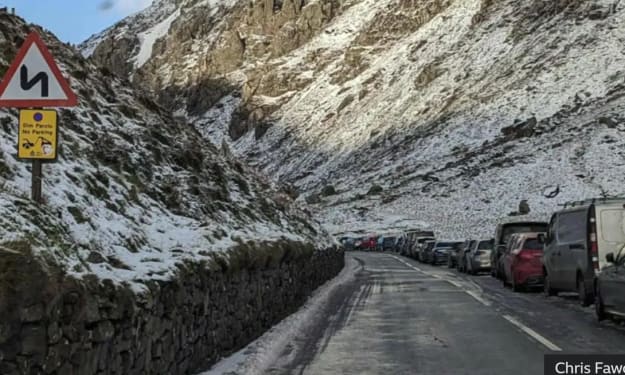
Heavy snowfall may transform beauty spots into winter wonderlands, but it also brings serious risks when visitors ignore basic safety and parking rules. Police have issued a strong warning against what they describe as “ridiculous” parking at a popular beauty spot, after snow disruption led to blocked roads, stranded vehicles, and delayed emergency access. As wintry conditions continue to affect travel, authorities are urging the public to prioritise safety over scenic photographs, reminding drivers that poor parking decisions can have life-threatening consequences during severe weather. Snowfall Turns Scenic into Hazardous The recent spell of snow attracted large numbers of visitors eager to enjoy picturesque landscapes blanketed in white. Hillsides, national parks, and rural viewpoints quickly became hotspots for walkers, families, and amateur photographers. However, police say the surge in visitors coincided with widespread parking chaos. Cars were left abandoned on narrow roads, grass verges, gateways, and even blocking access routes meant for emergency vehicles and local residents. What may appear to drivers as a harmless decision to “park for just a few minutes” can quickly escalate into a major safety issue—especially when snow and ice reduce road space and visibility. Police Response and Public Warning Local police forces have taken to social media and public statements to express frustration at the situation. Officers described some parking behaviour as not only irresponsible but dangerous, particularly given the weather conditions. Police warned that emergency vehicles, including ambulances and mountain rescue teams, were struggling to reach areas due to blocked roads. In severe weather, response times are already under pressure, and illegally parked vehicles can mean the difference between life and death. Authorities have also made it clear that enforcement action will be taken where necessary. Drivers risk fines, towing, and penalty points if their vehicles obstruct roads or endanger others. Impact on Emergency Services One of the most serious consequences of poor parking during snow disruption is its impact on emergency services. Narrow rural roads, already difficult to navigate in icy conditions, become completely impassable when cars are parked irresponsibly. Fire crews, paramedics, and rescue teams rely on clear access routes, particularly in popular beauty spots where accidents such as slips, falls, or stranded walkers are more likely in winter conditions. Police stressed that emergency vehicles do not have the luxury of “finding another way around” when roads are blocked. Delays caused by inconsiderate parking put both responders and the public at risk. Local Residents Left Frustrated It is not only emergency services that are affected. Residents living near popular beauty spots often bear the brunt of snow-related disruption. Driveways are blocked, access to homes becomes difficult, and essential journeys for work, medical appointments, or supplies are delayed. Many locals report feeling ignored by visitors who treat rural communities like seasonal attractions rather than lived-in areas. During winter weather, this frustration is magnified, as residents may already be dealing with power outages, poor road conditions, and limited access to services. Police have echoed these concerns, reminding visitors that beauty spots are often surrounded by working communities, not just open spaces for leisure. Why Snow Makes Parking More Dangerous Snow significantly reduces road safety margins. It narrows carriageways, hides road markings, and makes verges unstable. A car parked partly on a road might seem manageable in normal conditions, but in snow it can create blind corners, force vehicles into oncoming traffic, or cause skidding accidents. Additionally, snowploughs and gritters require space to operate effectively. Poorly parked vehicles can prevent these essential services from clearing roads, prolonging disruption for everyone. Authorities warn that even experienced drivers can underestimate how quickly conditions can change in winter weather. Social Media and the “Snow Day” Effect Police have also pointed to social media as a contributing factor. Viral images of snow-covered landscapes often encourage spontaneous trips without proper planning. People see beautiful photos and head out without considering parking availability, road conditions, or weather warnings. This “snow day” mentality can overwhelm rural infrastructure not designed for large volumes of traffic, particularly during adverse weather. Police urge visitors to check local advice before travelling and to be prepared to turn back if conditions are unsafe. Advice for Safe Winter Visits In response to the ongoing disruption, authorities have shared clear guidance for anyone planning to visit beauty spots during snowy conditions: Avoid unnecessary travel during severe weather warnings Park only in designated areas, never on roads or verges Do not block gateways, tracks, or emergency access routes Check weather and road conditions before setting off Be prepared to leave if parking is unavailable Police emphasise that no photograph or short walk is worth risking lives or causing serious disruption. Enforcement and Accountability While officers prefer to rely on public cooperation, they have confirmed that enforcement will be stepped up if irresponsible behaviour continues. Vehicles may be ticketed or removed, particularly if they pose a danger or obstruction. Authorities stress that enforcement is not about spoiling enjoyment but about ensuring public safety. Winter conditions demand higher levels of responsibility from drivers, not less. A Shared Responsibility Snow transforms landscapes, but it also tests public behaviour. Police warnings against “ridiculous” parking are not just expressions of frustration—they are urgent reminders that safety must come first. Enjoying nature is a privilege, not a right, especially during extreme weather. By parking responsibly and respecting local communities, visitors can help ensure that beauty spots remain accessible, emergency services remain effective, and winter days do not turn into preventable disasters. As snow disruption continues, the message from police is clear: think before you park, or don’t park at all
By Muhammad Hassan7 days ago in Earth



Comments
There are no comments for this story
Be the first to respond and start the conversation.