
At Least 26 Dead as Typhoon Wreaks Havoc in the Philippines
Powerful Storm Leaves Destruction, Floods, and Heartbreak in Its Wake

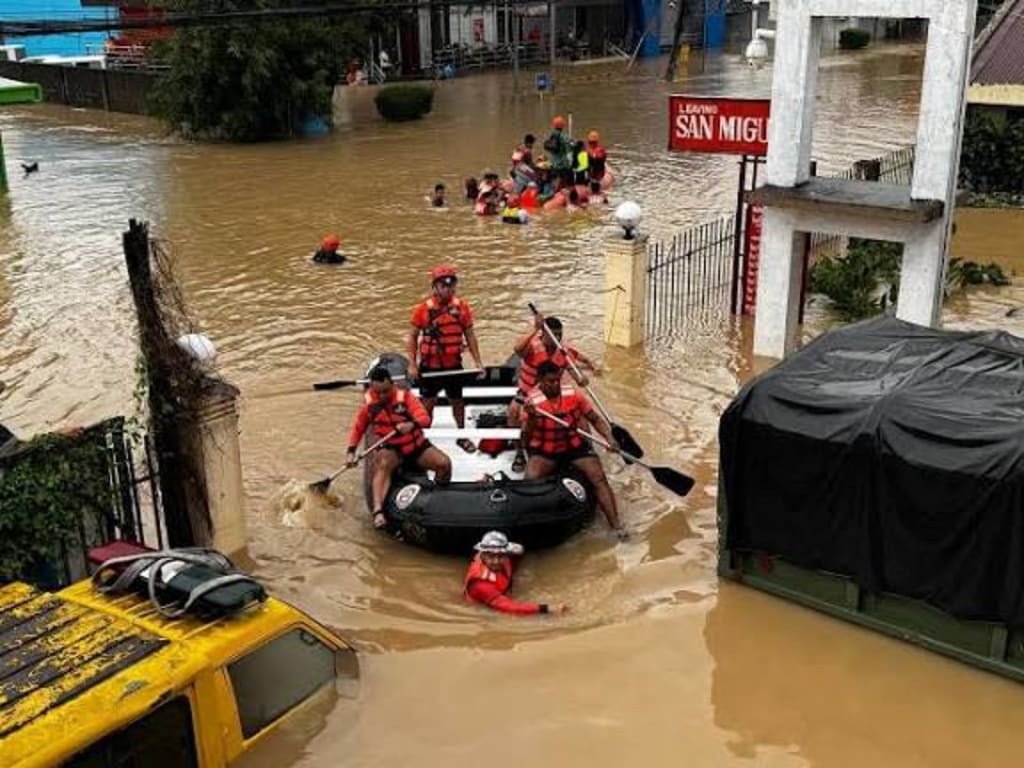
A powerful typhoon has struck the Philippines, leaving at least 26 people dead and many more missing, as torrential rains, violent winds, and landslides tore through several provinces. The storm, one of the most destructive to hit the country this year, has caused widespread devastation — flattening homes, flooding entire villages, and forcing thousands to flee to evacuation centers.
For a nation accustomed to severe tropical storms, this latest typhoon has brought another painful reminder of the Philippines’ vulnerability to climate disasters.
---
A Night of Terror
The typhoon, named Typhoon Amara by local authorities, made landfall in the central region of the Philippines late Saturday night, packing winds exceeding 150 kilometers per hour (around 93 mph). Within hours, coastal towns were underwater, trees were uprooted, and electricity poles snapped like matchsticks.
In one of the hardest-hit provinces, Leyte, rescuers worked through the night to reach survivors trapped beneath the debris of collapsed houses. “We heard the wind roaring like a monster,” said one survivor, describing how her family huddled under a table for hours as their roof was torn away. “When we came out, everything was gone.”
Authorities reported that most of the casualties were caused by flash floods and landslides in mountainous areas, where heavy rains triggered walls of mud to cascade down onto homes. Dozens of people remain missing, and officials fear the death toll could rise as rescue teams reach more isolated areas.
---
A Nation Underwater
Heavy rainfall continued for more than 24 hours after the typhoon made landfall, causing rivers to overflow and inundating towns and farmlands. Footage shared on social media showed people wading through chest-deep floodwaters, clutching bags of clothes and children. In some regions, bridges were washed away, cutting off access to food and medical supplies.
The National Disaster Risk Reduction and Management Council (NDRRMC) reported that nearly 200,000 people were displaced from their homes. Many are now staying in overcrowded evacuation centers, where clean water and sanitation are in short supply.
“We are trying our best to provide food and temporary shelter,” said a local mayor in Samar Province, “but our resources are stretched thin. We need urgent help.”
---
Government and International Response
President Ferdinand Marcos Jr. has ordered an immediate relief operation, deploying military and coast guard units to assist with search and rescue efforts. Emergency aid — including rice, canned goods, blankets, and medical supplies — is being distributed to the affected areas.
International organizations, including the Red Cross and UNICEF, have also begun coordinating with local authorities to deliver humanitarian assistance. The European Union and Japan have both pledged financial aid for recovery efforts.
Despite these efforts, reaching remote communities remains a major challenge due to landslides blocking major roads. Helicopters and boats are being used to deliver supplies to cut-off areas.
---
The Human Cost
For many Filipinos, the typhoon has taken more than property — it has taken lives, livelihoods, and a sense of security. The Philippines, an archipelago of more than 7,000 islands, faces an average of 20 tropical storms each year, many of which are deadly.
Farmers in the Visayas region are among those hardest hit. Vast tracts of rice and coconut fields have been destroyed just weeks before the harvest season. “This was supposed to be our best crop,” said one farmer in Northern Samar, surveying the muddy remains of his land. “Now, there’s nothing left.”
In coastal areas, fishermen have lost boats that were their only means of income. Families who depend on daily wages are now left wondering how they will rebuild.
---
Climate Change: A Growing Threat
Experts say the increasing intensity of typhoons in the Philippines is linked to climate change. Warmer ocean temperatures provide more energy for storms, making them stronger and more destructive.
“The science is clear,” said a climatologist from the University of the Philippines. “Climate change is amplifying the risks. What used to be a strong storm decades ago is now a super typhoon.”
The Philippines has consistently ranked among the most climate-vulnerable countries in the world. Environmental groups are calling for urgent action, not just on disaster response but also on long-term resilience — including better infrastructure, sustainable urban planning, and international cooperation to combat global warming.
---
Stories of Hope Amid the Ruins
Amid the heartbreak, stories of courage and kindness have emerged. Volunteers have been seen delivering food and medicine to survivors, while local communities are opening their homes to displaced neighbors.
In one coastal town, residents formed human chains to rescue children stranded by rising water. “Even when we have nothing, we help each other,” said a teacher who joined the rescue efforts. “That’s what it means to be Filipino.”
Churches and schools have turned into temporary shelters, offering food and comfort to those who lost everything. Across the country, donations are pouring in, as Filipinos unite once again in the spirit of bayanihan — the tradition of communal solidarity.
---
Looking Ahead
As floodwaters begin to recede, the long road to recovery begins. Engineers are assessing damaged bridges and power lines, while health officials warn of possible outbreaks of waterborne diseases. The government has promised to rebuild homes and provide financial support to affected families.
For now, survivors cling to hope — that the storms will pass, that the rains will stop, and that life will slowly return to normal. But they also know that unless real action is taken to address climate change, tragedies like this one may only become more frequent.
The Philippines has weathered countless storms before, and its people have always endured with courage and faith. Yet each new disaster carries the same heartbreaking truth: rebuilding is never easy, and time is running out to protect those most at risk.
About the Creator
Fiaz Ahmed
I am Fiaz Ahmed. I am a passionate writer. I love covering trending topics and breaking news. With a sharp eye for what’s happening around the world, and crafts timely and engaging stories that keep readers informed and updated.
Keep reading
More stories from Fiaz Ahmed and writers in Earth and other communities.
Seven Climbers Dead After Nepal Avalanche
A devastating avalanche in Nepal’s Himalayas has claimed the lives of seven climbers and left several others missing, marking one of the deadliest mountaineering disasters in recent years. The tragedy unfolded near Mount Manaslu, the world’s eighth-highest peak, where sudden snowfall and ice collapse buried multiple expedition teams under tons of snow.
By Fiaz Ahmed 4 months ago in Earth
Pandora’s Burden
“My brother warned me to not accept gifts from the one who commissioned you,” said Epimetheus to the woman clad in silvery raiments standing at the entrance to the temple. Her silver tiara and the silver rings on her fingers and toes glinted in the firelight cast by torches set on either side of the doorway. Lingering in the shadows, beyond the reach of the flames as she was, he could not tell what she held in her hands. At first what appeared to be a box was perhaps a funerary urn, or maybe merely an apple.
By J. Otis Haas3 days ago in Fiction




Comments
There are no comments for this story
Be the first to respond and start the conversation.