
Are Cell Phones Capable of Changing the Shape of Our Bones?
What Do You Think?

What if cell phones were so powerful that they could change the shape of our bones? This is a startling new topic that has recently been making the rounds in the media. It stems from a scientific report that claims using phones and tablets can cause serious and long-term changes to our bodies, and not in the way you might think. David Shahar and Mark Sayers, who specialize in biomechanics at Australia's University of the Sunshine Coast, conducted a study in recent years. Biomechanics examines how mechanical principles apply to live organisms, from how humans run to how insects beat their wings.
Shahar and Sayers' research also includes osteo biography, which is used to deduce what someone's life was like from their bones. It's been known for some time that skeletons adapt to a person's lifestyle; for example, some unusually large skeletons were discovered on the Pacific island of Tinian in 1924; stone structures near the skeletons explained the substantial nature of the island's bones by working with heavy stones. Shaw heart and Sayers feel that modern technology is moulding the bones of today's youth.
So how is it doing this? It's all because of something called an EOP, or external occipital protuberance. Some experts and commentators have been more colorful, describing it as a foam ball or a devil-like horn. In reality, the EOP is a bone growth found in the back of the skull that's connected to the nuchal ligament, which is an important ligament that connects Nick muscles to the skull. The EOP has an effect similar to an anchor at the top of the nuchal ligament. Now, let's go back to what the researchers were doing with the study in the first place, which was to examine chiropractor x-rays of persons aged 18 to 86.
They wanted to gain a current understanding of how skeletons change because many of these x-rays were investigating things like neck pains there's also an element of what consequences these changes may have on our health. Shahar has sayers noticed that EOP appeared to be more prevalent in young people. They hypothesized that young people's posture while constantly checking their phones and tablets was a major factor during screen time. The theory is that by craning forward extra pressure is put on the area where sculpt me smuzzle to compensate the EOP gets gradually longer growing to around several milliliters.
The findings also revealed that it was mostly found in men in 2016 Shah Harden Sayers reported a bigger Yi Opie and 67% of men compared to 20% of women based on a test group of 218 people by 2018 they had looked at 1200 people with males appearing to be 5 times more likely to get these large texts necks But what about the possible impact on humanity? We hear a lot about phone radiation being connected to cancer, but can using a mobile device genuinely cause substantial health problems in the body?
This new paper has sparked debate on the subject because it is the first time specialists have directly stated how technology affects our bodies. According to Shahar and Sayers, the elongated yo PS is a degenerative process, implying that things will only get worse for young people if they continue to use their devices. There is also something called text thumb or thumb arthritis, where the thumb can develop serious problems similar to the dreaded carpal tunnel syndrome. However, the study of EOPS and referring to them as horns highlights where spikes has been criticized by others. According to experts, the research is not conclusive and, like every scientific paper, involves assumptions. Longer skull bones are nothing new, according to archaeologists, and they are especially frequent in males. According to the study's detractors, there simply isn't enough factual evidence to back up the idea that using your cell phone transforms you into Hellboy.
So, are Shahar and sayers on to something, or have they simply taken established facts and fitted them into their own explanation? Either way, there's no denying that technology has had a dramatic impact on our lives, and the idea that future generations are changing due to constant interaction with their devices is a serious issue that needs to be addressed; ultimately, it will be the archaeologists of the future who make that call. Who knows, maybe they won't even have gigantic spikes protruding out of the back of their necks in the future. So, maybe a little more walking in the park and a little less Angry Birds for you.
About the Creator
Abigail Palmer
As a writer, I am passionate about exploring the complexities of the world around us and translating them into engaging content, so if you are looking for insightful, informative & entertaining content look no further my articles are here:)
Keep reading
More stories from Abigail Palmer and writers in Earth and other communities.
If We Should Stop Sleeping
Losing sleep can have serious consequences. The United Nations considers it a form of torture, and the longer it goes on, the worse it gets. Just 48 hours without sleep is considered extreme sleep deprivation, but you’ll probably start to notice weirdness before that. After 18 hours without sleep, you might feel a little tipsy. Staying awake for 24 hours is the equivalent of drinking three or four drinks in two hours. And after 48 hours without sleep, your BAC might be at 0.1%, which is higher than the legal driving limit in every state. You might feel foggy, less alert, or double vision, almost like you're wearing sleepy beer goggles. That's because sleep deprivation slows down how your brain cells communicate with each other. So even if you're drinking alcohol, drowsiness will increase its effects. And caffeine only works up to a certain point; by the end of a day and a half without sleep, it'll start to wear off.
By Abigail Palmer3 years ago in Earth
Australia Organic Fertilizer Market Size and Forecast 2025–2033
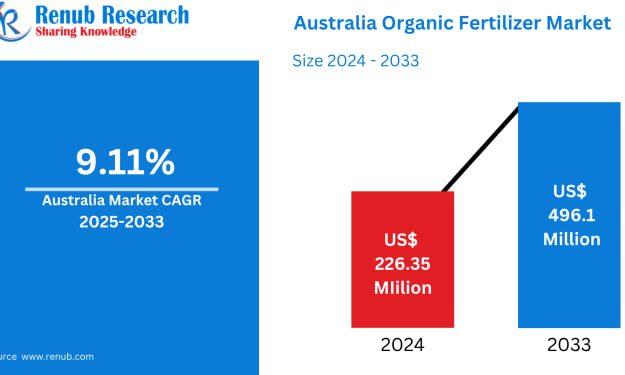
Australia Organic Fertilizer Market Outlook The Australia Organic Fertilizer Market is entering a strong growth phase as sustainability becomes a core priority for farmers, consumers, and policymakers alike. According to Renub Research, the market is expected to reach US$ 496.1 million by 2033, rising from US$ 226.35 million in 2024, expanding at a CAGR of 9.11% from 2025 to 2033.
By jaiklin Fanandish3 days ago in Earth
High-Speed Train Crash in Southern Spain Leaves at Least 21 Dead
A devastating high-speed train crash in southern Spain has left at least 21 people dead and dozens injured, shocking the nation and triggering a major emergency response. The incident, which occurred on a busy rail route connecting key southern cities, has reignited concerns over railway safety, infrastructure maintenance, and emergency preparedness in one of Europe’s most advanced rail networks.
By Aarif Lashari6 days ago in Earth
Autonomy Is The Real Privilege
Good morning, freedom-seekers! Today we’re gonna be looking at autonomy. A strange word, I know; one many would probably look at blankly and run away from on sight. We’re gonna figure out what it actually means, consider how it’s achieved, and decipher just how deeply most of us are tangled up in dependence without realising it.
By That ‘Freedom’ Guy4 days ago in Humans



Comments
There are no comments for this story
Be the first to respond and start the conversation.