
Application of AI to poultry farming
Advancing Poultry Farming: AI'S Journey Towards Proactive Monitoring.

Introduction:
In the lush countryside of Oakridge Farms, a transformation was underway. Poultry farmer John Anderson had always been passionate about raising healthy chickens, but he yearned for a way to take his farm to new heights. He had heard whispers of a technological marvel called Artificial Intelligence (AI) that could revolutionize the way he managed his flock. Eager to explore this cutting-edge solution, John embarked on a journey to implement AI-based systems for automated monitoring in his poultry farm.
Chapter 1: The Genesis of Proactive Monitoring
John delved into extensive research to understand the potential benefits of AI in poultry farming. He discovered that AI-based systems could monitor crucial environmental factors such as temperature, humidity, air quality, and water consumption. By integrating sensors throughout his poultry houses and employing data analysis algorithms, John realized he could detect deviations from optimal conditions and receive real-time alerts. This proactive monitoring promised to create a healthier and more sustainable environment for his birds.
Chapter 2: Implementation and Early Challenges
Equipped with newfound knowledge, John decided to embrace AI in his poultry farm. He collaborated with a team of AI experts and technicians to install a sophisticated network of sensors throughout his farm. These sensors collected a wealth of data on temperature, humidity, air quality, and water consumption, providing a comprehensive snapshot of the poultry houses. However, the initial challenge lay in calibrating the AI algorithms to accurately identify deviations and generate meaningful alerts.
Chapter 3: From Data to Insights: The Power of AI
As the sensors tirelessly collected data, John's team developed advanced AI algorithms to analyze and interpret this wealth of information. Machine learning techniques were employed to train the algorithms to recognize patterns and identify abnormal conditions. Gradually, the AI systems began to provide valuable insights. For instance, by correlating temperature fluctuations with bird behavior, the algorithms detected signs of heat stress, prompting John to adjust ventilation and cooling systems accordingly.
Chapter 4: The Wings of Real-Time Alerts
One fateful summer day, as the temperature soared unexpectedly, John received a real-time alert on his smartphone. The AI system had detected a rapid increase in temperature in one of the poultry houses, signaling a potential crisis. John rushed to the scene, grateful for the prompt intervention. Upon investigation, he found a malfunctioning cooling system that, if left unaddressed, could have resulted in detrimental consequences for his flock. This incident underscored the true power of AI-based proactive monitoring.
Chapter 5: Continuous Improvement and Refinement
John was not content with stopping there. He realized the potential to fine-tune the AI algorithms and expand the scope of monitoring. He collaborated with veterinarians and nutritionists to integrate additional parameters into the system. The AI algorithms were enhanced to monitor ammonia levels, CO2 concentrations, and even the feed and water consumption patterns of individual birds. These refinements enabled John to gain a comprehensive understanding of his flock's health and wellbeing.
Chapter 6: The Ripple Effect: Improved Animal Welfare and Efficiency
The AI-driven proactive monitoring system yielded remarkable results. John witnessed a significant reduction in the incidence of diseases and the need for antibiotic treatments. With real-time alerts, he could swiftly address issues like poor ventilation, ensuring optimal air quality for his birds. Water and feed consumption patterns helped him identify individual bird health concerns promptly, allowing for targeted interventions. This holistic approach to poultry farming not only enhanced animal welfare but also increased overall efficiency.
Chapter 7: Sharing the Success: Industry Adoption
John's success story spread like wildfire throughout the poultry farming community. Farmers near and far sought his guidance on implementing AI-based monitoring systems. Recognizing the transformative potential of AI, industry associations organized workshops and conferences to disseminate knowledge and promote its adoption.
About the Creator
Keep reading
More stories from writers in Earth and other communities.
Hunt for the Names of Mysterious Dwarf Planets
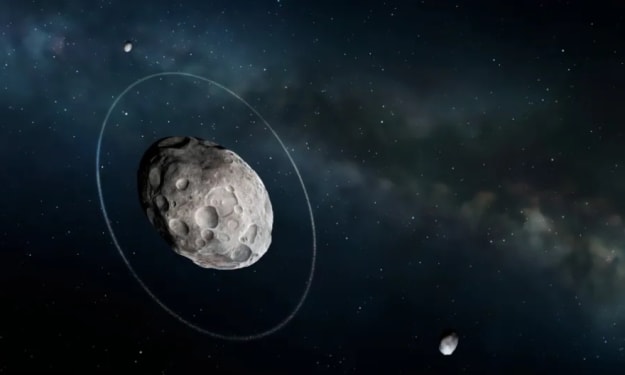
Far beyond the familiar planets of our solar system lies a cold, dark region filled with icy bodies, ancient debris, and mysterious worlds yet to be fully understood. Among these distant objects are dwarf planets, many of which orbit on the fringes of our solar system in regions like the Kuiper Belt and beyond. While some, such as Pluto, have captured public imagination for decades, many others remain unnamed, sparking a fascinating hunt among astronomers to discover, study, and ultimately name these elusive celestial bodies.
By Aarif Lashari4 days ago in Earth
Spotlight on the Risks of An Exploding Sea Urchin Population
The marine ecosystem is a complicated place full of millions of species and hundreds of thousands of critically interdependent relationships. While the decline of some species populations might have only marginal effects on the health of the world’s oceans, others could set off a chain of events that could ultimately be catastrophic.
By Virginia Chipurnoi2 days ago in Earth



Comments (1)
Very nice