
Anaxagoras: The Man Who Challenged the Gods with the Truth About the Moon
Long before telescopes, one Greek philosopher dared to say the Moon was just a rock—and paid the price for it.

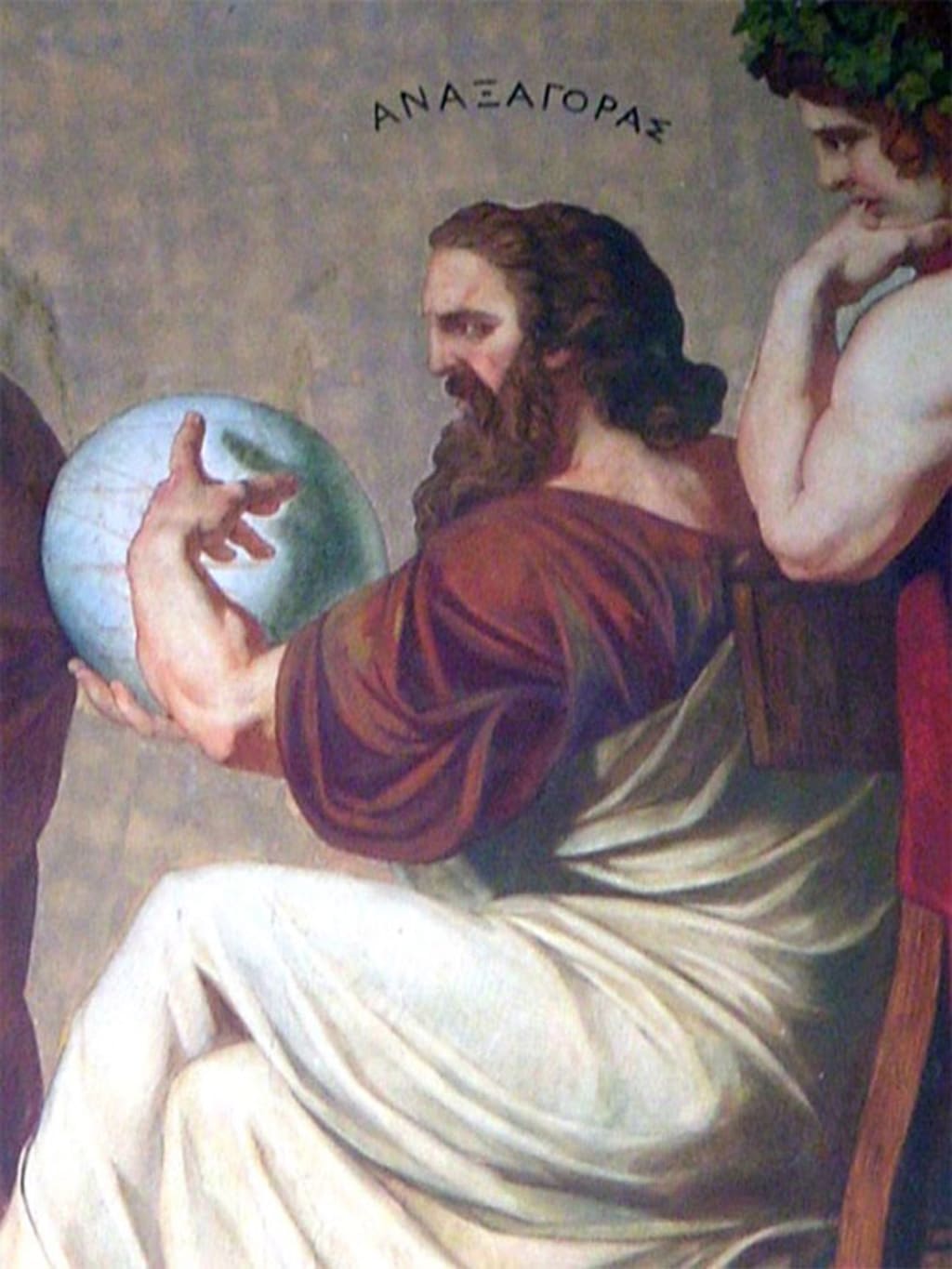
More than 2,500 years ago, when myths and gods ruled the minds of men, one Greek philosopher looked up at the night sky and saw something entirely different: not a celestial deity, but a silent, rocky world floating in darkness. His name was Anaxagoras, and his bold observations about the Moon—and the universe at large—not only changed the course of human understanding, but also brought him dangerously close to death.
Though he lived in the 5th century BCE, Anaxagoras dared to think in a way that was radically ahead of his time. In an age when the Moon was worshipped as a divine being, he was one of the first to claim it was simply a large, rocky body, much like Earth. This revolutionary idea would later inspire astronomers for centuries—but in his own time, it was heresy.
A Philosopher Among the Stars
Anaxagoras was not merely a philosopher. He was a seeker of truth, deeply curious about the cosmos and the forces that governed the natural world. While other thinkers of his era pondered ethics, politics, or metaphysics, Anaxagoras turned his attention to the heavens.
He spent years observing the Moon, noting its phases, its behavior during eclipses, and its position relative to the Earth and the Sun. From these meticulous observations, he drew conclusions that would seem almost scientific by today’s standards.
Unlike his contemporaries, who believed the Moon was a divine entity or an ethereal sphere, Anaxagoras made a groundbreaking claim: the Moon was made of rock, just like Earth. Even more shocking was his assertion that the Moon did not emit its own light, but instead reflected sunlight. This may seem obvious now, but back then, it was a daring proposition that defied centuries of religious and cultural beliefs.
The First to Explain Eclipses
Anaxagoras also provided one of the earliest correct explanations for eclipses. He noticed that during a lunar eclipse, the Moon turned dark not because it was angry or cursed—as many believed—but because it passed through the Earth’s shadow when the Sun, Earth, and Moon aligned.
Likewise, he understood the mechanics of a solar eclipse: the Moon moved between the Earth and the Sun, temporarily blocking sunlight and casting a shadow on Earth. Today, these explanations are taught in elementary school. But in ancient Greece, such knowledge was nothing short of revolutionary—and dangerous.
Mountains on the Moon
Anaxagoras didn't stop there. Through careful observation of the Moon's surface—most likely with the naked eye or basic tools—he concluded that the Moon had mountains and valleys, just like Earth. This was a direct challenge to the notion of the heavens being perfect, smooth, and unchanging.
In fact, Anaxagoras's work laid the groundwork for later astronomers like Galileo Galilei, who, nearly 2,000 years later, would use a telescope to confirm that the Moon did, indeed, have mountains and craters.
Punished for the Truth
Anaxagoras lived in Athens during its golden age—a city that celebrated philosophy, art, and science. But even in such an enlightened society, certain truths were too dangerous to speak aloud. His ideas about the Moon, the Sun, and the heavens contradicted the official religious doctrines of the time. In particular, the belief that celestial bodies were gods was deeply entrenched in Greek society.
Worse yet, Anaxagoras claimed the Sun was not a god either, but a massive, fiery rock, larger than the Peloponnesus. In the eyes of religious authorities, this wasn’t just a theory—it was blasphemy.
He was arrested, tried, and sentenced to death for spreading what was seen as atheism and impiety. Some accounts suggest he was later exiled rather than executed, thanks in part to the intervention of influential friends, including Pericles, the great Athenian statesman. But regardless of the outcome, Anaxagoras paid a steep price for daring to challenge the gods.
Legacy Etched in the Moon
Centuries later, the very object that nearly cost Anaxagoras his life would become a symbol of his legacy. Today, a crater near the Moon’s north pole bears his name—an enduring tribute to the man who first dared to say, “The Moon is not a god. It is a world.”
That crater, Anaxagoras Crater, stands as a silent monument to scientific courage and intellectual rebellion. It reminds us that truth, no matter how controversial, has a way of resurfacing.
The Courage to Ask "What If?"
What makes Anaxagoras truly remarkable is not just his theories, but the spirit behind them. In a world bound by myth and fear, he dared to question the unquestionable. He used logic and observation to replace fear with understanding, and superstition with science.
His story is a reminder that progress often comes at a cost. The truth is not always welcome, especially when it threatens long-held beliefs. But it is always worth pursuing. Anaxagoras may have lost his freedom, but he gained something even greater: a place in the history of human thought.
Conclusion: A Legacy Written in Starlight
Long before telescopes, satellites, or space missions, Anaxagoras looked at the Moon and saw a reflection of our own planet. He imagined mountains where others saw magic, shadows where others saw spirits, and sunlight where others saw divine radiance.
Today, as we study the Moon through advanced technology—or even dream of setting foot on its surface—we walk in the footsteps of thinkers like him. He didn’t just change our view of the Moon—he changed our way of thinking.
Anaxagoras reminds us that truth can be dangerous, but it is also powerful. And sometimes, one man with the courage to think differently can move the world—or at least, understand it better.
About the Creator
Eleanor Grace
"Dream big.Start small.Act now."
Keep reading
More stories from Eleanor Grace and writers in Earth and other communities.
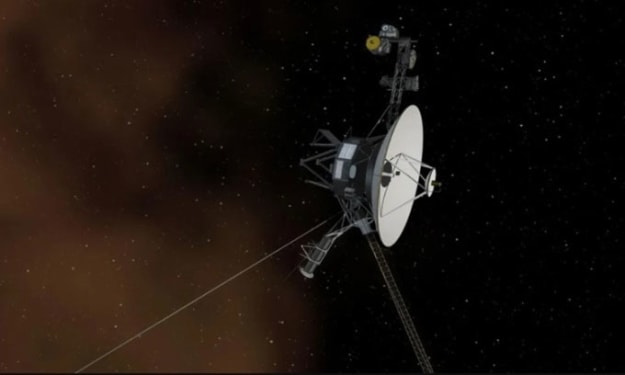
NASA Receives Communication Signal from Spacecraft 24 Billion Kilometers Away
After a prolonged period of communication issues with Voyager 1, NASA has finally received a meaningful and readable signal from the spacecraft, which is currently traveling through interstellar space. This marks a significant milestone in one of NASA's longest and most ambitious space missions.
By Eleanor Grace10 months ago in Earth
The New Gold Rush is Happening at Wastewater Treatment Plants
I never thought much about where wastewater goes after it leaves my house until I read a study from Arizona State University. Researchers tested sewage sludge from cities across America and found something remarkable.
By Marcus Briggsa day ago in Earth
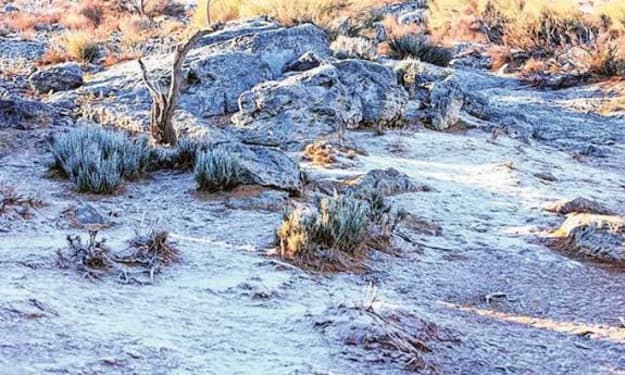
UAE Enters Al Shabt: Brace for Winter’s Coldest Days
The United Arab Emirates is set to experience one of the harshest winter spells in recent memory as the country enters Al Shabt, a period traditionally associated with extreme cold. Residents across the emirates are being urged to prepare for temperatures that are expected to drop well below seasonal averages, with potential disruptions to daily life, travel, and energy consumption. Meteorologists have warned that Al Shabt, historically marked by icy winds and sudden temperature dips, will this year be particularly severe due to a combination of regional weather patterns and shifting global climatic trends. Forecasters predict nighttime temperatures in some areas could drop to as low as 8–10°C, a significant decline for a country more accustomed to mild winters. Coastal regions may experience slightly warmer conditions, but the cold will be intensified by strong northern winds sweeping across the Arabian Peninsula. Understanding Al Shabt Al Shabt, which translates to “the coldest part of winter,” is a term deeply embedded in Gulf traditions. Historically, Bedouins and farmers used the period to plan agricultural activities, livestock care, and resource management. Today, while modern infrastructure and urban planning mitigate some effects of the cold, the cultural significance remains, and residents are reminded of its intensity through historical observations and local weather lore. “Al Shabt is more than a cultural marker—it’s a meteorological reality,” said Dr. Aisha Al Mansoori, a senior climatologist at the UAE National Center for Meteorology. “We are observing patterns that suggest this Al Shabt could be colder than usual. Residents should take precautions, especially in northern and inland regions where the temperature drop will be most pronounced.” Preparing for the Cold Authorities across the UAE are taking proactive measures to help residents and businesses prepare for the upcoming cold spell. The Ministry of Interior has issued advisories for motorists to check vehicle heating systems and tire conditions, while electricity and water authorities are ensuring that energy grids are ready for increased demand. Hospitals and emergency services have also been put on alert to handle potential cold-related health incidents. Schools and universities are expected to remain open, but parents are being advised to dress children in warm layers and limit outdoor exposure, especially during early morning and late evening hours. Workplaces are encouraged to implement flexible schedules to reduce the risks associated with commuting during frigid mornings. Travel and Transportation Challenges The UAE’s extensive road network and urban infrastructure may face some challenges during Al Shabt. While snow is highly unlikely, fog formation during the early morning hours could reduce visibility, leading to potential travel disruptions. Aviation authorities are coordinating with meteorologists to monitor conditions at major airports, ensuring that flights remain on schedule while prioritizing passenger safety. “Drivers should exercise caution and plan extra time for their journeys,” said Hamad Al Suwaidi, a senior official at the Roads and Transport Authority. “Even a minor dip in temperature can create slick roads in certain areas, and we advise everyone to remain vigilant and adhere to safety guidelines.” Impact on Daily Life Beyond transportation, the cold weather is expected to affect outdoor events, construction projects, and energy consumption. Many outdoor workers may need additional protective clothing, while households will see a surge in electricity usage for heating. Retailers and service providers are preparing for increased demand for warm clothing, heaters, and other winter essentials. Health experts emphasize the need for precautions, particularly among vulnerable populations such as the elderly, children, and individuals with preexisting conditions. “Cold weather can exacerbate respiratory illnesses and cardiovascular problems,” said Dr. Mohammed Al Hammadi, a public health specialist. “Hydration, proper clothing, and staying indoors during the coldest hours are key measures to minimize health risks.” Looking Ahead While Al Shabt is expected to last for several days, meteorologists suggest that the period of extreme cold will gradually ease as the region transitions toward milder winter conditions. Nevertheless, residents are advised to remain prepared and informed, as sudden weather shifts are common in the Gulf. “The key to navigating Al Shabt is awareness and readiness,” Dr. Al Mansoori concluded. “The cold may be intense, but with proper precautions and respect for the weather, residents can stay safe and even enjoy the unique aspects of this traditional winter period.” In the coming days, the UAE will experience an unusual contrast—desert landscapes typically associated with warmth will be gripped by biting cold, reminding residents of the country’s diverse climatic character. As the nation braces for Al Shabt, the emphasis is on preparation, safety, and resilience, ensuring that the coldest days of winter are met with caution rather than surprise.
By Fiaz Ahmed Brohi5 days ago in Earth
Autonomy Is The Real Privilege
Good morning, freedom-seekers! Today we’re gonna be looking at autonomy. A strange word, I know; one many would probably look at blankly and run away from on sight. We’re gonna figure out what it actually means, consider how it’s achieved, and decipher just how deeply most of us are tangled up in dependence without realising it.
By That ‘Freedom’ Guyabout 12 hours ago in Humans


Comments
There are no comments for this story
Be the first to respond and start the conversation.