
Amazing Animals São Tomé and Príncipe
Wildlife of Central Africa

São Tomé and Príncipe is an island country in the Gulf of Guinea, off the western coast of Central Africa. The country consists of two archipelagos around the two main islands of Sao Tome and Principe.
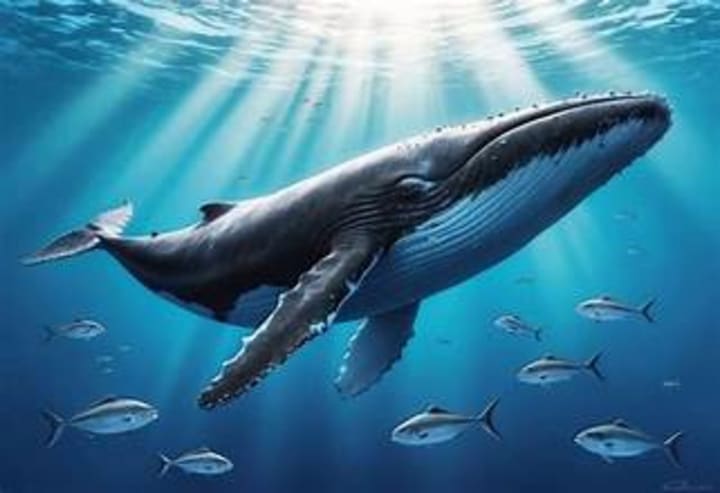
Blue whales are marine mammals and baleen whales. They are the largest animals on Earth and found in every ocean in the world except the Arctic. They have huge, long, slim bodies, are grayish blue, and their large tails split at the end into two rubbery flukes. Blue whales are solitary creatures. They communicate with each other using a variety of sounds or songs, including squeaks, hums, and rumbles, mainly during the breeding season, which is in winter.Blue whales have a carnivorous diet that mainly consists of krill and small crustaceans, although they will occasionally eat small fish.

Common bottlenose dolphins are wide-ranging marine mammals and a very familiar dolphin species. They are gray and males are generally larger and heavier than females. These dolphins have short and well-defined snouts that look like an old-fashioned gin bottle, which is the source of their common name. Common bottlenose dolphins are found in all of the world's seas, both tropical and temperate. They are very social animals. Typically living in groups ranging from just a few individuals to more than 100. These dolphins are carnivores and usually eat eels, squid, shrimp, and a wide variety of fishes.
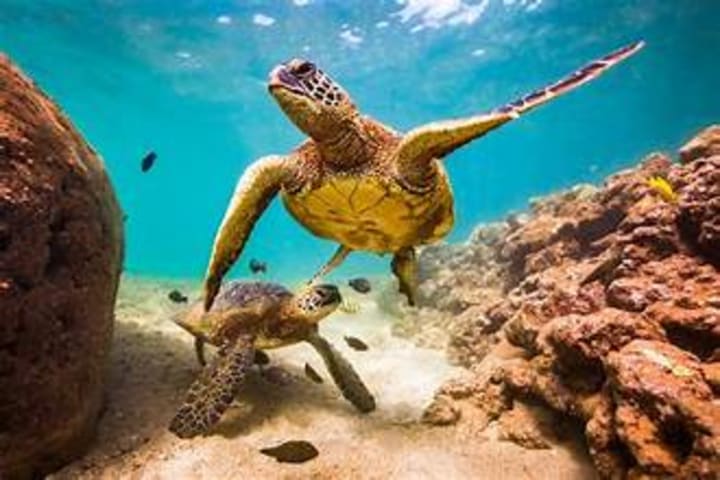
Green sea turtles are a species of large sea turtles. Their heads appear small in comparison with the size of their bodies, which is covered in brown scales with a light-colored edge. Males are bigger than females and have a longer tail, sticking out well past the shell. The shell of the turtle has smooth, non-overlapping plates colored different shades of brown, with patterns that change as the turtle grows older. The underside of the shell is lighter colored. Green sea turtles are not able to pull their heads into their shells. They live in the Atlantic Ocean, ranging from the eastern part of the United States along the coast of South America and over to South Africa. These turtles spend almost all their lives underwater and come out of the water only when nesting. Young sea turtles eat fish eggs, mollusks, jellyfish, small invertebrates, worms, sponges, algae, and crustaceans. Most adult sea turtles are strictly herbivorous.
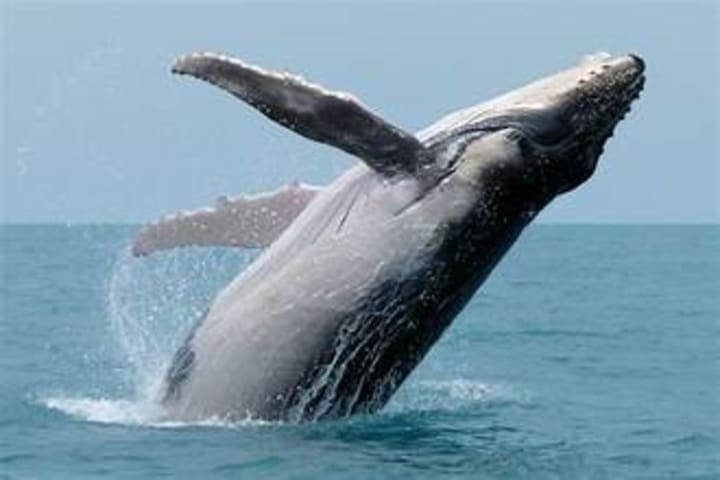
Humpback whales are a species of baleen whale. They are bulky and have thin rostrums and proportionally long flippers, each around one-third of its body length. They have a short dorsal fin that varies from nearly nonexistent to somewhat long and curved. Humpback whales inhabit all major oceans from subpolar latitudes to the equator. They live alone or in small loose groups that can disband after a few hours. Groups may stay together longer in summer to forage and feed cooperatively. They are carnivores and eat krill and small fish from schools such as haddock, herring, capelin, salmon, sand lance, pollock, and mackerel. They feed mostly during summer, living off their fat during winter.
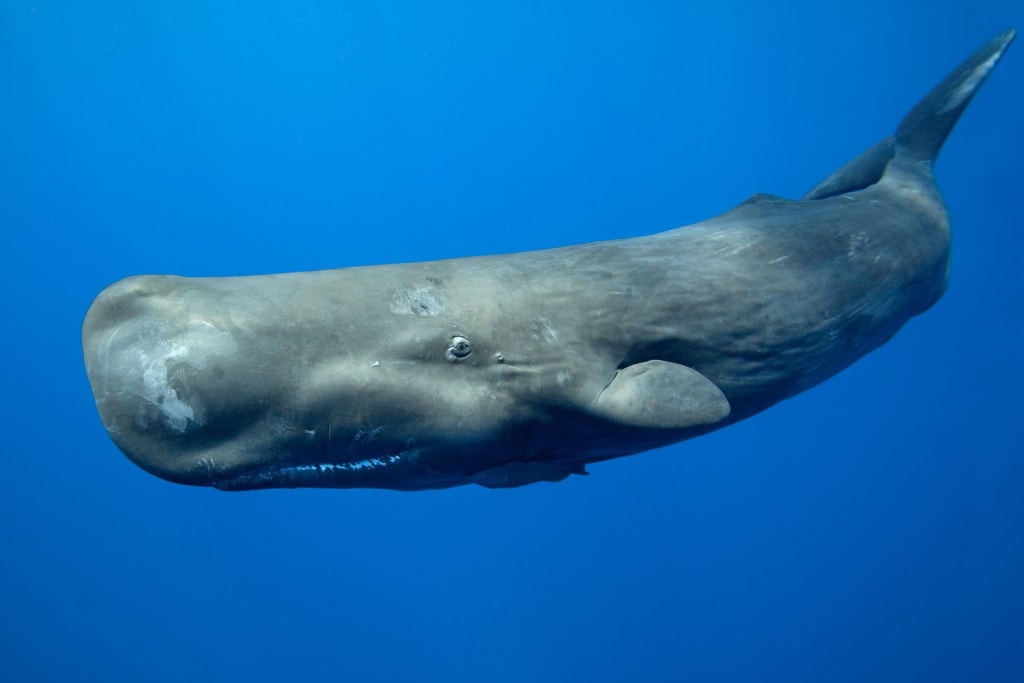
Sperm whales (pictured above) are the largest of the toothed whales. They have a distinctive shape with large, block-shaped heads. The S-shaped blowhole is located very close to the front of the head and shifted to the whale's left. This gives rise to a distinctive bushy, forward-angled spray. They prefer ice-free waters over 1,000 meters (3,300 ft) deep and are usually found in deep, offshore waters. Sperm whales form groups of around 100 individuals, roughly according to age and gender. They are carnivores and feed primarily on squid (particularly giant squid), octopus, and deep-water fish, and also sharks and skates.
Birds
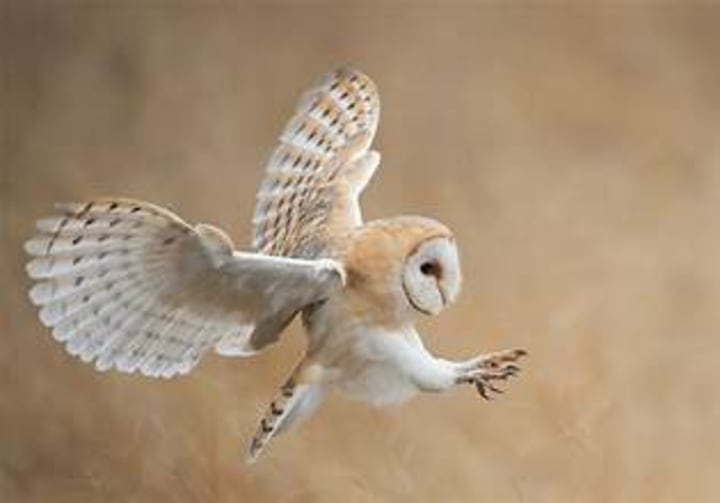
Barn owls are the most widely distributed species of owl on Earth and one of the most widespread of all species of birds. They are medium-sized, pale-colored birds with long wings and short, squarish tails. their heads and upper bodies typically vary between pale brown and some shade of gray in most subspecies. Barn owls occur in all of Europe (except Fennoscandia and Malta), most of Africa apart from the Sahara, the Indian subcontinent, Southeast Asia, Australia, many Pacific Islands, and North, Central, and South America.They are birds of open country such as farmland, plantation, shrubland, savanna, or grassland with some interspersed woodland. They prefer to hunt along the edges of woods or in rough grass strips adjoining pasture. For nesting and roosting, they choose holes in trees, fissures in cliffs, disused buildings, chimneys, hay sheds, barns, or silos. Barn owls are nocturnal birds that rely on their acute sense of hearing when hunting in complete darkness.They are carnivores, and most of their prey is terrestrial, but bats and birds are also taken, as well as lizards, amphibians, and insects.
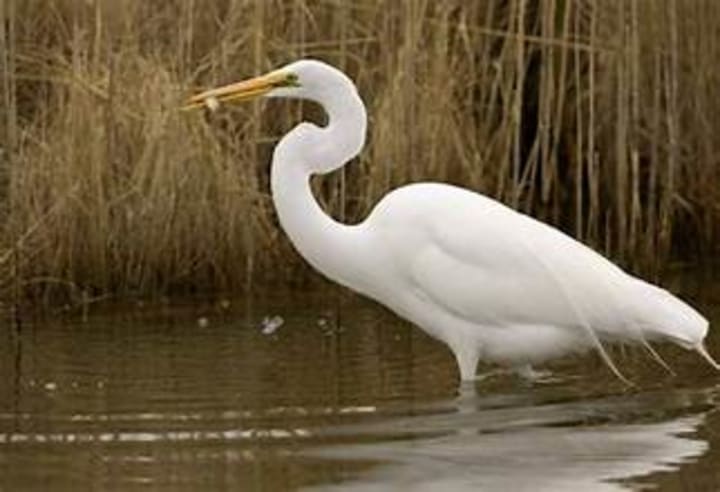
Great egrets are large, widely distributed wading birds. Like all egrets, these are members of the heron family. They are completely white with magnificent plumage, reminiscent of lace. The bill of the great egret is sharp, long, and yellow in color. The bird has long, black feet and legs. These birds are widely distributed throughout the world, including North and South America, Eurasia, Africa, and Australia. In Africa, they can be found only outside the breeding season.Great egrets are carnivores. Their usual diet consists primarily of fish. However, they can feed upon a wide variety of aquatic animals, including frogs and crustaceans. They will also consume terrestrial species such as rodents and grasshoppers.
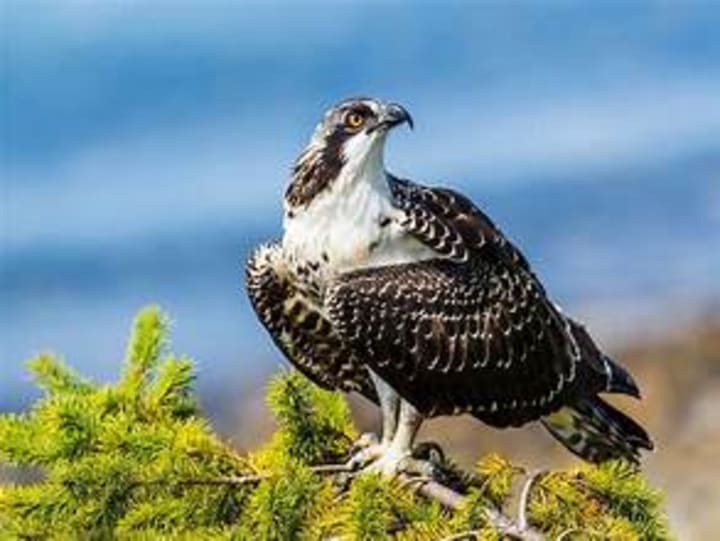
Ospreys are diurnal, fish-eating birds of prey. They inhabit a wide variety of habitats, nesting in any location near a body of water providing an adequate food supply. They are found on all continents except Antarctica. Ospreys have deep, glossy brown upper parts, while their breasts are white and sometimes streaked with brown, and the underparts are pure white. The head is white with a dark mask across the eyes, reaching to the sides of the neck. Ospreys are generally solitary birds, but in winter they may roost in small flocks at night.They are carnivores, and fish makes up 99% of their diet. Occasionally, they may prey on rodents, rabbits, hares, other birds, and small reptiles.
About the Creator
Rasma Raisters
My passions are writing and creating poetry. I write for several sites online and have four themed blogs on Wordpress. Please follow me on Twitter.
Keep reading
More stories from Rasma Raisters and writers in Earth and other communities.
Life in the Gulf of Mexico
The Gulf of Mexico is an oceanic basin and a marginal sea of the Atlantic Ocean, mostly surrounded by the North American continent.The Gulf of Mexico yields more fish, shrimp, and shellfish annually than the South and Mid-Atlantic, Chesapeake, and New England areas combined. Although it has its own name and boundaries, the Gulf of Mexico can be considered part of the Atlantic Ocean, as oceans have no hard boundaries.
By Rasma Raisters5 months ago in Earth
White Mushroom Market Size and Forecast 2025–2033
Introduction White mushrooms—scientifically known as Agaricus bisporus—are no longer confined to salads, pizzas, and soups. Once considered a humble kitchen staple, they are now emerging as a strategic crop in the global agrifood ecosystem. Driven by sustainability trends, plant-based eating, and rising health consciousness, white mushrooms have carved out a powerful position in both consumer markets and foodservice industries.
By jaiklin Fanandish7 days ago in Earth
Medicinal herbs of the Carpathians
According to popular beliefs, the Carpathians are considered a healing "place of power" and there is no mysticism in this. Air with a unique composition and medicinal Carpathian herbs can work real miracles. Since ancient times, the Hutsuls have used them to treat various diseases. Today, herbal medicine in the Carpathians is experiencing its revival, attracting more and more attention from both locals and tourists.
By Olaf Podolski4 days ago in Earth


Comments
There are no comments for this story
Be the first to respond and start the conversation.