
A Walk Through Earth's Climate History
Unraveling the Threads of Change

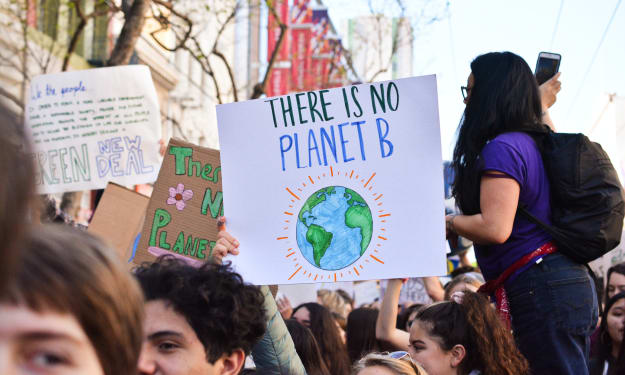
In the vast tapestry of Earth's existence, the climate has undergone immense fluctuations long before human beings became aware of its nuances, and certainly before our activities began influencing it. The climate of our planet has witnessed periods ranging from ice ages to iceless ages, volcanic winters, and atmospheres dominated by methane and ammonia. Dr. Sammy, in this enlightening episode titled "A Walk Through Earth's Climate History," urges us to explore the intricate cycles that have shaped our climate for hundreds of millions of years, offering a unique perspective on the current climate challenges we face.
Throughout Earth's history, a series of cycles, both incredibly long and lasting only a few thousand years, have played a pivotal role in shaping the climate. Dr. Sammy emphasizes that these cycles will persist long after our presence on Earth ceases to exist. The episode invites viewers to take a stroll down Earth's climate history lane, aiming to find answers to the pressing question of our current predicament and how deep into hot water we truly find ourselves.
Over the past 540 million years, Earth's climate has oscillated between two primary states: greenhouse and ice house climates. Greenhouse periods boast abundant liquid water and minimal ice at the poles, while ice house conditions witness the presence of large ice sheets at both poles. The most recent transition occurred around 55 million years ago during the thermal maximum, a peak in the last greenhouse state. This transition marked the beginning of the ice age we are currently experiencing.
The Earth's climate doesn't change arbitrarily; there are reasons behind these shifts. Dr. Sammy introduces the theory of a massive bloom of freshwater fern called Azolla in the Arctic Ocean about 55 million years ago. The fern, upon decomposing, sank to the seafloor, taking a substantial carbon load with it. This event, coupled with reduced carbon dioxide in the atmosphere, initiated a cooling process that led to the onset of an ice age. This example illustrates how living organisms, like the Azolla fern, can influence the climate over extended periods.
The episode then explores the broader influencers of Earth's climate, including the Sun's variations in brightness, orbital eccentricity, and changes in the Earth's axial tilt. These factors contribute to fluctuations in solar radiation and temperature over varying time scales. The Earth's orbit, transitioning from nearly circular to elliptical, results in orbital eccentricity cycles lasting about a hundred thousand years. Additionally, changes in the Earth's axial tilt occur in cycles of approximately 42,000 years, influencing the distribution of solar energy across the planet.
The narrative touches upon the early stages of Earth's formation, where a molten lava surface gradually cooled to allow the formation of oceans and land masses. The emergence of oxygen, driven by photosynthetic algae called cyanobacteria, led to the great oxygen catastrophe, a critical event in Earth's history. Oxygen levels rose dramatically, impacting anaerobic life forms and setting the stage for the evolution of aerobic organisms.
As Earth evolved, so did its climate. The episode highlights significant periods, such as the Cambrian explosion and the asteroid impact around 65 million years ago, which triggered an impact winter and reshaped the planet's ecosystems. The transition from greenhouse to ice house climates about 35 million years ago marked the formation of glaciers in Antarctica, contributing to the current ice age.
The discussion culminates with a focus on the present scenario, where human activities, particularly the burning of fossil fuels, have accelerated climate change. Dr. Sammy introduces the iconic "hockey stick" graph, depicting the rapid increase in average global temperatures during the 20th century. Recent research, utilizing fossilized plankton, extends the temperature record back 11,300 years, revealing that current temperatures are rising faster than they have in the past 100 years.
In conclusion, "A Walk Through Earth's Climate History" provides a comprehensive overview of the intricate cycles that have shaped our planet's climate over millions of years. It emphasizes the dynamic interplay between living organisms, atmospheric composition, and celestial factors. The episode serves as a reminder that while Earth's climate has weathered various challenges, the current human-induced changes pose unprecedented threats. It calls for collective action to address climate change and safeguard the delicate balance of our planet's ecosystems for future generations.
About the Creator
Līva
World is interesting place. Scary, but worth living.
Nature is full of surprises and people are... well, people are something else.
Art is the best doctor.
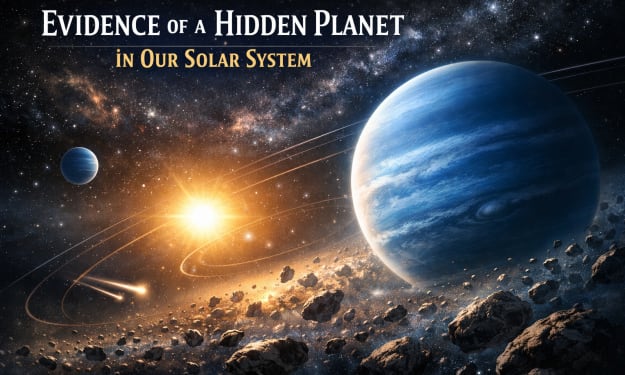
Evidence Suggests a Large Hidden Planet May Exist in Our Solar System
For centuries, scientists believed the major members of our Solar System were fully known. From the rocky inner planets to the gas giants and icy bodies beyond, astronomers thought they had mapped most of the significant objects orbiting the Sun. However, new research by American scientists suggests that a large, hidden planet may still be lurking in the distant reaches of our Solar System.
By Irshad Abbasi 4 days ago in Earth


Comments
There are no comments for this story
Be the first to respond and start the conversation.