
A Telescope's Powerful New Tool May Offer a Better Way to Forecast Solar Storms
A telescope's powerful new tool may offer a better way to predict solar storms.

A Telescope's Powerful New Tool May Offer a Better Way to Forecast Solar Storms
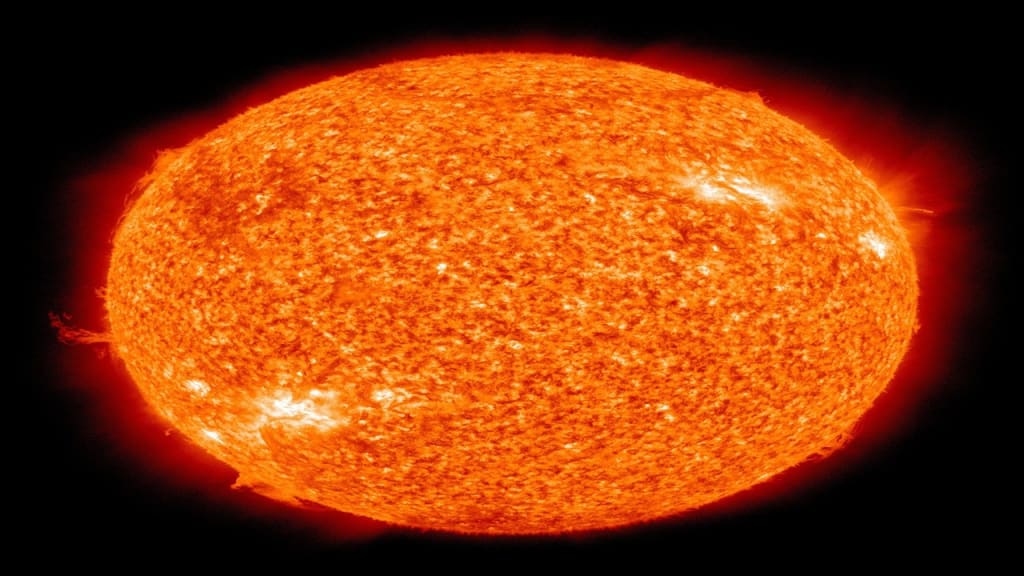
Solar storms, which are large eruptions of charged particles from the Sun, can have catastrophic consequences for Earth's power networks, satellites, and communication systems. Scientists have long struggled to make more accurate predictions about severe storms. However, a breakthrough in telescope technology could soon change this. A new technique linked into modern solar telescopes is revealing unprecedented insights into the Sun's magnetic activity, with the potential to revolutionize how we forecast solar storms.
Threat of Solar Storms:
Before delving into the new technology, it's critical to understand why solar storms are such a problem. The Sun periodically emits bursts of energy in the form of solar flares and coronal mass ejections (CMEs). When these eruptions are aimed at Earth, they can interact with the magnetic field, resulting in geomagnetic storms.
The effects could be severe:
• High-energy particles can destroy satellite electronics and interrupt GPS, telecommunications, and weather monitoring systems.
• Strong geomagnetic storms can cause electrical grid problems, including blackouts.
• Astronaut safety: High radiation levels pose a risk to astronauts in orbit.
• Communication interference can impair radio transmissions, especially those used in aviation.
Historically, huge solar storms such as the Carrington Event in 1859 and the Quebec blackout in 1989 highlighted how sensitive modern infrastructure is to space weather. With civilization becoming more reliant on technology, the demand for improved solar storm prediction has never been stronger.
The Challenge of Predicting Solar Storms:
Scientists are currently monitoring the Sun for signals of oncoming solar activity, using instruments such as NASA's Solar Dynamics Observatory (SDO) and the European Space Agency's Solar Orbiter. These technologies monitor sunspot activity, magnetic field alterations, and solar flares. However, predicting when and how a solar storm may hit Earth remains tricky.
One of the most difficult challenges is comprehending the Sun's complicated magnetic fields, which generate solar outbursts. Traditional methods rely on extrapolating magnetic field measurements from the Sun's surface, but this approach frequently misses important changes occurring deeper in the solar atmosphere.
A breakthrough in solar observation:
A new capability, just added to ground-based and space telescopes, is changing the game. This breakthrough uses enhanced Spectro polarimetry, a technique that uses light polarization to map magnetic fields in the Sun's corona with remarkable precision.
How It Works:
1. Spectropolarimetry: Scientists use sunlight polarization to determine magnetic field strength and direction in the Sun's outer atmosphere.
2. High-Resolution Imaging: New adaptive optics systems reduce atmospheric distortion, resulting in crisper images of the Sun's surface.
3. Machine Learning Algorithms: AI analyzes large volumes of data to uncover patterns that predict solar eruptions.
This combination enables researchers to detect tiny magnetic instabilities that may lead to solar flares or CMEs before they completely develop.
The Impact of Solar Storm Forecasting :
This new technology allows scientists to detect precursor signals of solar eruptions earlier than before.
- • Improve prediction accuracy, minimizing false alarms and missed warnings.
- • Provide longer lead times, allowing power providers and satellite operators to prepare.
For example, if a telescope detects a rapidly twisting magnetic field in the corona, it may indicate an oncoming CME. Using traditional means, such an occurrence may only be confirmed after the eruption begins. However, with this new technology, warnings might be provided hours or even days in advance.
Future Applications and Missions :
Several prospective solar missions intend to include this technology:
• The Daniel K. Inouye Solar Telescope (DKIST) in Hawaii utilizes enhanced spectropolarimetry to examine the Sun's magnetic fields.
• ESA's Proba-3 mission will examine the Sun's corona in greater detail with formation-flying telescopes. NASA's planned missions, including the Geospace Dynamics Constellation, will improve space weather monitoring.
As these methods become more widely used, we may enter a new era of space weather forecasting—one in which solar storms are anticipated with the same accuracy as terrestrial weather occurrences.
Conclusion :
The creation of this new telescopic technology represents a substantial advancement in solar storm prediction. Scientists can better predict harmful space weather occurrences by learning more about the Sun's magnetic activity, so helping to protect our technology-dependent civilization. While obstacles remain, the future of solar forecasting appears brighter than ever, thanks to cutting-edge advancements in telescope technology.
As science advances, the hope is that solar storm warnings will become as routine and reliable as hurricane forecasts, guaranteeing that humankind is never caught off guard by the Sun's fury.
About the Creator
Sazid Rahman
Author and storyteller who focuses on human experience, feelings, and life. One narrative at a time, I firmly believe that words have the ability to uplift, unite, and ignite change.
Keep reading
More stories from Sazid Rahman and writers in Earth and other communities.
Black Holes: The Mysterious Giants of the Universe
Introduction : Black holes are some of the most fascinating and mysterious things in the cosmos. These cosmic occurrences, in which gravity is so strong that even light cannot escape, test our knowledge of physics and space-time. Scientists have studied them for decades, but they continue to astound us with their unusual qualities and enormous power. This page delves into what black holes are, how they arise, the various varieties, and their significance in the universe.
By Sazid Rahman 9 months ago in Earth
The New Gold Rush is Happening at Wastewater Treatment Plants
I never thought much about where wastewater goes after it leaves my house until I read a study from Arizona State University. Researchers tested sewage sludge from cities across America and found something remarkable.
By Marcus Briggsa day ago in Earth
UAE Enters Al Shabt: Brace for Winter’s Coldest Days
The United Arab Emirates is set to experience one of the harshest winter spells in recent memory as the country enters Al Shabt, a period traditionally associated with extreme cold. Residents across the emirates are being urged to prepare for temperatures that are expected to drop well below seasonal averages, with potential disruptions to daily life, travel, and energy consumption. Meteorologists have warned that Al Shabt, historically marked by icy winds and sudden temperature dips, will this year be particularly severe due to a combination of regional weather patterns and shifting global climatic trends. Forecasters predict nighttime temperatures in some areas could drop to as low as 8–10°C, a significant decline for a country more accustomed to mild winters. Coastal regions may experience slightly warmer conditions, but the cold will be intensified by strong northern winds sweeping across the Arabian Peninsula. Understanding Al Shabt Al Shabt, which translates to “the coldest part of winter,” is a term deeply embedded in Gulf traditions. Historically, Bedouins and farmers used the period to plan agricultural activities, livestock care, and resource management. Today, while modern infrastructure and urban planning mitigate some effects of the cold, the cultural significance remains, and residents are reminded of its intensity through historical observations and local weather lore. “Al Shabt is more than a cultural marker—it’s a meteorological reality,” said Dr. Aisha Al Mansoori, a senior climatologist at the UAE National Center for Meteorology. “We are observing patterns that suggest this Al Shabt could be colder than usual. Residents should take precautions, especially in northern and inland regions where the temperature drop will be most pronounced.” Preparing for the Cold Authorities across the UAE are taking proactive measures to help residents and businesses prepare for the upcoming cold spell. The Ministry of Interior has issued advisories for motorists to check vehicle heating systems and tire conditions, while electricity and water authorities are ensuring that energy grids are ready for increased demand. Hospitals and emergency services have also been put on alert to handle potential cold-related health incidents. Schools and universities are expected to remain open, but parents are being advised to dress children in warm layers and limit outdoor exposure, especially during early morning and late evening hours. Workplaces are encouraged to implement flexible schedules to reduce the risks associated with commuting during frigid mornings. Travel and Transportation Challenges The UAE’s extensive road network and urban infrastructure may face some challenges during Al Shabt. While snow is highly unlikely, fog formation during the early morning hours could reduce visibility, leading to potential travel disruptions. Aviation authorities are coordinating with meteorologists to monitor conditions at major airports, ensuring that flights remain on schedule while prioritizing passenger safety. “Drivers should exercise caution and plan extra time for their journeys,” said Hamad Al Suwaidi, a senior official at the Roads and Transport Authority. “Even a minor dip in temperature can create slick roads in certain areas, and we advise everyone to remain vigilant and adhere to safety guidelines.” Impact on Daily Life Beyond transportation, the cold weather is expected to affect outdoor events, construction projects, and energy consumption. Many outdoor workers may need additional protective clothing, while households will see a surge in electricity usage for heating. Retailers and service providers are preparing for increased demand for warm clothing, heaters, and other winter essentials. Health experts emphasize the need for precautions, particularly among vulnerable populations such as the elderly, children, and individuals with preexisting conditions. “Cold weather can exacerbate respiratory illnesses and cardiovascular problems,” said Dr. Mohammed Al Hammadi, a public health specialist. “Hydration, proper clothing, and staying indoors during the coldest hours are key measures to minimize health risks.” Looking Ahead While Al Shabt is expected to last for several days, meteorologists suggest that the period of extreme cold will gradually ease as the region transitions toward milder winter conditions. Nevertheless, residents are advised to remain prepared and informed, as sudden weather shifts are common in the Gulf. “The key to navigating Al Shabt is awareness and readiness,” Dr. Al Mansoori concluded. “The cold may be intense, but with proper precautions and respect for the weather, residents can stay safe and even enjoy the unique aspects of this traditional winter period.” In the coming days, the UAE will experience an unusual contrast—desert landscapes typically associated with warmth will be gripped by biting cold, reminding residents of the country’s diverse climatic character. As the nation braces for Al Shabt, the emphasis is on preparation, safety, and resilience, ensuring that the coldest days of winter are met with caution rather than surprise.
By Fiaz Ahmed Brohi4 days ago in Earth
Autonomy Is The Real Privilege
Good morning, freedom-seekers! Today we’re gonna be looking at autonomy. A strange word, I know; one many would probably look at blankly and run away from on sight. We’re gonna figure out what it actually means, consider how it’s achieved, and decipher just how deeply most of us are tangled up in dependence without realising it.
By That ‘Freedom’ Guyabout 7 hours ago in Humans



Comments
There are no comments for this story
Be the first to respond and start the conversation.