
A Rainbow of Animals
Some of the most colorful animals in the world

Birds
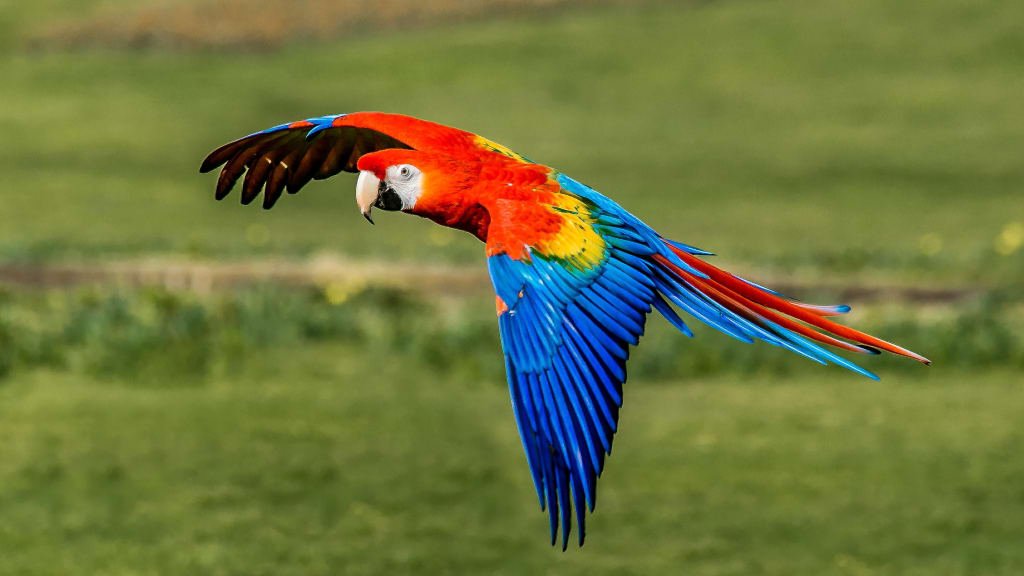
Scarlet macaws delight with their rainbow colors of red, blue, and yellow. They can be seen in the rainforests and dry forests of Central and South America. These birds are both social and smart.

Peacocks delight viewers with their shimmering iridescent colors of blue and green. When a male peacock unfurls his tail it is a sight to behold. The most recognizable species of peafowl are the blue or Indian peacock of India and Sri Lanka and the green or Javanese peacock found from Myanmar to Java.
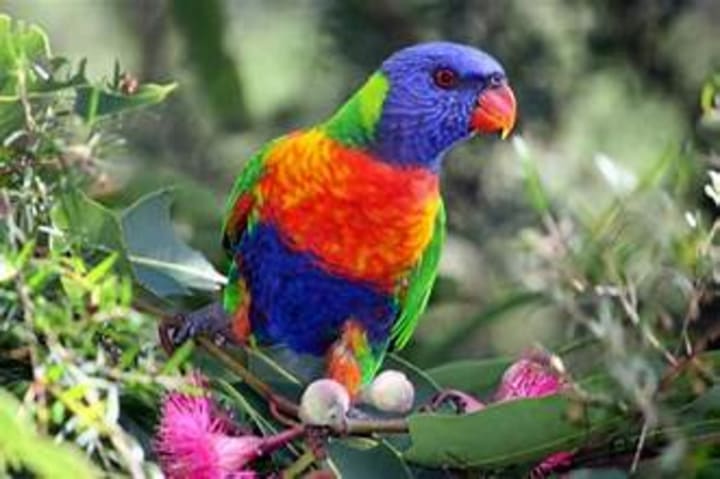
Rainbow lorekeets burst forth in a variety of colors. They habitat eucalyptus forests. They are a species of parrot found in Australia. These birds are medium-sized colorful parrots. Their heads are deep blue with a greenish-yellow nuchal collar, and the rest of the upper parts (wings, back, and tail) are green. The chest is orange/yellow in color. The belly is deep blue, and the thighs and rump are green. In flight a yellow wing-bar contrasts clearly with the red underwing coverts.

Keel-billed toucans have multicolored large bills. They are colorful Latin American members of the toucan family.They make their homes in tropical jungles and feed on a wide variety of food. Keel-billed toucans are very social birds that often play or often "duel" with each other using their bills, and throw fruit into each other's mouths.

Flamingos are beautiful in pink. Their pink coloring comes from the carotenoid-rich diet they consume. They are tall, pink wading birds with thick down turned bills. Flamingos have slender legs, long, graceful necks, large wings, and short tails. There are large colonies that can be found on the Atlantic Ocean and Gulf of Mexico coasts in tropical and subtropical America.

Northern cardinals are a sight to behold all in red and whistle happy tunes. In wintertimes they brighten snowy landscapes. They are a common North American songbird species best known for their bright-red plumage. They do not migrate during winters and are common throughout the Eastern US.

Painted buntings are among the most colorful North American songbirds. Males display stunning colors – the backs are golden-green, the heads are blue, and the underparts are red.

Resplendent Quetzals decorate the could forests of Central America. They have iridescent green and red plumage that shimmers beneath the forest canopy.

Blue morpho butterflies are a sight to behold with their blue iridescent wings. These butterflies are rare; only found in the western hemisphere, ranging from Mexico through Central and South America, including the Amazonian rain forest to Paraguay. They are found across Argentina, Bolivia, Brazil, Colombia, Ecuador, Paraguay, Peru, Suriname, and Venezuela.

Cameleons will have you guessing their true colors. They are small slow-moving Old World lizards with a prehensile tail, long extensible tongue, protruding eyes that rotate independently, and a highly developed ability to change color. They live in trees wrapping their tails around the branches. Their standard colors are brown or green to blend in with their surroundings. While they can display bright reds, oranges, blues, yellows, and more, chameleons cannot change to match any color. About half of the species occur only in Madagascar, whereas others occur mostly in sub-Saharan Africa.
Fish

Mandarin Fish are like an artist's creation with electric blue and orange stripes. They can be seen dancinb among the coral in the Indo-Pacific. These fish have distinctive pelvic fins that they use to "walk" across the ocean floor.
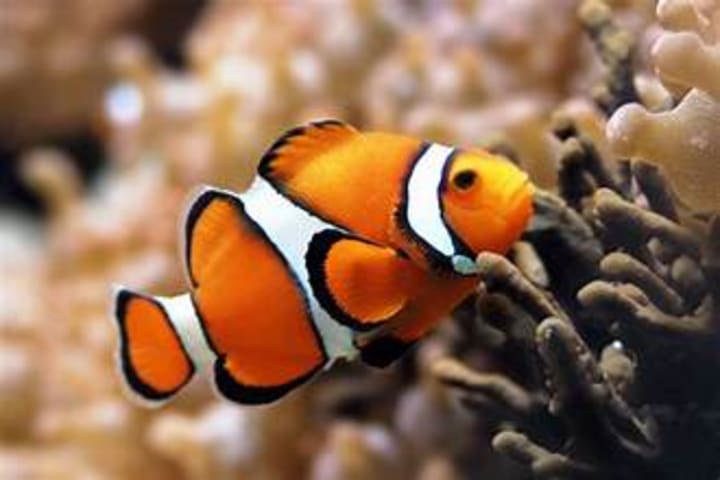
Clownfish might not look like clowns but they stand out with their bright orange coloring. The most recognizable species, the false clownfish, has bright orange coloring that is set off by broad, white bands outlined in black. This fish has a rounded tail, and its dorsal fin is lined with 11 spines. These fish swim in tropical coral reefs.

Lionfish glide through water with grace and have striking striped fins and venomous spines. They are native to the Indo-Pacific. One of the best-known species is the red lionfish striped with red, brown, and white.
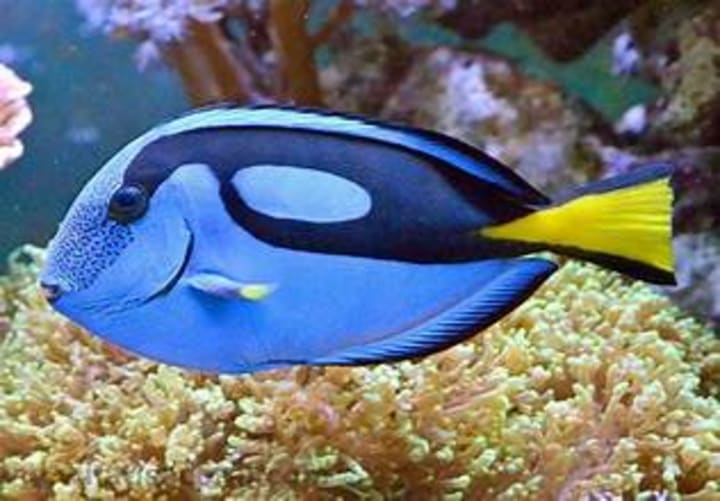
Regal tangs are known for their bright blue bodies and yellow tails. They are reef dwellers. These fish live in the Pacific Ocean, but they are also found in the Indian Ocean, from East Africa to Micronesia.
Frogs

Poison dart frogs might be dangerous but their bright colors dazzle. They can be found in Central and South America and should be admired from afar.

Red-eyed tree frogs have bright green vodies and red eyes. They are brightly colored tree-dwelling frog species found in the neo-tropical rainforests. These frogs are also characterized by bulging red eyes, vertical blue-and-yellow stripes on the flanks, and orange feet and toes.
Monkeys

Mandrills are large Old World monkeys native to west central Africa. Their faces appear to have been painted by the brush of an artist. Their noses are red surrounded by blue coloring making them look very distinguished.
Sea Slugs

One of the most important facts to remember about sea slugs is there are over 2,000 species. They are found in both shallow and deep areas of oceans. One of the most colorful types is known as the blue dragon. It has a blue body, dark blue stripes on its head, and silver on its back.

The Spanish dancer is another notable animal belonging to the phylum Mollusca. Its flat body is bright orangish-red.
About the Creator
Rasma Raisters
My passions are writing and creating poetry. I write for several sites online and have four themed blogs on Wordpress. Please follow me on Twitter.
Keep reading
More stories from Rasma Raisters and writers in Earth and other communities.
Devoted Moms in the Wild
Alligator Moms These mom take gently care of her little ones in the murky swamps. After the eggs hatch the alligatior transport her young in her mouth to the water. These are very devoted mom and have protective instincts. They remain nearby garding their babies against any threats.
By Rasma Raisters9 months ago in Earth
Our European Allies Just Exposed Trump’s Core Weakness—and Also America’s
Recent developments in Europe have cast a spotlight on both Donald Trump’s leadership weaknesses and broader American vulnerabilities in international relations. Allies across the continent have been taking steps that indirectly highlight limitations in U.S. policy, leaving Trump supporters, critics, and global observers questioning whether the United States is adequately positioned to lead on the world stage.
By Muhammad Hassan3 days ago in Earth
Dubai Food District Unveiled as DP World Expands Al Aweer Market
In a significant move that will shape the future of Dubai’s food industry, DP World has unveiled its latest project, the Dubai Food District, as part of an expansion of the Al Aweer Market. This new development is set to revolutionize the region’s food trade, offering state-of-the-art facilities designed to streamline the supply chain, foster innovation, and bolster Dubai’s position as a global hub for food trade. With the rise of global demand for fresh, high-quality food products, this ambitious expansion promises to elevate the UAE’s food sector and enhance the efficiency of food distribution across the region.
By Muhammad Hassan5 days ago in Earth
Affection and Healing for Yourself
During the night of the last quarter moon, I gathered my ritual supplies. I carefully handled the chunk of black tourmaline that would protect me from your overall negative and narcissistic energy. I carefully walked the house with my stick of selenite in hand, asking the universe to cleanse our working space.
By Alisha Wilkins ✒️🦋🖋️7 days ago in Fiction




Comments (1)
The descriptions of these colorful birds are really interesting. I've always been fascinated by the scarlet macaw's vibrant hues. It makes me wonder how they evolved to have such distinct colors. And the keel-billed toucans' bill duels sound like a lot of fun. Do you think these unique features are mainly for attracting mates or serve other purposes too?