
A Caribbean island's quest to become the world's first climate-resilient nation
world's first climate-resilient nation

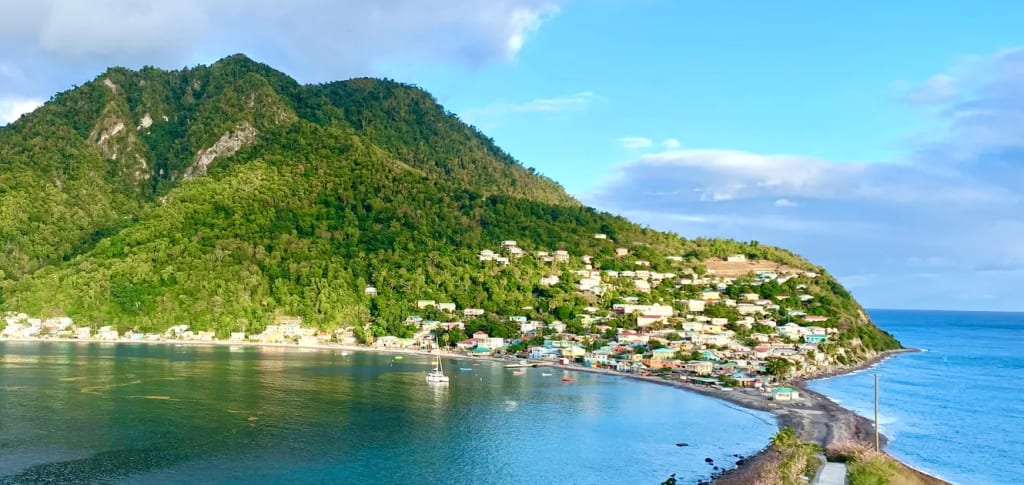
The Caribbean island of Dominica is one of the world's most at-risk places from climate change. Can it fulfil plans to become the world's first climate-resilient nation?
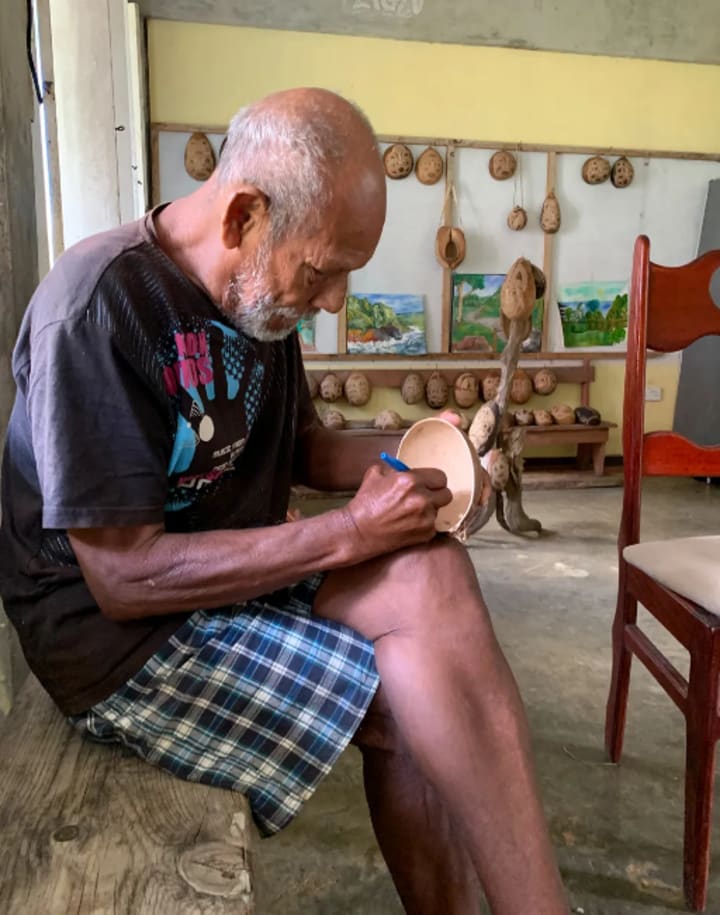
On a sunny Monday morning in September 2017, 67-year-old Faustulus Frederick was adding the finishing touches to a traditional wooden sculpture at his home in Salybia, on the Caribbean island of Dominica.
The small village of Salybia is one of eight that make up the 3,700-acre (1,500-hectare) Kalinago Territory – the home of Dominica's indigenous people. At the territory's highest elevations, lookout points provide sweeping views of the tempestuous Atlantic Ocean thousands of feet below.
Frederick is an artist and former teacher who served his people as Kalinago Chief when he was just 25 years old. His paintings depict life and tradition in the Territory. His mural on the wall of the community's Catholic church is a breathtaking landmark, along with the church's altar – a carved canoe.
But as he added paint to the face on his latest piece, an emergency update blared on a nearby radio.
"The weather announcer said we should prepare our things and get ready to move to the shelter, which is the primary school," he tells me as we sit in a classroom at that shelter – his home since 2017.
Warnings are important for everyone…They let places be habitable – Ilan Kelman
Frederick grabbed some clothes, papers and his artwork and headed over. There were only a few hours to spare.
The storm was first announced to residents of the small island as a tropical depression on 16 September, but within two days heightened ocean surface temperature and low wind shear led it to intensify to a category five superstorm, the strongest possible hurricane, which was named Hurricane Maria.
When it made landfall in Dominica it hit the Kalinago Territory first and hit it hard. It claimed lives island-wide and cost Dominica over 3.5 billion Eastern Caribbean Dollars (£1bn/$1.3bn), equivalent to 226% of its GDP in 2016, in losses and damages. "It was the toughest hurricane we ever faced," says Frederick.
Dominica is one of the most disaster-vulnerable countries on Earth, meaning the country faces a choice between building resilience or risking becoming locked in an unsustainable cycle of destruction and rebuilding from hazards that could eventually make living there unfeasible.
After two of the country's most costly natural disasters struck within two years of each other (2015 and 2017), Dominica’s prime minister declared the country had found itself "on the front line of the war on climate change" and announced plans to make Dominica "the world’s first climate-resilient nation". Building resilience into every facet of society was essential to ensure the island remains habitable, he said.
Among the key measures to mainstream resilience is Dominica’s early warning system – a means to warn residents in advance about dangerous weather events, allowing them time to make what can be life-saving preparations, such as moving to higher ground. Dominica’s unique system includes a grassroots approach of support and communication using traditional conch shells.
"Warnings are important for everyone. They save lives. They support livelihoods. They let places be habitable," says Ilan Kelman, deputy director of the University College London (UCL) Warning Research Centre, the world's first research centre dedicated to the science of warnings.
Protecting the everyday lives of Dominicans means implementing early warnings across communities and integrating them with other protections. In the long term, though, the big question that lingers is whether this will be enough.
The value of warnings
Small island developing states like Dominica are disproportionately impacted by climate change, meaning they stand to lose even more than other countries if the global community and big greenhouse gas emitters fail to meet commitments to cut emissions.
The adaptation limits of some islands may be exceeded well before 2100, says Shobha Maharaj, a climate impacts scientist and lead author of the small islands chapter in the latest Intergovernmental Panel on Climate Change (IPCC) report. This means some small islands face a threat to their very liveability, due to both sea-level rise and exposure to repeated extreme weather events.
The IPCC painted a worrying picture of how small islands are already feeling the impacts of climate change. In Dominica, rising sea levels that increase the risk of storm surges and the increase in the strength of hurricanes are among the principal climate change concerns, alongside floods and landslides. A 2019 study concluded that a storm of Maria's magnitude is nearly five times as likely to form now as during the 1950s.
The IPCC singles out early warning systems as a key pillar of climate adaptation across risk areas from hurricanes and flooding to extreme heat and the spread of disease across the world. It credits the systems for saving lives following the devastating European heatwave of 2003, and notes that, in the case of flood risk, they may be the only measure to reduce casualties.
At the Cop27 climate conference in Sharm el-Sheikh, Egypt last year, UN Secretary-General António Guterres unveiled a plan to ensure everyone on the planet is protected by early warning systems within the next five years.
"Vulnerable communities in climate hotspots are being blindsided by cascading climate disasters without any means of prior alert," he said, noting that countries with limited early warning coverage have disaster mortality eight times higher than countries with high coverage.
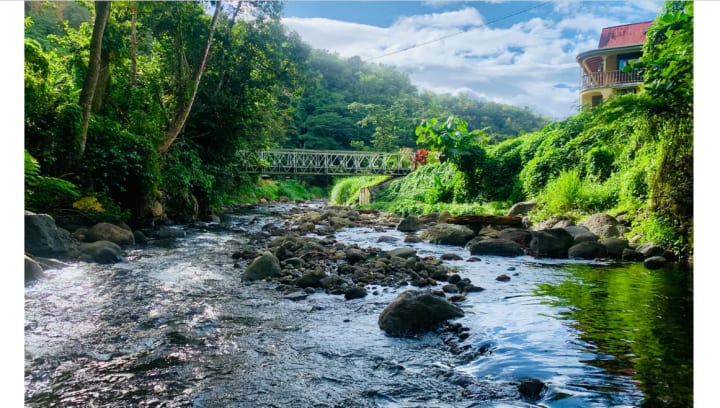
Dominica's case is especially tricky due to its mountainous topography and therefore the complexity of generating accurate extreme weather forecasts – particularly for floods, says Emily Wilkinson, a senior research fellow at the Overseas Development Institute, a London-based think tank. "Many communities get completely cut off by tropical cyclones, sometimes for weeks."
Standing outside the hurricane shelter he still calls home, Frederick tells me radio bulletins played a key part in warning people about Hurricane Maria. "We always listen to the weather forecast. It was the forecast and warning to move fast to the shelter that helped us."
Neighbours also scrambled to each other's houses to spread the word, he says. He himself helped an elderly man to the shelter during the disaster.
This element of neighbourly communication is hugely important for early warning systems, says Jennifer Trivedi, assistant professor of anthropology at the University of Delaware's Disaster Research Center.
"Often, when I ask people in the field where they heard about an incoming hurricane, or changing floodwaters, they talk about hearing it from friends or neighbours," she says. "Someone knocked on their door. A friend called their house. They heard about it at church. Those networks are essential because people know them, they trust them."
This intricate communication chain provides important layers to reach people in more ways, she adds, over and above warnings sent to smartphones. "We can't expect that will be the only warning system. Many people around the world don't have [a smartphone], don't use all its capabilities, or maybe they're in an area that doesn't get a signal as well."
Frederick Donaldson, the disaster coordinator for the territory and a member of the Kalinago community, says Dominica’s cascade system for early warnings has been used for centuries by indigenous people.
About the Creator
nizam uddin
My name is Nizam Uddin and I am thrilled to be a part of Vocal.com's community of writers. As a passionate technology enthusiast, I am excited to share my insights and opinions on the latest trends and innovations in the world of tech.
Keep reading
More stories from nizam uddin and writers in Earth and other communities.
The Italian farmers saving an ancient fruit with solar power
The revival of the citron of Calabria in southern Italy is a remarkable story of resilience and innovation in the face of climate stress and economic challenges. For many years, this iconic fruit was on the verge of extinction due to extreme weather conditions and the declining economic value associated with its cultivation. However, a unique solution involving the combination of traditional farming practices and renewable energy infrastructure has breathed new life into the citron, offering valuable lessons for other climate-stressed crops around the world.
By nizam uddin3 years ago in Earth
Stock Market Today: Nasdaq Futures Rise; Oil Skids After Trump Dials Down Iran Tension
If you’ve been following the markets this week, you’ve probably noticed how sensitive traders are to geopolitical headlines. On Thursday, Nasdaq futures rose, while oil prices dropped after U.S. President Donald Trump made remarks that dialed down fears of immediate military escalation with Iran. It’s a classic example of how news can move multiple markets at once — tech stocks climbing while commodities react in the opposite direction. Nasdaq Futures Bounce Back Technology and growth-focused stocks led the recovery in futures trading. Nasdaq futures climbed, signaling that investors are regaining confidence after recent volatility. Many traders have been cautious, with some taking profits from high-flying tech names, but today’s rebound shows that market optimism is returning. Corporate earnings are a big factor here. Several tech giants, including semiconductor and software companies, have beaten analyst expectations in recent weeks. These results support longer-term growth narratives, giving investors confidence that the tech sector can continue to outperform even amid economic uncertainty. For anyone watching the markets, this is a reminder: futures are forward-looking indicators. When traders see signs of stabilization — like reduced geopolitical tension or strong earnings — markets often react positively before the official trading session even begins. Oil Prices Fall Amid Eased Tensions On the flip side, oil prices skidded. The energy market had been pricing in potential supply disruptions due to the tension with Iran, particularly in critical regions like the Strait of Hormuz. But after Trump’s comments, traders interpreted a lower risk of military conflict, and crude futures dropped sharply. West Texas Intermediate (WTI) and Brent crude both saw declines of around 4–5%, as investors adjusted their positions. This shows how geopolitical risk premiums can inflate commodity prices — and how quickly they can disappear once the perceived threat diminishes. Lower oil prices are a double-edged sword. On one hand, cheaper fuel eases costs for consumers and businesses. On the other, energy companies and oil-exporting nations may face pressure on revenue and profits if prices remain soft. Why Geopolitics Moves Markets The Middle East continues to be a major driver of global market sentiment. Even the possibility of conflict in oil-rich regions can make investors nervous, sending equities lower and commodities higher. Conversely, statements that calm these fears can produce quick rebounds in risk assets like stocks and a decline in commodities like oil. This week’s developments show just how reactive the markets have become. A single remark from a world leader — in this case, Trump — can shift risk perception and trigger immediate moves across multiple asset classes. Earnings and Economic Data Still Key While geopolitical headlines dominate daily moves, corporate earnings and economic data remain critical for long-term market trends. Financial giants like Morgan Stanley recently reported results that beat expectations, boosting their stock prices and reinforcing positive sentiment in the sector. Investors are paying close attention to these fundamentals. Earnings reports and macroeconomic indicators provide insight into underlying trends, helping traders separate short-term volatility from sustainable growth. What Investors Should Watch For stock investors: The rebound in Nasdaq futures suggests that growth and technology stocks are finding support, but volatility is still high. Active risk management and portfolio diversification remain essential. For energy markets: Today’s slump in oil prices highlights how commodities react to geopolitical sentiment. Traders should watch for developments in the Middle East, as any escalation could reverse the decline in prices almost immediately. For global markets overall: Investors must balance multiple narratives — geopolitical events, corporate earnings, economic data, and interest rate expectations. This interplay shapes risk appetite and influences how capital flows across sectors and regions. The Takeaway Today’s market action illustrates a broader theme: markets are highly sensitive to shifts in risk perception. When geopolitical tension eases, equities tend to rise, and risk-sensitive commodities like oil fall. But when threats reappear, sentiment can flip, reminding investors that global markets are dynamic and interconnected. This combination of Nasdaq gains and falling oil prices isn’t just about numbers — it’s about investor psychology, risk management, and the speed at which news travels in our global economy. The lesson is clear: staying informed and flexible is more important than ever for anyone participating in today’s markets.
By Muhammad Hassan4 days ago in Earth
Cement's Quiet Pivot
Why this is under-the-radar progress Cement and concrete account for a sizable slice of global CO₂, but the fastest cuts right now aren’t headline-grabbing moonshots — they’re practical shifts already filtering through specifications, standards, and procurement. Three forces are converging: (1) modern cement standards that enable big clinker reductions with reliable performance; (2) rapid market adoption of Portland-limestone cement (PLC) and new ternary blends such as limestone–calcined clay cements (LC3); and (3) public buyers setting embodied-carbon requirements that move the market. Together, these are driving real-world emission declines from the most-used construction material on earth — often without changing how structures are designed or built [8].
By Futoshi Tachino7 days ago in Earth


Comments
There are no comments for this story
Be the first to respond and start the conversation.