

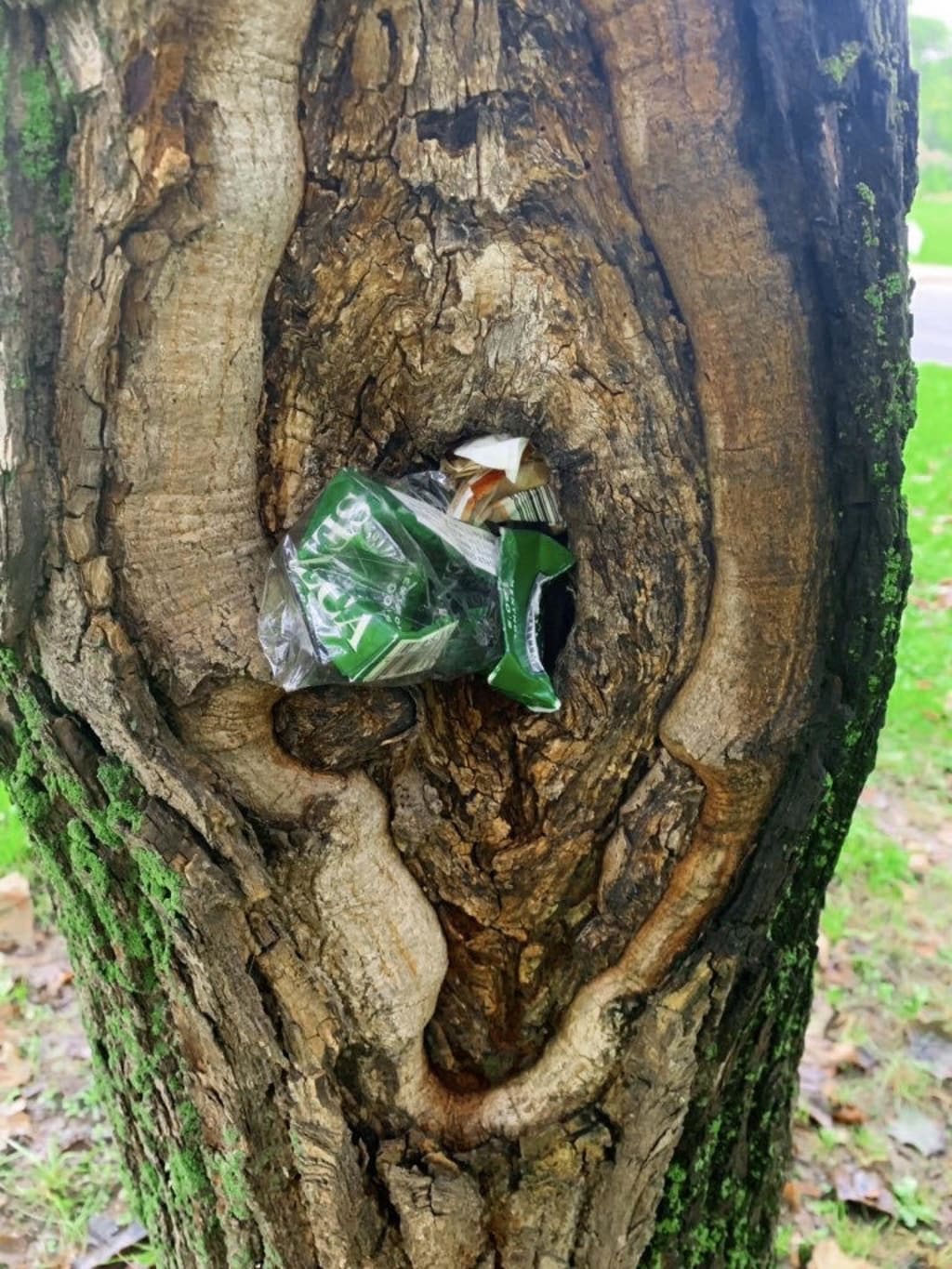
Every waking day is a new day. A chance to start over, cut our hair off, learn something new, and even save the world!
Keeping our home planet, Earth, as beautiful as all of the life that it harbors, has become a call to action! In my recorded seven day (non-consecutive) venture, I came across various objects, in need of a new home. Each with their own story to tell…
Day 1:

On my first day of observation, I encountered an empty Red Bull box. It appeared that someone must have indeed found their wings after all. Research statistics display a rather positive rate of progression globally for paper recycling. According to data found by Wakefield (2022), paper is one of the most heavily recycled items on the planet. Wakefield (2022) also reported that in 2021, 91.4% of corrugated cardboard was recycled. At a nearly 68% rate, 50 million tonnes of paper were recovered from recycling in 2021 (Wakefield, 2022). Additionally, half of the paper recycled, was in fact used to make cardboard boxes (Wakefield, 2022). As specified by the University of South Indiana, it may be possible to save at least 17 trees, by simply recycling one tonne of paper (Acimovak, 2022). Safe to say, this is one powerful piece of material laying right on the ground, isn’t it?
Day 2: It’s the worst, when you thought that you had six cans of Sprite, but somehow you ended up with a...
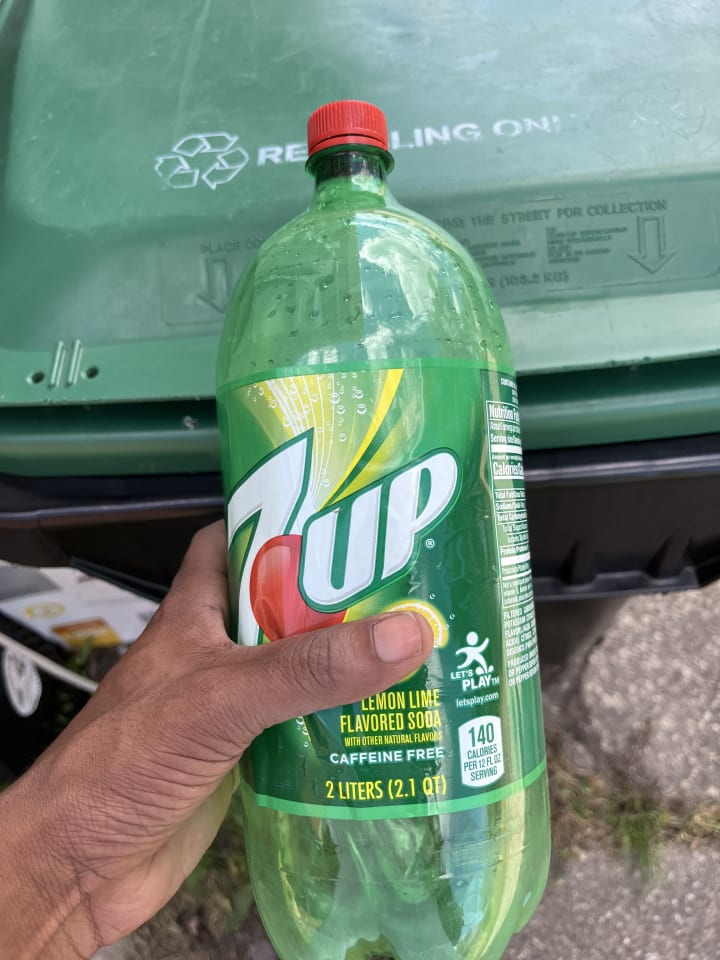
As the demand for plastic bottles continues to rise every year, the risks that plastic products pose to our environment also increase. Per the findings of Vuleta (2022), plastic waste continues to grow at an annual rate, of 9% a year. With well over 300 million tonnes of waste produced every twelve months. The plastic that is often left behind, is consumed by other animals, leading to harmful effects (Vuletta, 2022). Plastic also can take well over hundreds of years to properly degrade. According to Vuleta (2022), an astounding 73% of litter found on beaches worldwide are plastic. Additionally, it was reported that over a million marine life animals die every year, from ingesting harmful materials that have been left behind by (Vuletta, 2022). The World Economic Forum (2016) also published a study over six years ago, where it was found that our oceans are predicted to eventually have more plastic than fish, no later than the year 2050 (MacArthur et al, 2016, p. 6).
Nemo and I, nevertheless, remain optimistic.
Day 3: C a n you feel the love?
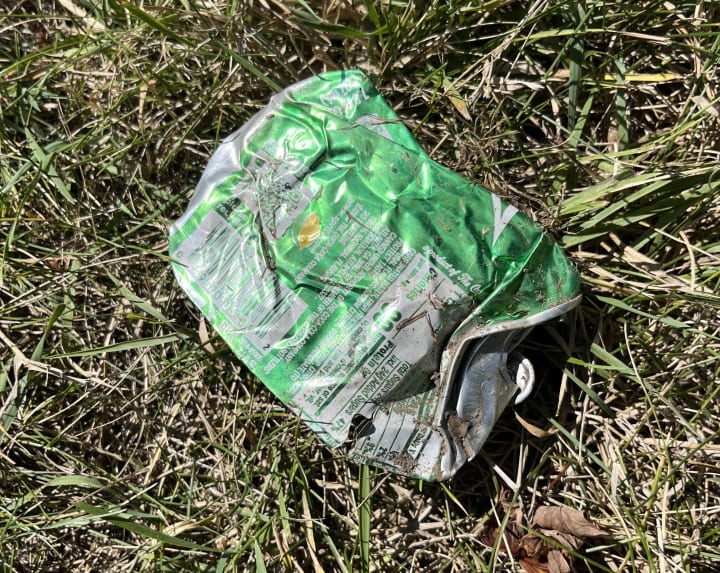
In a rather ironic twist, aluminum reportedly only makes up for a small 1% of littered products worldwide (Wakefield, 2022). In the year 2021, it was discovered that the demand for aluminum products rose from 3.8 million metric tonnes, to 4.3 million metric tonnes produced, in the United States (Wakefield, 2022). Fortunately, similar to glass products, aluminum products do not require much energy, and can be recycled constantly without the need to create an entirely new product from scratch (Acimovac, 2022). Despite the relative ease of recycling aluminum, over 7 million tonnes of aluminum are still not recycled every year (Wakefield, 2022). Although aluminum currently poses a smaller threat than some of its other material counterparts, it is important to note that the demand for aluminum continues to grow annually, and is expected to grow over 80%, by the year 2050 (Wakefield, 2022).
Day 4: The perfect way to capture my attention, perhaps, isn't to have a sign that reads “ATTENTION”, but to leave a piece of gum right next to said sign!

Research shows that over 40% of food produced each year is wasted, with fruits and vegetables being the most common waste (Szecsel, 2022). Food waste alone has been indicated as a significant factor in the emission of greenhouse gasses, being responsible for approximately 10% of emissions released (Wakefield, 2022). Conversely, methods such as home composting, may help eliminate nearly 300 pounds of food from landfills (Szecsel, 2022). In addition, the United States Department of Agriculture, argues that, if we change how we use our food waste, by re-purpose, we could possibly transform our food waste into animal feed and bio-energy (Szecsel, 2022).
Sometimes we should ask ourselves. What would Eliza Thornberry do?
Day 5: Sweet Sally sells Seagrams by the Seashore. Seldom, Sally slips.

The only glass I typically hear about are the Glass Animals band, who have performed at various beach festivals all over America. Interestingly enough, the beach is also where you can find one of the key ingredients needed to make glass. Sand, along with limestone, are combined to make an efficient and rather inexpensive product (Wakefield, 2022). Wakenfield (2022) furthermore emphasized, that well over 110 million glass products are thrown away daily, in the United States alone. Of those millions, only a third of these objects are actually recycled on average. Contrarily, along with aluminum, glass is one of the easiest products to recreate, due to the abundance of their original sources (Wakenfield, 2022).
As P!nk once said, just raise your glass! (Then, please carefully place it in a recycling bin once you’re finished, thank you!)
Day 6:

Tobacco not only damages the human body, but also brings harm to our Earth and atmosphere (World Health Organization, Tobacco: Poisoning our Planet, p. 4). According to the World Human Organization (2022), the tobacco industry destroys over 600 million trees, 84 million tonnes of C02, 22 billion tonnes of water, and over 8 millions human lives, per year! (World Health Organization, Tobacco: Poisoning our Planet, p. 6).
Cigarettes are known to possess filters that contain microplastics that are toxic and destructive towards the human body (World Health Organization, Tobacco: Poisoning our Planet, p. 4). The World Human Organization (2022), states that cigarette filters are the second most common pollutant in the world, with costs physical, mental, and financial. Doctor Ruediger Krech of the WHO corporation, argues that over 4.5 trillion cigarette filters currently fill our parks, sidewalks, waters and soil. With no proven health benefits, the continued littering of cigarettes often ends up becoming a problem, even for non-smokers (World Health Organization, Tobacco: Poisoning our Planet, p. 6). In the United States, as opposed to the tobacco industries being held accountable, for cleaning up the environments in which they helped to ruin, in most states, the task of funding clean-up projects has many times been charged to taxpayers (World Health Organization, Tobacco: Poisoning our Planet, p. 10).
China spends an estimated 2.6 billion (U.S.D) dollars to curve tobacco based litter, followed by India at a yearly estimate of $766 million (U.S.D), and $200 million (U.S.D) spent by Germany and Brazil respectively (World Health Organization, Tobacco: Poisoning our Planet, p. 6).
The World Health Organization (2022) also highlighted that some U.S cities such as San Francisco, California, along with countries including France and Germany, have begun actively challenging giant tobacco corporations, enacting “extended producer responsibility legislation”, which firmly holds these parties responsible for cleaning up their waste (World Health Organization, Tobacco: Poisoning our Planet, p. 6).
Day 7: Does anyone else remember that one episode where Spongebob came ashore?
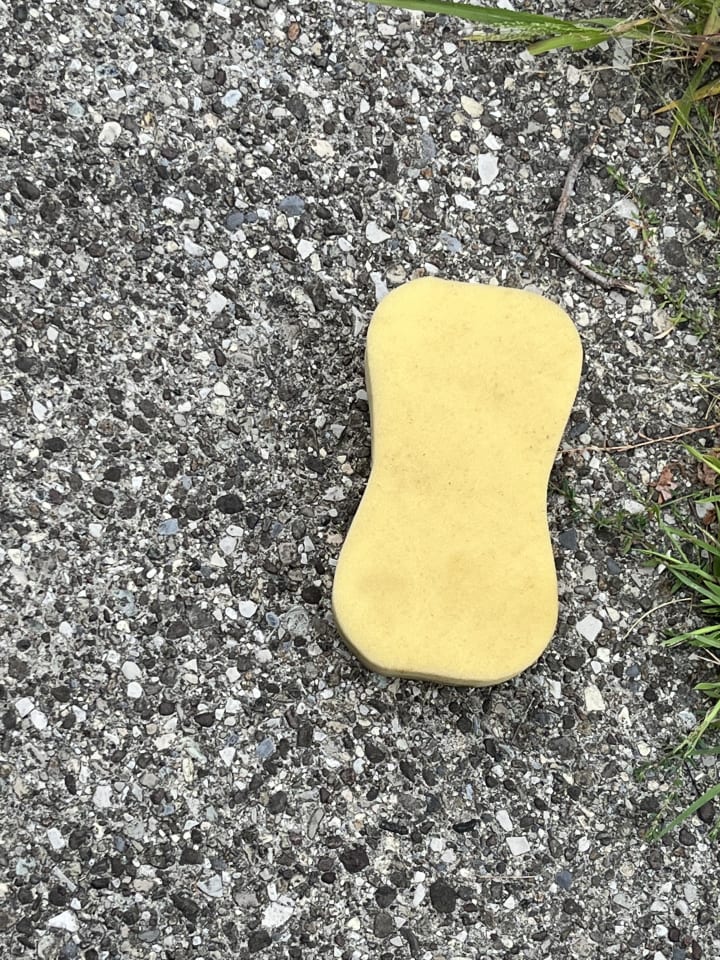
With the current rate of pollution worldwide, some scholars argue that it is time to begin re-purposing, as opposed to replacing. While a product may have gone out of style for one person, we may often become surprised, at how one person's “trash”, could become someone else's treasure. Some may call the sponge pictured above that I found, odd. Yet, personally, I think it has a delightful yellow hue!
In a recent article written by Rinkesh (2022) over forty five possible answers to curbing litter globally were discussed. One of the suggestions was to simply begin cleaning up litter, whenever you should have the free time (Rinkesh, 2022). I believe that taking initiative and knowing when to be selfless is what makes a true leader. Just as someone witnesses you being proactive, whether it’s your best friend, or a random bystander, you have the power to inspire the people around you!
Rinkesh (2022) also suggests that reaching out to local businesses may be a critical step in spreading awareness. Our voices may have reach, however it is always important to remember that there is power in numbers, and innovation. For example, UK based crowdfunding company Hubbub, created their own ballot bins, initially only sold locally, before eventually expanding to countries such as Spain, France, Japan and the United States (Digital Synopsis, 2015). Typically, the bins were placed on the outer walls of shops and restaurants. Some bins were even connected to light poles (Digital Synopsis, 2015). The ballots were utilized to create an interactive experience, where anyone could participate in a “vote”, choosing between only two options, based on the question presented. Using cigarette butts, voters were able to engage in this unique system, and the bins also helped reduce cigarette based litter by 46%, according to Southend Council (Reducing Cigarette Butt Litter, 2018).
More methods proposed by Rinkesh (2022) to reduce litter pollution worldwide, included sporting reusable bags when shopping. The author also suggested helping to provide resources to further educate adults and children on the dangers of littering and ways that we all can help improve the environment. Lastly, of the many recommendations presented by this author, “beautifying an area near you” (Rinkesh 2022), personally was my favorite piece of advice. One of which I will continue to do for the rest of my life. The feeling one can experience from helping nature return back to its original form, is otherworldly!
Day: Present
In my perspective, should you genuinely do right by nature, nature shall do right by you as well. With our planet spinning faster than ever, there could not be a better time to make a change! One step at a time, day by day, nurturing our nature. The power is ours, and today is a brand new day. A great day to save the world!
Works Cited
(Due to Vocal's lack of extended formatting options, I have attached a link here to the Works Cited with proper APA citations.)
Acimovic, I., Kovachevska, M., Rakicevic, M., & *, N. (2022, August 2). 29 recycling statistics we need to be aware of in 2022. ComfyLiving. Retrieved August 22, 2022, from https://comfyliving.net/recycling-statistics/#:~:text=The%20Top%2010%20Recycling%20Statistics%20for%202022&text=In%202018%2C%2069.1%20million%20tons,tons%20of%20waste%20every%20year.
DigitalSynopsis.com. (2015, September 25). Vote with your butt - here's a genius idea to stop people from littering cigarettes. Digital Synopsis. Retrieved August 22, 2022, fromhttps://digitalsynopsis.com/buzz/hubbub-neat-streets-cigarette-butt-vote/
MacArthur, D. E., Waughray, D., & Stuchtey, M. R. (2016). (rep.). The New Plastics Economy Rethinking the future of plastics . World Economy Forum. Retrieved August 21, 2022, from https://www3.weforum.org/docs/WEF_The_New_Plastics_Economy.pdf.
Organization, W. H. (n.d.). (publication). Tobacco: poisoning our planet (pp. 1–36). Retrieved August 21, 2022, from https://www.who.int/publications/i/item/9789240051287. Reducing cigarette butt litter. Local Government Association. (2018, May 20). Retrieved August 22, 2022, from https://www.local.gov.uk/case-studies/reducing-cigarette-butt-litter
Rinkesh. (2022, July 28). 45 prodigious ways that can help you to prevent litter. Conserve Energy Future. Retrieved August 22, 2022, from https://www.conserve-energy-future.com/prodigious-ways-you-can-do-to-prevent-litter.php
Szecsei, S. (2022, February 18). 25+ Alarming Food Waste Statistics (2022 update). Petpedia. Retrieved August 22, 2022, from https://petpedia.co/food-waste-statistics/
Vuleta, B. (2022, August 15). 51+ plastic waste statistics [2022]. SeedScientific. Retrieved August 22, 2022, from https://seedscientific.com/plastic-waste-statistics/
Wakefield, F. (2022, August 18). Top 25 recycling facts and statistics for 2022. EcoWatch. Retrieved August 22, 2022, from https://www.ecowatch.com/recycling-stats.html
Note:
If you or a loved one are struggling with an addiction, and are in need of help, feel free to contact the Substance Abuse and Mental Health Services Association (also known as SAMHSA). The National Helpline (1-800-662-4357) is zero costs, confidential and available around the clock.
A link to their website:
https://www.samhsa.gov/find-help/national-helpline
And last of all....

About the Creator
Oscar Wilson
🎸☔️🛸
Reader insights
Nice work
Very well written. Keep up the good work!
Top insights
Easy to read and follow
Well-structured & engaging content
Expert insights and opinions
Arguments were carefully researched and presented
Eye opening
Niche topic & fresh perspectives
Heartfelt and relatable
The story invoked strong personal emotions
Keep reading
More stories from Oscar Wilson and writers in Earth and other communities.
Mount Sinai, the World’s Oldest Monastery, and the Prophet’s Letter: Faith, History, and a Controversial Development Plan
At a sacred site revered by Muslims, Christians, and Jews alike, an ambitious modernization project has stirred debate after reports of graves being relocated—raising questions about heritage, memory, and the cost of progress.
By Irshad Abbasi 4 days ago in Earth


Comments (1)
This was very informative! I wish more people were concerned about the state of our planet.