
100,000 Ordered to Evacuate as Rivers Rise in Washington State
A massive atmospheric river unleashes historic flooding across Western Washington, forcing mass evacuations and triggering a statewide emergency

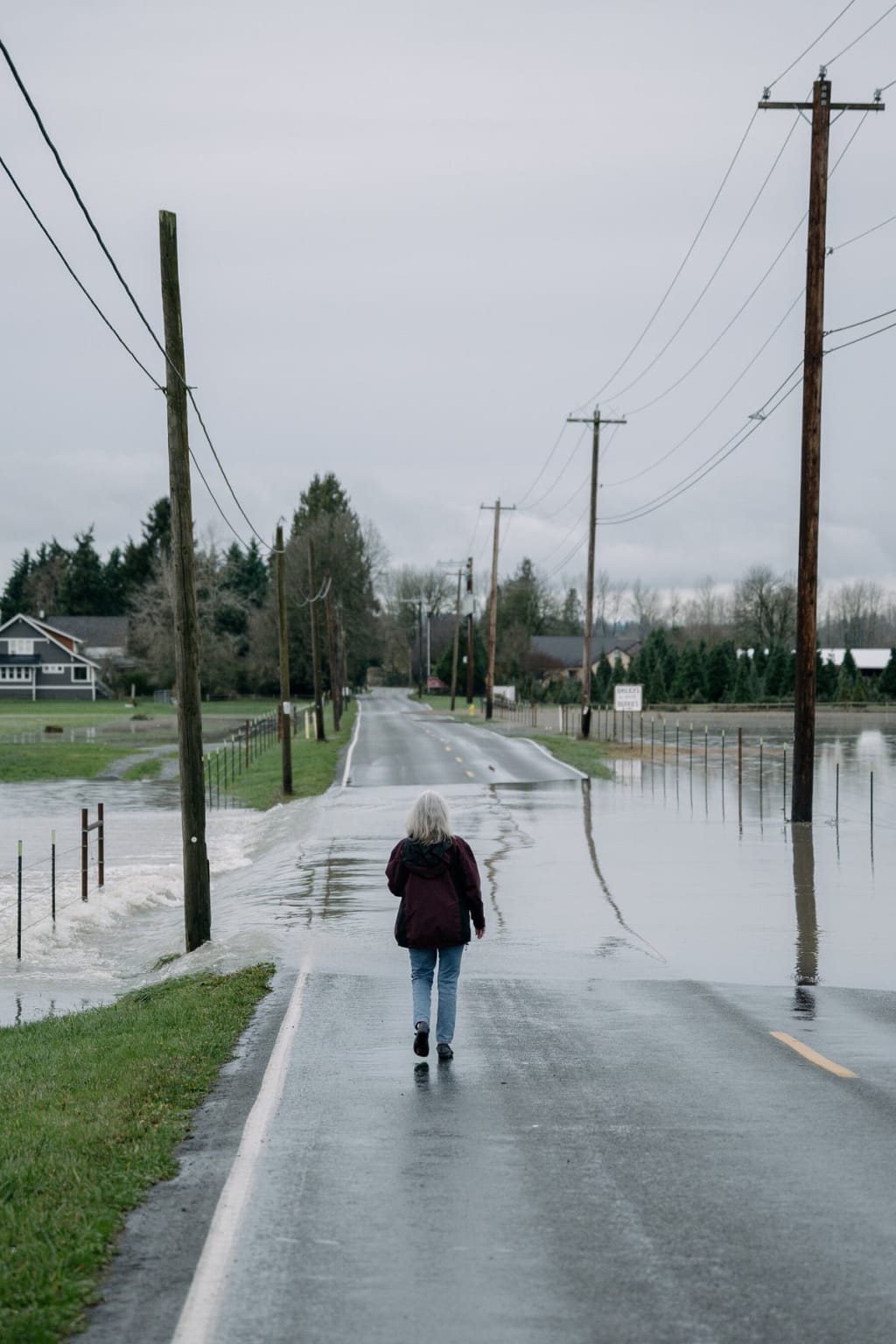
Western Washington is facing one of its most severe natural disasters in recent memory as officials have ordered up to 100,000 residents to evacuate due to rapidly rising rivers and dangerous flooding. Days of relentless rainfall, fueled by a powerful atmospheric river, have pushed waterways such as the Skagit, Snohomish, and Puyallup Rivers to record or near-record levels. Entire communities now find themselves racing to higher ground as local authorities warn that the situation remains “life-threatening and unpredictable.”
A Statewide Emergency Unfolds
Washington Governor Bob Ferguson declared a statewide emergency after storm systems dumped extraordinary amounts of rain across the region. The record rainfall quickly overwhelmed rivers, creeks, and storm drains, causing widespread flooding across valleys and low-lying communities.
Meteorologists say the storm system responsible is among the strongest atmospheric rivers to hit the Pacific Northwest in years. With saturated soil and relentless downpours, rivers rose far faster than residents or emergency crews anticipated.
The governor urged residents to obey evacuation alerts immediately, emphasizing that delays could place families directly in harm’s way. Emergency sirens, local police alerts, and text warnings were sent out as water levels continued to climb.
“GO NOW” Evacuation Orders
In Skagit County — one of the hardest-hit areas — local officials issued Level 3 ‘GO NOW’ orders, the highest evacuation alert. Communities across Burlington, Hamilton, La Conner, Lyman, and parts of Mount Vernon and Sedro-Woolley were told to evacuate without delay.
Authorities estimate that 100,000 people across Western Washington could ultimately be affected by mandatory or voluntary evacuation notices as rivers overflow into neighborhoods, farms, and business districts.
Emergency shelters quickly opened in nearby schools, churches, and community centers. Volunteers helped distribute blankets, food, and necessities to families fleeing with only a few essentials.
Flooding Engulfs Roads, Homes, and Farmland
As riverbanks collapsed under the pressure, entire roadways disappeared beneath muddy, debris-filled water. Major transportation routes were closed, including portions of U.S. Route 2, local highways, and rural access roads.
Residents reported watching large logs, tree branches, and debris rushing downstream at alarming speeds. Some areas saw water levels rise so quickly that cars, sheds, and farm equipment were submerged within hours.
Schools in several counties — including King, Snohomish, and Skagit — were forced to close, while transit systems suspended service in multiple affected locations. Businesses near riverbanks either shut down voluntarily or found themselves knee-deep in rising waters.
Emergency Crews and National Guard Mobilize
Local fire departments and rescue teams have been working around the clock, responding to distress calls from residents stranded in flooded homes or trapped in vehicles. Swift-water rescue units have been deployed to navigate currents made stronger by the massive inflow of stormwater.
The Washington National Guard has also been activated to support evacuation efforts, assist with sandbagging operations, and reinforce levees. Troops were seen setting up emergency barriers, helping with rescues, and preparing additional evacuation centers.
Despite these efforts, access to some rural communities remains difficult, raising concerns about people who may still be trapped without communication.
Understanding the Atmospheric River
Experts say the flooding stems from a “Pineapple Express” atmospheric river — a long, narrow corridor of warm, moisture-laden air stretching from the tropics to the Pacific Northwest. This system brought feet of rain to some areas in just days, overwhelming the region’s natural drainage capacity.
While the intensity of this storm was unusually high, atmospheric rivers have grown more frequent and severe in recent years, raising questions about long-term climate resilience in Washington state.
Residents Face Uncertain Days Ahead
Even as rainfall begins to slow, forecasters warn that river levels may continue rising for several more days. With the ground fully saturated, even light rain could worsen flooding or trigger landslides.
Communities now face significant uncertainty:
Hundreds of homes may be uninhabitable after severe water damage.
Livestock and crops in agricultural regions could be devastated.
Road and bridge repairs could take weeks or months.
Families may be displaced long after waters recede.
Local officials are coordinating with federal agencies to begin assessing damage and preparing for long-term disaster recovery efforts.
For now, residents remain focused on safety, watching river gauges, and hoping the worst is over. Yet with floodwaters still rising in parts of the state, the crisis is far from finished.
About the Creator
Asad Ali
I'm Asad Ali, a passionate blogger with 3 years of experience creating engaging and informative content across various niches. I specialize in crafting SEO-friendly articles that drive traffic and deliver value to readers.
Why Didn't Anyone Tell Us
Men, move along. This is not for you. This is for the women. I was forty-five when I began menopause. It is pretty young for that to be going on in a woman’s life, but I had undiagnosed PCOS, my entire life. Thank you to all the gynecologists I had seen my entire life. That in itself should encourage women to keep seeking second opinions, especially when you are not getting correct answers or any at all.
By Alexandra Grant4 days ago in Humans


Comments
There are no comments for this story
Be the first to respond and start the conversation.