
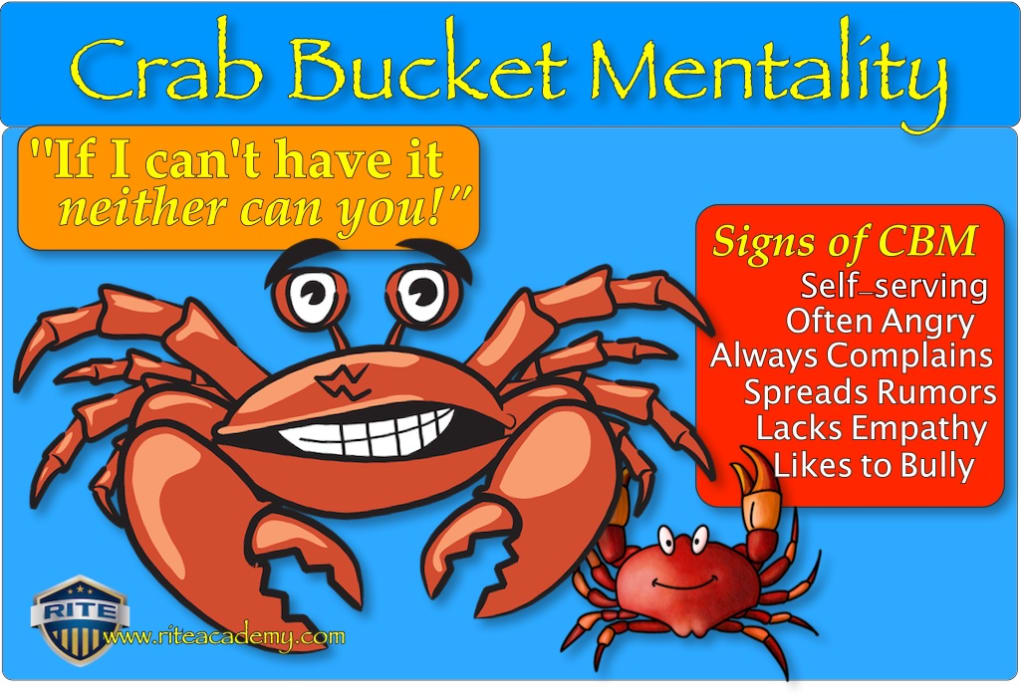
Jealousy is a powerful emotion that can manifest in many ways, but perhaps none is more destructive than the “crab mentality”. A mindset that pulls others down rather than celebrating their success.
In my home country, “crab mentality” is often heard phrase because it’s really existed among us. I’m not sure it has become part the culture or if life is simply too difficult there and it became some people’s favorite practice. When someone became successful, others started looking for flaws trying to ruin reputation.
Rooted in the analogy of crabs trapped in the bucket, each one dragging the other down to prevent escape. But is it just cultural? Or could be there be deeper, psychological and environmental factors driving this toxic competitiveness?
Here are some of the examples of “crab mentality” attacking specific groups in my birth country:
A. They resent those who “burned eyebrows” studying hard to succeed, or those who worked tirelessly abroad to create a better life.
B. Businesses that took years before attaining the pinnacle of success often times the target of this pathetic “crab mentality”.
C. Those who worked tirelessly abroad to create a better life.
It’s sad, that jealousy is expressed in such a toxic way, and it often times breaks friendships, or any relationships, even among siblings. I often wonder why people get jealous. Isn’t it amazing and admirable when people push through obstacle and succeed? Instead of being envious why not concentrate to uplift life, rather spreading negativity and hatred.
And please don’t say that true friends are only those who help you in times of need. Because there are some people who want to be friends, and help they considered beneath them, but when those individuals succeed, they will suddenly change, will try to hinder and sabotage their progress, by spreading destructive rumors, bullying, worst and organize friends with ”pact mentality”.
A cowardice act to pull down a successful person they hate. They will cooperate, coordinate to jeopardized to maintain their superiority complex. A behavior rooted in a phenomenon known as “illusory superiority” or the “better-than-average” effect.
For example, one study found that 65% of participants believed they were more intelligent than the average person, overestimating their illusionary abilities. This effect is seen in various aspects of life, even in diverse cultures like those in the US.
It’s important to note that being born in a third-world country does not make someone less intelligent than those born in America. Similarly, just because someone has a college degree does not mean they are more intelligent than those who haven’t graduated.
While intelligence can be shaped by environmental factors, studies show that intelligence is largely genetic. It can be improved not only through formal education but also through upbringing, environment, and don’t forget self-education.
Therefore, the “crab mentality” is not confined to any one culture; it can happen anywhere. When people selectively compare themselves to others and realize their illusions of grandeur — that they aren’t actually better than others — jealousy often follows, especially when their genetic potential for intelligence hasn’t been fully developed or nurtured.
When negativity clouds judgment, both education and genetics can fail to contribute to a person’s growth. Comparing ourselves to others is not a sign of intelligence; it’s a poor way to feel superior. This attitude shows how environmental influences can hinder even the potential of superior genes or a good education.
Life choices also play a crucial role in success — if you want to succeed, thinking positively and focusing on personal growth is key.
Here are some suggestion to avoid people with crab mentality:
1. Set boundaries. Make sure that the people you are dealing with knows your values, goals and expectations. To have a healthy relationship and to help protect your mental well being.
2. Identify negative influences. Limit interactions to those who used to slander, criticized, sabotage, rumor monger and exhibit jealousy to others. Those who are always angry and annoyed to people around them.
3. Don’t engage in gossip: Avoid engaging on gossip or negative conversations. Instead, focus on positive, productive discussions.
4. Limit social media exposure: SocMed usually fuel envy and comparison. Stop posting your personal life. Many people are not interested in your happy life, but waiting for your demise.
5. Seek like-minded individuals. It’s ok to have few friends who shared the same values, goal, and growth mindset.
6. Be Empathic and Understanding. Remind yourself that people who exhibit crab mentality may be struggling their own fears, insecurities and personal problems.
These simple steps can help you protect and create a healthy environment that can help you grow more, maintain peace and happiness. Forgiveness is also important to our own wellness or mental health, but it doesn’t mean we should keep the closeness and association with them.
***This article was first published in Medium by this author. Thank you for reading .
About the Creator
Keep reading
More stories from Monica Lunot Kuker and writers in Critique and other communities.
Cassie and Johnny
I’m the kind of dame you notice. I’m no femme fatale, but you can’t ignore me, at least not until I warn you about what’s coming, then everybody ignores me. Hell, they usually blame me afterwards and give Johnny all the credit for saving the day, but my Johnny couldn’t save a seat at the movies without my help. Sure, he’s brawny, but brainy? Not so much. Like that time I asked him to spot me five bucks, and he said he didn’t see it anywhere on me, and believe you me, he looked but good.
By Harper Lewis12 days ago in Critique
Do we really need AI videos?
By now, you’ve likely seen what the latest AI video model, Seedance 2.0, can do. If you haven’t, just look around. The videos flooding your feed—the ones with perfect lighting, cinematic depth, and hyper-realistic motion—they’re not real. They were all generated by AI.
By John Zhang6 days ago in Critique




Comments
There are no comments for this story
Be the first to respond and start the conversation.