
Modern Classic - “The Great Gatsby”
Levar’s Film Reviews

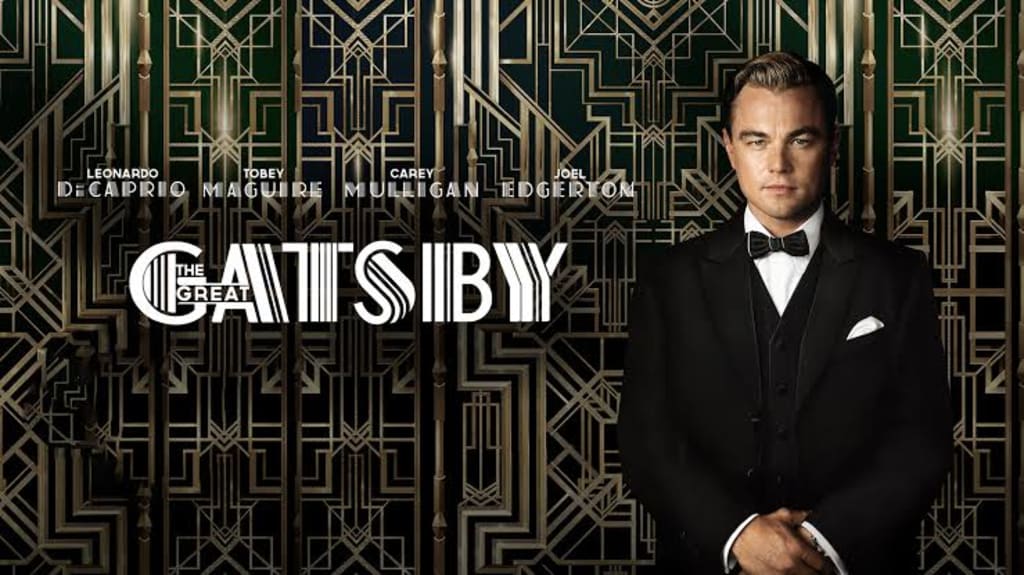
"In my younger, more vulnerable years, my father would give me some advice; always try to see the best in people he would say..." - Nick Carroway
Baz Lurhmann has a knack of transporting audiences to times (Moulin Rouge) and places (Romeo + Juliet) entirely via cinematic aura. He successfully creates a unique, all encompassing feel for his films. Imagine what it was like living in 1920's New York; pre civil rights, pre-commercial flights, pre t.v and social media. It's a time where being sociable actually meant being around people and being known meant having a tangible presence. With The Great Gatsby there's no need for guess work. Lurhmann's films deny you any need for filling in the blanks. He literally allows his audience to experience the place and space they're watching, with extra doses of theatricality (Jay-Z and 3D this time around) added for good measure. A friend described the film as having taken a world famous book and "sprinkling glitter over it", which perfectly encapsulates its mood.
What strikes you about the film, which is well translated from F.Scott Fitzgerald's timeless text, is that in terms of everyday, human motivations, it's a world not too dissimilar from our own. Class systems still exist, affairs take place, people desire money and celebrity is the pinnacle of many a life agenda. In Gatsby, like today, decadence is revered more than genorosity and it's the high society who are the people to be around, while the poor are given little to no recognition.
Thankfully the film is not only similar in theme, but it also closely follows the book in narrative: An enigmatic man known as Gatsby (Leonardo DiCaprio) throws luxurious parties from his mansion home, without anyone knowing who he is, or how he made his fortune. In the mix of these parties is a high society network of relationships, most notably between cousins Nick Carroway (Tobey Maguire) and Daisy Buchannan (Carey Mulligan), along with her wealthy husband Tom (Joel Edgerton). There are a number of side characters who quite fittingly weave in and out of the story's tapestry, just as people do in life.
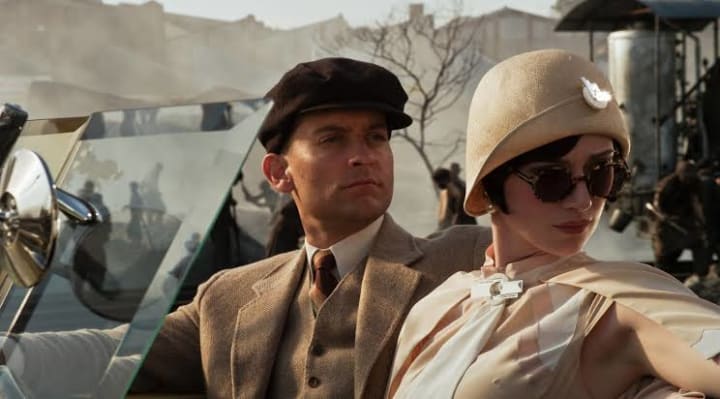
Nick comes to rent a property next to Gatsby's mansion and the two form an acquaintance. However, it's later revealed that Daisy and Gatsby share a romantic history, which in turn rears an obsessive aspect to Gatsby's character.
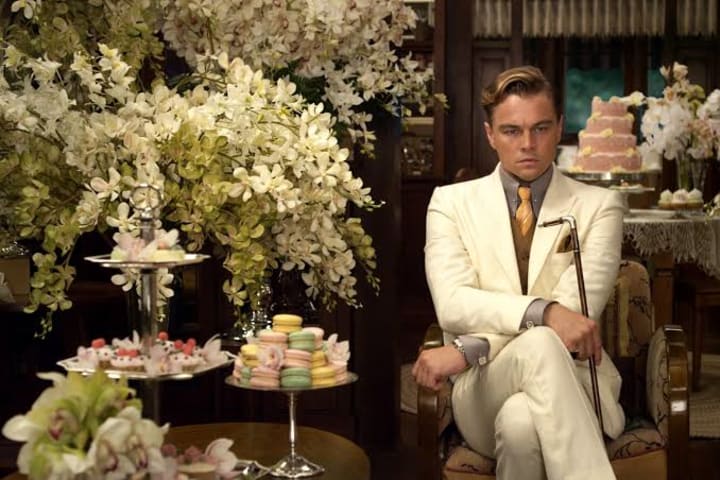
The film eventually reveals that Gatsby's sole motivation is Daisy's love, but more significant than this, is how he forgets the honest way their attraction was formed. Now he attempts to gain her love as if it were procurement. The flashing beam Gatsby sees across the bay, which lights the dock of Daisy and Tom's marital home is green, symbolic of his obsessive jealousy. He wishes to win a woman through material means, because so often the women men want are the ones who, unfortunately are materially motivated, yet incongruently, want to be loved for who they are. "For we are living in a material world and I am a material girl", famous lyrics Luhrmann himself has utilised on film before and would be fitting here.
This picture is nowhere near as textured as the book and this is unsurprising, it's rare that film adaptations are. But one thing it does well is to convey the emptiness that derives from a life built entirely out of materialism.
You come across people in life who preach the importance of humility and the ills of decadence. Yet often these are the same people who take overt pride in the labels they wear, expensive holiday destinations and the pleasure of the nice car they drive. Everyone wants to have nice things, but The Great Gatsby highlights the hollowness of having for having's sake. Gatsby's motivations are the promotion of his reputation, based almost entirely on surface, the 'being' of someone. "I didn't want you to think I was some nobody", he unapolagetically confesses to Nick Carroway early on in their friendship. Ultimately, the reason why Gatsby is such a timeless text, is that it brutally exposes the greed that exists within many of us.
Luhrmann is a brave filmmaker. His pictures may be said to be flamboyant and fantastical, but within his narratives he rarely shies away from important socio-economic undercurrents. He makes films, based on screenplays about white people, but integral to his stories are also ethnic minority characters, whose involvement is never flyby, but rather indicative of the racial attitudes of a given era. Furthermore his female charcaters are never screen fodder and we see variable attitudes and personalities of the women in this world, not boring cardboard cut outs. This is far more respectable than doing what many a filmmaker would, being dismissive and lacking inclusivity. Overall, the film won't necessarily be remembered as great, but for its timeless messages and its specialist way of delivering them, it cannot be dismissed.
See the trailer here: The Great Gatsby Trailer
About the Creator
Lev. Life. Style
I’m fascinated by culture’s ability to shape thought and behaviour. I value creativity as a means of aiding wellbeing and growth. Film, analysis, travel and meaningful discussion, are personal passions that I’m grateful to share.
Lev
Keep reading
More stories from Lev. Life. Style and writers in Critique and other communities.
Charming Classic - “Pulp Fiction”
“I’m trying Ringo. I’m trying real hard to be the shepherd.” - Jules At the 2014 Cannes Film Festival, Quentin Tarantino gave a press conference, in recognition of the 20th anniversary of Pulp Fiction, for which he won the Palm d'Or in '94. During the conference, Quentin was his usual candid and uniquely articulate self, directing a scathing attack on modern cinema. Specifically speaking about the practice of digital filmmaking, he stated; "cinema as I know it, has died." He was talking about the tragic abandonment of 35mm film cameras, which have historically been used to shoot movies, giving cinema a distinctive visual quality that differentiates it from other mediums. Quentin's view is that using digital cameras is a step back in the art of filmmaking and that having digital projection in cinemas, is like watching "television in public". Aside from his talent for directing, these types of unabashed opinions are partially what have led Quentin to be the force he is in Hollywood.
By Lev. Life. Style 9 months ago in Critique
Standing While Falling
Quotation from Friedrich Nietzsche "He who wrestles long with monsters should beware lest he himself become a monster. And if you gaze long into an abyss, the abyss also gazes into you. Man is not destroyed by suffering, but by the meaning he makes of it."
By LUCCIAN LAYTH9 days ago in Critique



Comments (1)
You painted a great picture of the film's world. It really makes you think about how little has changed in human nature over the years. I'm curious, though. Do you think the film's flashy elements distract from the book's more subtle themes?