Latest Stories
Most recently published stories in Critique.
Happy Birthday!!!!
Happy Birthday to me! I am a person that does not want to be the center of attention not even on my birthday or really anytime. Oh, I had birthday parties back then, but for some reason I just wanted it to be like any other kind of summer picnic. There were presents and cake and ice cream but as a treat. I am now 61 years old, and I had a very quiet birthday just reading and writing and that was fine by me. Birthdays are our days to what we want to do. I had a quiet day.
By Mark Graham7 months ago in Critique
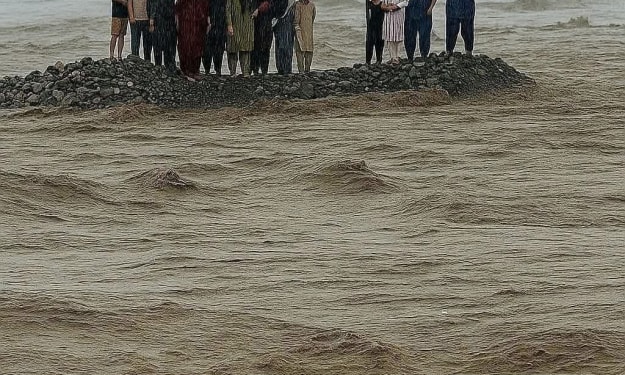
When the Swat River Raged, A Family’s Joy Turned to Horror
On the morning of June 27, 2025, in the lush valley of Swat, northern Pakistan, a family gathered by the river for a simple breakfast. They were tourists—some from Sialkot, others from Mardan—with children among them, sharing hot tea and laughter by the water’s edge.
By Fakhruddin Adil7 months ago in Critique
July 1, 1964
July 1 is Canada Day sort of Canada's Independence Day, I believe, but actually July 1, 1964, is my birthday. This is the month of the dog days of summer as well as our Independence Day. Believe it or not I chose the image of the flag and soldiers for I was born the month that Americans started to be sent to the Vietnam War and all those issues Vietnam caused. Canada Day is Canada's day of freedom and for those who need to make some serious choices in their lives. Thank you soldiers for protecting the baby I was.
By Mark Graham7 months ago in Critique
Sociological Imagination
This place is odd. I am at a café in Allentown. I like the loft area. I am Phantom of the Opera here. Hiding in the shadows of a dead and vacant café. There are no people here; just as there were none on the street. The things around me that feel most alive are, ironically, the things that are most dead. To my left is some sort of wooden crank machine. To my right, an old, ornate full-size mirror. Up here, closer to the ceiling, one is better able to appreciate the ghosts of this building. Often the ceiling is the last thing to change through all the iterations of businesses and residences. These things feel more alive than the phone by my side, the clothes that are on me, the bag that I carry, but not the books that are within that bag. Marcel Duchamp coined the term the “infrathin” to give a word to the phenomenon of the residue left by humans on objects. It is the marks left behind, such as the warmth on a seat after someone has left, or the smell of tobacco in a room. These objects around me relate, but they are a more permanent version. They have taken in the marks of history and the dead. There is a possession to them. The phone, my clothes, my bag have touched no one but me. Save for the passing brush or the hug of family and partner. But this is not imprintation. Some of my books have not known the touch of another reader, but not most. I love used books. This possession of books is intensified by the marks of prior human contact. It is a connection with a separate mind that is thinking and interpreting the same words as you. In a way, this is a comradery. It cuts through the loneliness of thought. It adds life to thinking with the dead. Roland Barthes discusses in his essay “The Death of the Author” that the author should be one that disappears into the work. Ultimately, the reader becomes the author. It is the reader that is the end interpreter of the work, and it is the reader that gives meaning to the work. Without the reader, there is no author, and there is no author if they are not themselves a reader. Even without used books, there is an aliveness that comes from books that is ultimately unalive. It is this uncanny paradox that makes books the quintessential source of intelligence. Freud discussed this element in his essay on the uncanny by stating that the uncanny arose from “doubts whether an apparently animate being is really alive; or conversely, whether a lifeless object might not be in fact animate”. In this understanding, it can be argued that books generally hold this uncanny quality. They are both alive and dead and also neither. However, it should be accepted that the uncanny stems more from the doubt than the paradox. This aliveness is the continuation of life through ideas. Discussing, and somewhat opposing, Michel Foucault and Roland Barthes, Kate Zambreno, in her To Write as if Already Dead, speaks of the desire to write with the solitude and peace of someone dead, and yet to place oneself within the work in order to be seen, respected, acknowledged. Although the reader may give the ultimate meaning to the work, the words themselves are a certain continuation of the self. The words matter, but maybe so also the importance of its generality, which Hamlet may well have implied with his epizeuxis, Words, words, words. More than the café in which I now sit, with its wooden crank machine, ornate mirror, and historical ceiling, books contain the history and space in which one can think.
By Daniel J. Guercio7 months ago in Critique
Please Don't Feed the Children Review: a dystopian scenario that could happen
Please Don't Feed the Children is the debut film by Destry Allyn Spielberg, which tells a plot set in an alternate world where a serious pandemic has wiped out the adult population. In this dystopian scenario, a group of orphaned children escape in search of a new life, only to meet a woman who keeps a sinister secret.
By Ninfa Galeano7 months ago in Critique
Why Everyone Suddenly Loves 'Quiet Luxury'—and Why It’s a Lie
In recent years, a new trend has quietly taken over the fashion and lifestyle world—something called “quiet luxury.” It’s become the buzzword on social media, the darling phrase in magazines, and a must-know term for influencers, designers, and shoppers alike. But what exactly is quiet luxury, and why has it gained such a sudden surge of popularity? More importantly, is it really what it claims to be, or is there something deeper beneath the polished surface?
By Muhammad Asim7 months ago in Critique
The Problem With Award Shows Nobody Talks About
There was a time when award shows were magical. Glitzy gowns, heartfelt speeches, standing ovations, and the belief that talent and hard work would always be recognized. But something has shifted. For years now, murmurs of discontent have grown into full-blown criticism, and while the conversations around diversity, snubs, and politics have been heard in mainstream circles, there's a deeper issue that remains largely untouched. The problem with award shows isn't just about who wins or loses—it's about the illusion they’ve carefully built, the emotional manipulation they encourage, and the way they subtly reinforce hierarchy in the creative world.
By Muhammad Asim7 months ago in Critique
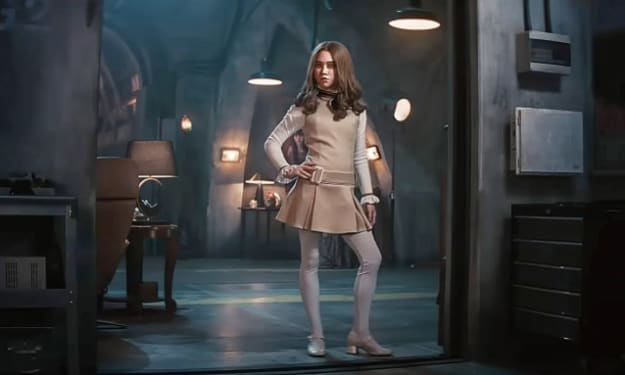
M3GAN 2.0 Review: a horror comedy in which the absurd predominates
M3GAN 2.0 is directed by Gerard Johnstone, the film continues the story of M3GAN, an AI-powered android, but now pits her against a new adversary, AMELIA, a military robot created using M3GAN's technology.
By Ninfa Galeano7 months ago in Critique
Why 'Perfect' Movies Are Boring Now
In recent years, there has been a growing conversation about how “perfect” movies—those with flawless production values, star-studded casts, and meticulously crafted scripts—often fail to captivate audiences the way films of the past did. While technically impressive, these modern cinematic offerings sometimes lack the emotional depth and raw imperfections that once made movies unforgettable. This article explores why “perfect” movies can feel boring today and how a critique of modern cinema reveals what’s missing.
By Muhammad Asim7 months ago in Critique
A Plague Of Lighthouse Keepers
Introduction This is for Annie Kapur's "Sing Us the Song of the Century" Challenge, which you can find here: I have always loved the music of Van Der Graaf Generator and knew the actual device from which they took their name from school physics lessons.
By Mike Singleton 💜 Mikeydred 7 months ago in Critique
Desolation Row. Top Story - June 2025.
Introduction This is for Annie Kapur's "Sing Us the Song of the Century" Challenge, which you can find here: I don't normally make more than one entry to a Challenge, but I will have two in this one. Even Bob Dylan has so many "story songs" that take you somewhere else, and Jimi Hendrix's cover of "All Along The Watchtower" would be my choice if I were limited to a 7" single and we have Hedrix's guitar and full on vocals (apparently, he was embarrassed about his own lyrics but he lets loose on Dylan's words) but that is not for this story.
By Mike Singleton 💜 Mikeydred 7 months ago in Critique