
When the Swat River Raged, A Family’s Joy Turned to Horror
A peaceful picnic by the river became a flash‑flood nightmare. From sudden tragedy, may we find our collective awakening

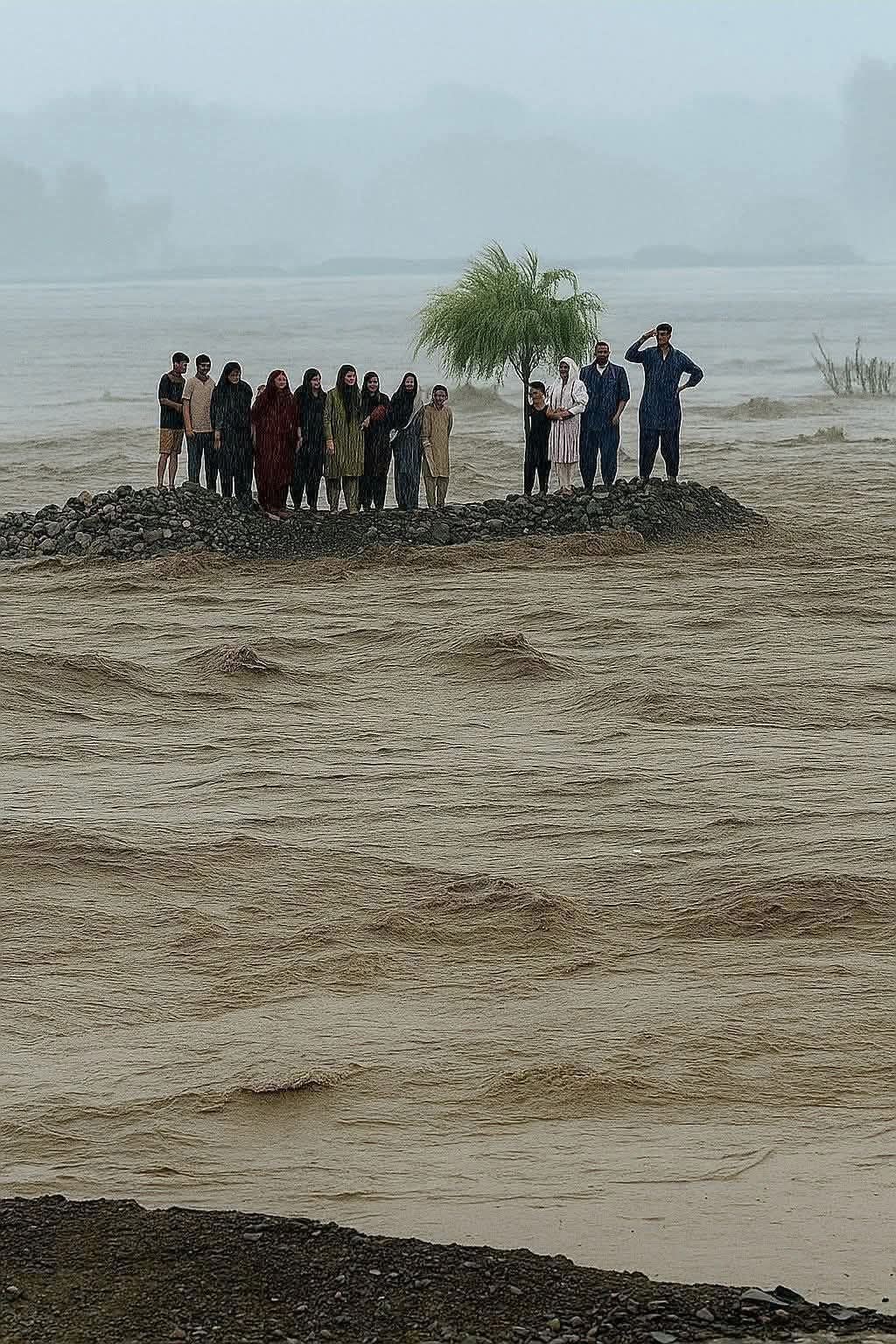
On the morning of June 27, 2025, in the lush valley of Swat, northern Pakistan, a family gathered by the river for a simple breakfast. They were tourists—some from Sialkot, others from Mardan—with children among them, sharing hot tea and laughter by the water’s edge.
It was around 8 AM. The day was warm, the river calm. Children splashed innocently, parents took photos to commemorate the outing. No one could have imagined tragedy would be just moments away.
Without warning, monsoon-fed flash floods surged downstream—a wall of roaring water. In seconds, everything changed. A wave like a breached dyke swept across the bank, engulfing children and adults alike. Just like that, 18 members from two families were swept away.
Rescuers sprinted to the scene—army, police, and Rescue 1122—with boats and rafts. They fought brutal currents to save those trapped. They pulled four alive, but recovered at least seven bodies so far, with more than a dozen still missing. Another update reported nine dead, four rescued, and four still missing, while a total rescue mission continues.
Imagine the panic. Children screaming. Parents lunging into icy torrents. Screams echoing off rocky banks as floodwaters raced, relentless. Riverside scenes shifted instantly from peace to pandemonium—phones dropped, sandals lost, lives swept away.
Amid warnings from the Provincial Disaster Management Authority (PDMA), Section 144 had been in force—bathing and hanging near the river was prohibited. But tourists, entranced by beauty, ignored the risks—and the unthinkable happened.
Why did our systems fail? Why were rescue teams delayed? Eyewitnesses say people called for help for hours before help arrived. Officials have been suspended for negligence. An inquiry committee is launching an investigation.
This catastrophe is more than a natural disaster—it’s a message. A message about responsibility, about accountability, about the human cost of planning failures and complacency. It’s a lesson in climate change, unheeded warnings, and infrastructure unprepared for extremes.
This story is not just about drowned tourists. It’s about mothers who lost children, siblings who lost parents, and entire families forever changed. It’s about a nation grieving—not just for 18 lives, but for each moment of safety that was lost.
It’s also a reflection of our wider world, where warnings are raised but often ignored and where beauty becomes the stage for tragedy. Whether Swat or someplace else, the same cycle repeats: nature warns—and we forget.
But from this devastation can come purpose.
First, accountability: officials must answer why warnings were ignored and why rescue was delayed. Systems must improve, early-warning systems strengthened, and public caution taken seriously.
Second, awareness: let this wake us up. Teach children and tourists about the real risks. Build safe viewing zones. Install warning signs near every river prone to flash floods.
Third, empathy: let us reach out—donate, volunteer, pray. Help the surviving families rebuild—emotionally, medically, financially. Let their loss move us from silent grief into active aid.
Finally, unity: Swat’s tragedy transcends political divides. Here is a moment for all Pakistanis—and global citizens—to pause, reflect, and act. From tragedy must rise collective strength.
From the drowned children’s silence we can learn: speak now. From the bereaved parents’ grief we can learn: care now. From the floodwaters' fury we can learn: prepare now.
Yes, this story is political—it challenges authority. It is moral—it questions our humanity. It is social—it tests our communal bonds. But above all, it is deeply human.
This family went to Swat seeking beauty, memory, and time together. They found a moment of pure joy—and in a blink, a storm found them instead. Let us take their moment and make it our mission: never again.
Let this not be another headline we scroll past. Let it be the one that changes us—our policies, our awareness, our readiness to act in solidarity.
Because when the river swept away 18 lives, it carried with it not just tragedy—but the responsibility to rise.
Let us rise.
.............................
By / Adil
About the Creator
Fakhruddin Adil
In a noisy world, I choose meaning. I write not for fame, but for truth – to awaken minds, challenge norms, and remind us that words can start revolutions
Keep reading
More stories from Fakhruddin Adil and writers in Critique and other communities.
They Threw a Child, But They Shook the World ـــــــ By / Adil
At a terminal of Moscow’s Sheremetyevo International Airport — a place meant to connect lives, cultures, and families — a brutal act took place that disconnected something deeper: humanity from itself.
By Fakhruddin Adil7 months ago in Education
Standing While Falling
Quotation from Friedrich Nietzsche "He who wrestles long with monsters should beware lest he himself become a monster. And if you gaze long into an abyss, the abyss also gazes into you. Man is not destroyed by suffering, but by the meaning he makes of it."
By LUCCIAN LAYTH12 days ago in Critique
Venezuela
By Leavie “Soul on Fire” Scott Her name was Nava, a 23‑year‑old shopkeeper’s daughter from Tehran, though she didn’t feel young anymore. Not after the week she had survived. Not after watching the value of Iran’s currency collapse so fast that shop windows changed prices twice a day. Not after seeing her father stand in his empty store and whisper, “I cannot afford to open tomorrow.”
By Organic Products a day ago in Critique


Comments
There are no comments for this story
Be the first to respond and start the conversation.