
I Couldn't Stomach Monster: The Ed Gein Story
A Critique
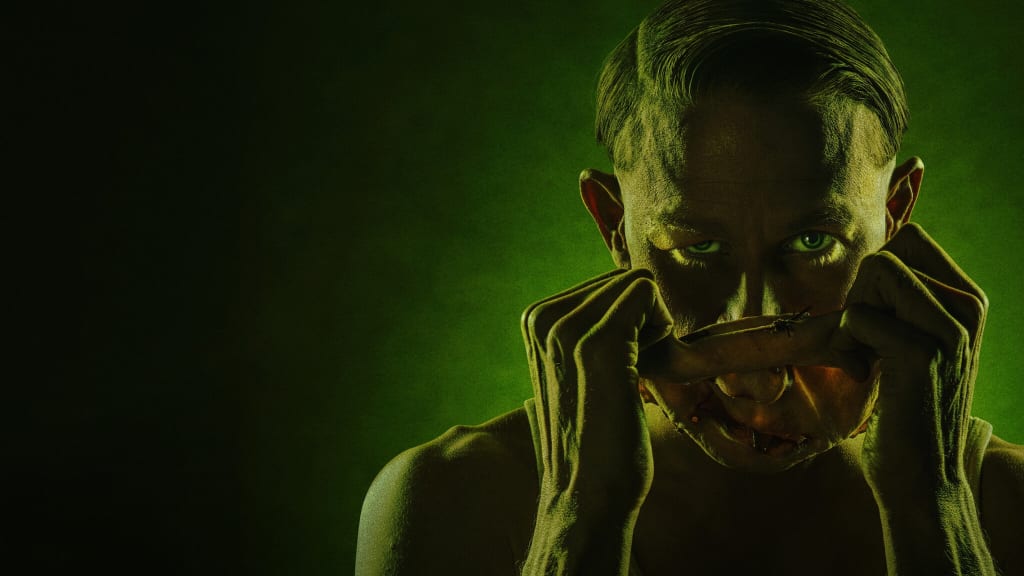
A technically proficient series that ultimately exploits tragedy rather than illuminating it, leaving one wondering if the only monsters here are those who profit from such suffering.
A Critical Review
Ryan Murphy's "Monster" represents everything troubling about our current true crime obsession, dressed up in prestige television clothing. Despite its claims of centering victims' stories, the series ultimately does exactly what it purports to avoid: it glamorizes a serial killer and turns unspeakable tragedy into entertainment. What emerges is not a thoughtful examination of systemic failure or a tribute to those who suffered, but rather a glossy, deeply uncomfortable exercise in voyeurism that mistakes provocation for profundity.
The Exploitation Problem
The most glaring issue is the series' fundamental contradiction. Murphy insists the show honors victims, yet devotes the overwhelming majority of screen time to the killer's perspective, psychology, and—most disturbingly—his fantasies. We're subjected to stylized, drawn-out sequences that feel less like somber documentation and more like the fever dreams of someone fascinated by monstrosity itself. The victims' families explicitly asked for this story not to be told, yet here it is, generating millions for Netflix and the producers while re-traumatizing those who suffered most.
When family members of victims publicly condemned the series before and after its release, calling it "retraumatizing" and accusing it of making them relive their worst nightmares, the response from the production was tepid at best. The standard defense—that this is a story that needs to be told—rings hollow when those most affected are begging for silence. There's something deeply cynical about a production that positions itself as socially conscious while ignoring the explicit wishes of the very people it claims to honor.
The series also profits from real tragedy in the most literal sense. While victims' families continue to struggle with their grief, the show's creators, cast, and streaming platform reap financial rewards and critical accolades. This isn't just a moral abstraction—it's a concrete transfer of capital built on the worst moments of people's lives. True crime as a genre has always had this problem, but "Monster" exemplifies it with particular shamelessness given its high-profile nature and massive budget.
Misguided Artistic Choices
The aesthetic choices border on offensive. Moody lighting, artistic camera angles, and a pulsing soundtrack transform horror into something approaching art-house cinema. These aren't documentary choices—they're the tools of romanticization. When you make brutality beautiful, you've lost the plot entirely. The series seems more interested in its own perceived daring and boundary-pushing than in genuine moral reckoning.
Episode after episode features lingering shots that feel designed to unsettle and titillate in equal measure. The house becomes almost a character itself—oppressive, claustrophobic, yet shot with an attention to visual composition that wouldn't be out of place in a Fincher film. This isn't journalism or education; it's aestheticization of the worst kind. When the camera lovingly tracks through spaces where people died, finding artistic beauty in the mise-en-scène of murder, the show reveals its true priorities.
The non-linear storytelling, while trendy, further muddles any claim to victim-centered narrative. We jump between timelines, seeing the killer as a child, as a young man, as a predator at the height of his crimes. This fragmentation serves to humanize and complicate him—to make him a fully realized character worthy of our sustained attention. Meanwhile, victims appear primarily in the context of their deaths, rarely given the narrative space to exist as complete human beings outside of their tragic ends.
Performance Over Purpose
Yes, Charlie Hunnam delivers a committed performance. But to what end? The portrayal is so intensely detailed, so thoroughly inhabited, that it tips into something uncomfortable—a showcase for acting prowess built on the graves of real people. We don't need to see this level of immersion into a murderer's psyche. The performance becomes the story, overshadowing everything else.
Hunnam's transformation is undeniably impressive from a purely technical standpoint—the mannerisms, the voice, the thousand-yard stare that suggests inner torment. But this very virtuosity becomes the problem. The more convincingly Hunnam embodies the killer, the more the show asks us to watch him, to study him, to be fascinated by him. Awards consideration follows, magazine profiles appear, and suddenly we're in the perverse position of celebrating an actor for how well he portrayed a man who committed unspeakable acts.
The supporting cast, many of whom play victims or their families, are given far less to work with. Their performances are often powerful, but they're working within a narrative structure that fundamentally limits their impact. They appear in one or two episodes, deliver heart-wrenching testimony or portray final moments, and then largely disappear. The show can't seem to figure out what to do with the living, breathing humanity of victims beyond using them as plot points in the killer's story.
The Dangerous Psychology of Religious Trauma and Maternal Abuse
Where the series truly fails—and perhaps causes the most harm—is in its clumsy, sensationalized treatment of the relationship between childhood religious trauma and sexuality. The show wants desperately to draw a straight line from maternal abuse and religious persecution to violence, creating a reductive and deeply harmful narrative about queer identity and criminality.
The portrayal of the mother-son dynamic is simultaneously exploitative and simplistic. We're subjected to endless scenes of religious condemnation laced with what the show clearly wants us to read as homoerotic tension—a Freudian fever dream that conflates maternal control with sexual confusion in ways that feel more like trashy psychosexual thriller than responsible examination of abuse. The series lingers on moments of religious shaming with an uncomfortable voyeurism, as if the camera itself is complicit in the degradation.
This framing is not just lazy—it's actively dangerous. By suggesting that religious persecution of sexuality and maternal psychological abuse create violent predators, the show perpetuates harmful stereotypes about queer people, particularly those struggling with internalized shame. Millions of people experience religious trauma around their sexuality. The vast majority do not become violent. The show's insistence on drawing causal connections plays into the worst kind of homophobic logic: that queer desire, when suppressed, inevitably curdles into something monstrous.
The Transphobia Lurking Beneath
Even more insidious is the show's treatment of gender transgression and its implications. Without making it explicit, the series repeatedly codes certain behaviors and desires as boundary violations that blur into criminality. There's a consistent visual and narrative language that associates gender nonconformity, experimentation with presentation, and the transgression of masculine norms with predatory behavior and moral degradation.
The show never directly addresses trans identity, but it doesn't need to—the subtext does the work. By repeatedly linking the killer's crimes to his relationship with his own body, his discomfort with masculine expectations, and his complicated relationship with gender performance, the series traffics in transphobic tropes without ever naming them. The message is clear: deviation from gender norms is associated with danger, perversity, and violence.
This is particularly harmful given the current climate of anti-trans legislation and violence. When mainstream entertainment consistently codes gender transgression as threatening or pathological—even subtly—it contributes to a cultural environment where trans people are seen as inherently dangerous or unstable. The show wants credit for exploring "complex" psychology but refuses to acknowledge how its imagery and narrative choices reinforce harmful stereotypes about bodies, identity, and violence.
The Religious Persecution Through a Distorted Lens
The series' treatment of religious trauma is exploitative in its specificity. We see the rituals of shame, the weaponization of scripture, the particular cruelty of a parent who uses faith as a tool for psychological destruction. But rather than examining how religious institutions and teachings cause genuine harm—particularly to LGBTQ+ individuals—the show uses religion as atmospheric dressing for a psychosexual melodrama.
The homo-erotic subtext in scenes of religious punishment is particularly troubling. By sexualizing the violence of spiritual abuse, the show suggests that the trauma itself is inseparable from forbidden desire—that the shame creates the desire creates the shame in an endless, titillating loop. This is not insight; it's exploitation of people's real experiences of religious persecution for shock value and perceived artistic daring.
Moreover, the show fails to engage with the real, documented harm that religious condemnation of LGBTQ+ identities causes. Instead of exploring how institutions systematically damage people through conversion therapy, spiritual abuse, and familial rejection, we get lurid scenes that position religion as merely one element in a individual pathology. The structural violence disappears, replaced by one bad mother in one troubled home.
The Mother-Son Dynamic as Cheap Psychoanalysis
The relationship between the killer and his mother becomes the show's attempt at psychological depth, but it's undergraduate Freud at best and harmfully reductive at worst. By positioning maternal abuse and inappropriate enmeshment as the "origin story" of violence, the show participates in the oldest, most tired form of mother-blaming while simultaneously sexualizing that dynamic in deeply uncomfortable ways.
The camera work during flashbacks to childhood creates an atmosphere of stifling, quasi-incestuous tension. The mother's control over her son is portrayed not just as abusive but as perversely intimate, with the show constantly suggesting that the boundaries between maternal love, religious control, and sexual possession have dissolved. This isn't sophisticated psychological exploration—it's sensationalism dressed up in art-house aesthetics.
Real survivors of maternal abuse and religious trauma deserve better than to see their experiences reduced to lurid origin stories for violence. The show wants us to understand the killer by understanding his mother, but in doing so, it suggests that this understanding somehow matters more than the lives he took. It also perpetuates the dangerous myth that abuse inevitably creates abusers, that trauma can only breed more trauma in an endless cycle.
The Empathy Problem
Perhaps most troubling is how the series asks viewers to empathize with the killer precisely through these narratives of religious persecution and maternal abuse. We see his lonely childhood, his internal struggle with forbidden desires.
Conclusion
The trauma is real. The victims were real. Their families' pain is ongoing. "Monster" treats all of this as raw material for prestige TV, and no amount of thoughtful framing devices or claims of victim-centering can disguise that fundamental moral failure. The series is technically proficient, occasionally well-acted, and certainly generates discussion—but none of that justifies its existence.
"Monster", however successful it may appear to be, is a technically proficient series that ultimately exploits tragedy rather than illuminating it, leaving one wondering if the only monsters here are those who profit from such suffering. No amount of artistic ambition can justify the fundamental moral bankruptcy at its core.
About the Creator
Parsley Rose
Just a small town girl, living in a dystopian wasteland, trying to survive the next big Feral Ghoul attack. I'm from a vault that ran questionable operations on sick and injured prewar to postnuclear apocalypse vault dwellers. I like stars.
Keep reading
More stories from Parsley Rose and writers in Critique and other communities.
So I watched Allegiant (2016)
Allegiant, released in 2016, occupies a unique and unfortunate position in franchise history: it was designed as the penultimate chapter of the Divergent series, the first half of a split finale that would conclude with Ascendant. Instead, due to poor box office performance and audience apathy, it became the accidental endpoint of a franchise that never received proper closure. This dual identity—intended setup piece and unintentional finale—haunts every aspect of the film, resulting in a viewing experience that feels simultaneously incomplete and exhausting.
By Parsley Rose 3 months ago in Critique
Who Is Clavicular? The Looksmaxxing Streamer Who Ran Over A Stalker In His Cybertruck
What is so damaging to this current culture is the ant-intellectualism which pervades nearly every element of it. Clavicular, real name, Braden Peters equivocates physical form with getting women, making money, and overall being a strong “man.”
By Skyler Saunders22 days ago in Critique
Catching Up
I know I have not been reading and commenting a lot these past couple weeks, but I have been reading and writing in my old-fashioned composition books and preparing some of those writings for here on Vocal. I have also been researching and writing my study books. I do have one wish for my subscribers here on Vocal.media.com and that is that everyone will have a great year. I do have a request and would like some follow-up on some of my older work and would you guys read or re-read my material and share your thoughts for I am thinking of putting together an anthology.
By Mark Graham4 days ago in Critique
My New Book is Finally Here
My poetry collection Beautiful and Brutal Things is done. It's actually done and finally published over 270 pages. Over a year of my life went into this book. More than a year, really. Long days at my computer, sometimes seven days a week because I couldn't stop even when I probably should have. Then two months of editing that felt harder than the writing itself. But it's finished, and I'm still standing, and the book is real.
By Tim Carmichaela day ago in BookClub



Comments
There are no comments for this story
Be the first to respond and start the conversation.