Draft
Eve Speaks
So there we were, hanging out in the garden, everything perfect, one day seamlessly melting into another when I noticed the caterpillars eating the apples, boring great holes through them, filling the air with the sweetest, most beautiful fragrance I had ever smelled. It smelled clean and crisp, not cloying like the sweet gardenias and jasmine. I kept coming back to smell the wonderful fruit that someone said we weren’t supposed to eat.
By Harper Lewis5 days ago in Critique
Diaries to Nietzsche. Top Story - January 2026.
Quotation from Friedrich Nietzsche "He who wrestles long with monsters should beware lest he himself become a monster. And if you gaze long into an abyss, the abyss also gazes into you. Man is not destroyed by suffering, but by the meaning he makes of it."
By LUCCIAN LAYTH12 days ago in Critique
Speaking to Time Instead of the Room
Much of modern communication is oriented toward immediacy. Writing is framed as something meant to be consumed quickly, reacted to instantly, and replaced just as fast by whatever comes next. Under this model, the value of a piece is measured almost entirely by its initial reception. If it does not land immediately, it is treated as a failure. This assumption narrows the purpose of writing and misunderstands how meaning actually travels through time.
By Peter Thwing - Host of the FST Podcast12 days ago in Critique
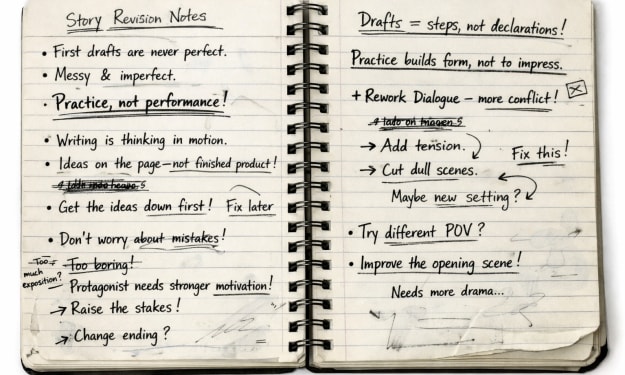
Practice vs Performance
One of the quiet pressures shaping modern communication is the assumption that anything written should be immediately shareable. Drafts blur into declarations, and exploration is mistaken for conclusion. Under this pressure, writing becomes performative by default. The moment words are placed on a page, they are treated as finished statements rather than steps in a process. This expectation distorts both how writing is produced and how it is received, collapsing practice into performance and leaving little room for genuine development.
By Peter Thwing - Host of the FST Podcast13 days ago in Critique
AI as a Reflective Surface
Much of the confusion surrounding artificial intelligence comes from treating it as an agent rather than a surface. When people speak about AI “doing the thinking,” “creating the ideas,” or “speaking for someone,” they are often projecting agency onto a system that does not possess intention, belief, or understanding. This projection obscures what is actually happening in many real-world uses. In those cases, AI is not acting as a source of meaning, but as a surface that reflects, redirects, and reshapes what is already present.
By Peter Thwing - Host of the FST Podcast22 days ago in Critique
Mental Health Tips for Digital Creators (From Someone Who Knows the Burnout)
Mental Health Tips for Digital Creators (From Someone Who Knows the Burnout) It sounds like the ideal job to be a digital creator. You get to work from anywhere, be your own boss, and turn your ideas into content people actually care about.
By Farida Kabir27 days ago in Critique
When Is a Move Final?
The Commitment Problem in Modern Chess Modern chess operates under a fractured commitment model that no longer aligns with how players think, how turns function in most games, or how chess itself is actually played across physical and digital formats. At the heart of the problem is that chess treats physical contact with a piece as binding commitment while simultaneously relying on a separate explicit action to end a player’s turn. This creates a logical contradiction: a move becomes final before the turn is over. In most turn-based games, interaction with game components is provisional until the player explicitly signals the end of their turn. Chess is an anomaly in this respect, and the inconsistency becomes increasingly visible in modern play.
By Peter Thwing - Host of the FST Podcast30 days ago in Critique
The Tainted Cup
The Tainted Cup by Robert Jackson Bennett I made this entire series to write this review. The 2024 Hugo Winner is a Holmes and Watson style whodunnit taking place in a fantasy world that blends Area X from the Southern Reach Trilogy and The Lost World–more on the setting later.
By Matthew J. Fromm2 months ago in Critique
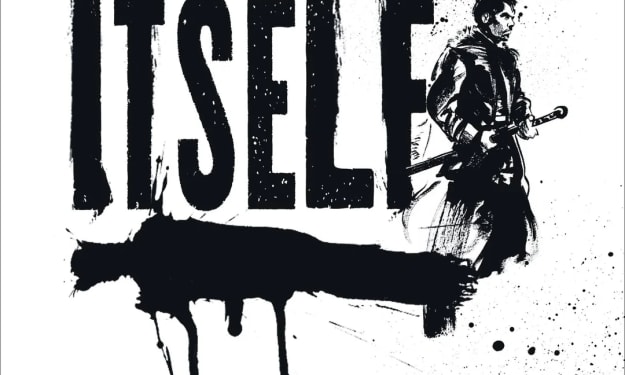
The Blade Itself
The Blade Itself by Joe Abercrombie Every once in a while, I pick up a book that reminds me fundamentally why I enjoy reading—a book that turns my brain off and sweeps me away to some far flung world that I can sit at any quiet moment and. . . disappear into.
By Matthew J. Fromm2 months ago in Critique