
Constitutionalism and the Quest for Social Equality in Modern India
An Analysis of Challenges to Constitutional Values
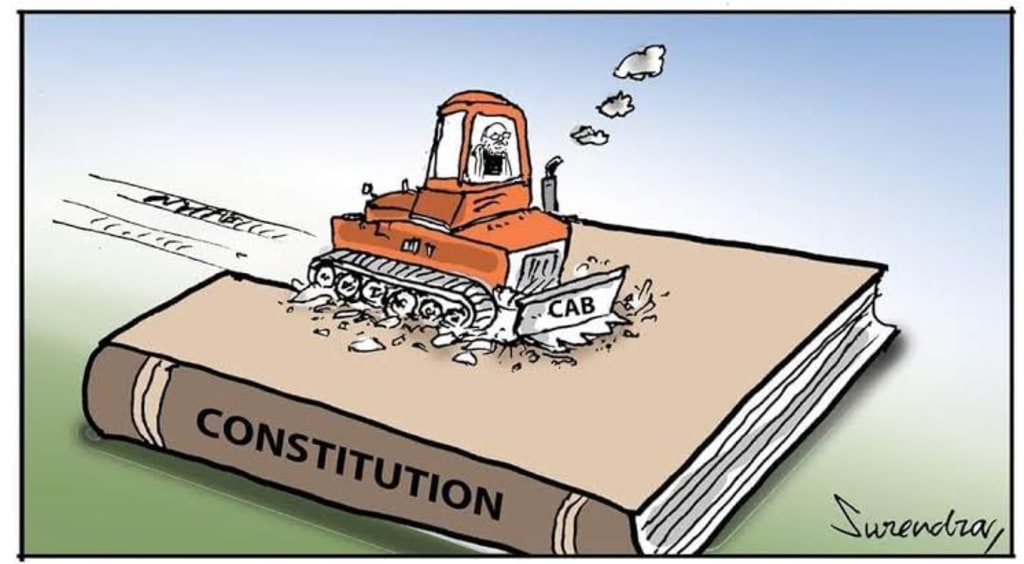
India’s modern constitutionalism, I do call myself a dalit feminist but there can be no feminism without constitutionalism and no constitutionalism without feminism. They are bound to each other like twins and therefore to even begin about women without constitutionalism. Import limitations on state power that’s what it really in its dealing, with its citizens endowed with fundamental rights which the state cannot be violated. Today we notice that there is a demand to put an end to constitutionalism and the demand in certain terms is why do we need codification. Somehow the debate is revolving around the issue of codification and the demand is why having a code, custom, practice and usage is enough. Custom practice and usage we had in this country for centuries and that is what governs us. What exactly is the demand that is there in the country today as its contemporary relevance, now the Judiciary of course is meant to be the guardian of these rights that we possess and I think it’s time to do a reckoning. They really been the Guardians of the rights which have been endowed to us by the Constitution? The other implication of constitutionalism is that the constitution is a binding norm today. We are often in a state of mind that the Constitution as mere guidelines we don’t need to treat it as a binding norm. We need to remind ourselves that constitutionalism means that the constitution is a binding norm binding on our citizens binding also on those who hold positions of constitutional power. It’s also a call to accountability to citizens in their interaction with each other as also of state organs, of course we all know what the Constitution promises it promises social economic and political justice in its directive principles, they are supposed to be binding on. In the matter of lawmaking we must ask ourselves the question that the Constitution adequately address the question of the suffering and compassion and do we fully share that responsibility for such suffering as being a human species among all sentient beings we humans alone have Free Will and the capability of making change, the change that we wish to see and therefore we must take complete responsibility for building the nation we wish to see.
The Constitution addresses itself to Future generations to the young Global Citizens of our times and not to those who wish to return to the power structures of centuries gone by, it is a break from the past I believe in the clean slave Theory. I believe that Indian Society was governed by rist hierarchies of caste on the top of which were the Brahmins who had the god-given right to order kings however as a powerful Counter Culture to brahmanism we also had atheistic Traditions such as Buddhism which emerged advocating equality and rejecting the rigid caste hierarchies. It emphasized the universality of suffering and promoted the idea that all individuals regardless of caste had the potential to Enlightenment. Buddhism challenged the foundational principles of caste based citizenship and discrimination. During colonial rule it reinforced exclusions over, in relation to caste , gender, and religion. The Constitution not only reflects this sharp break from centuries of oppression and also from Colonial rule it is normative in its content and it entrenches a vision of a modern society. A society that is based on an egalitarian political and social order, it promotes scientific and rational thought in all walks of life. Faith, and belief are not the basis of lawmaking but at the same time the right to freedom of conscience and religion is protected for all persons under the constitution of India. This shared vision which emerged from the Freedom Movement is what our constitution is based on the movements against British rule. Which demanded equality and self-determination for Indians and ultimately secured Independence. India chose self-determination by declaring itself a republic shaping the national identity and committing to a mission beyond Independence. The fructification of this movement is what we see in the constitution of India in the Preamble, which was introduced in the constituent assembly that we drew from the legacy of revolutions which went before our own, the French Revolution, the American Revolution . By the time the Constitution came to be framed the objectives resolution was already agreed upon and it’s important to remember the recent comments that have been made about the original Constitution that The Honorable Vice President of India said that we must circulate for our children the original Constitution. So what is the original Constitution is the question he seems to think, it is the copy of the Constitution which has several illustrations of which there are three copies two being in Parliament one in the Supreme Court but those illustrations came to be done in the year 1954 it is not the original Constitution. The original Constitution doesn’t have any of those illustrations and his comment was, we must circulate this so that children know that the con the original constitution of India had illustrations of Rong in it, this is not only misinformation but it would be interesting to know at what is the original Constitution it was introduced on the floor of Parliament and it came into force with immediate effect on 26th November 1949 and some provisions came into force, they were the provisions relating to citizenship, the provisions relating to a provisional Parliament, the provision relating to the president’s oath and the rest of the provisions came into force on 26th January 1950 so what is the original Constitution that is something that we need to educate ourselves. India ceased to be a colony as we all know in 1947 and through the process of self-determination and the freedom movement we became a republic. What came into existence is a successor state which is Sui generis, the constitution of India is Sui generis and no successor state is bound by the laws of the previous state. It is up to us to write on the clean slate and we wrote what we wanted.
The only question is what is the direction of the Supreme Court of India has however told us that there are certain basic features of the Constitution which cannot be altered and these include Democracy, the Rule of Law, Secularism, Federalism, Judicial Review, Separation of Powers, Supremacy of the Constitution, Independence of the Judiciary and republicanism. In 1999, government led by PM vajpayee decided not to go for a review of the Constitution but instead the notification which set up the Vana committee it says the commission is to review the functioning of the Constitution not to review the Constitution and the president of india K. R. Narayanan put a halt to the process of throwing the Constitution out. But those who are in positions of power today need to be reminded of their own history. The constitution apart from guaranteeing Fraternity, Equality, Liberty it also rejects the notion that ends these provisions of Justice and that’s something Indian constitution does not believe in and this is entrenched in Article 21 of the Constitution of India, which says no person shall be deprived of life or Liberty except by procedure established by law. The means to the end which is supposedly to be received and the Supreme Court has of course said that procedure has to be just fair and reasonable. We of course gave up the chains of servitude. It was a means of individual liberation as also collective liberation and we cannot forget that the Constitution called upon us to take our rightful place amidst the nations of the world. The constitution of ours is just to recapitulate so that we don’t miss out on the theological mission of the Constitution of India. Independence doesn’t look too good. Besides the struggle for independence from British rule there was another struggle going on for centuries and which still continues. That was a struggle for social emancipation. It’s a struggle that the Kerala women’s Collective has carried forward in resisting sexual harassment at the workplace, It’s been the struggle for the replacement of an unequal social order, it has been a fight for undoing historical injustices and for writing fundamental wrongs with fundamental rights in the constitution of India is the end product of these struggles. It is the foundational document which is the text and spirit aims for social transformation namely the creation and preservation of an equal social order. The Constitution represents the aspirations of those who were denied the basic ingredients of a dignified existence.
Today the journey for social reorganisation by the way these words were written in the petition which called for an end to a practice. which denied women of menstruating age between 10 and 50 from entering a temple and you’ll find a lot of the judgments of the Supreme Court that we now call transformative have come in relation to women and transgender and abandoning binary sexuality these are the driving forces of the new constitution of India. Women are the driving force of the new constitution of India, the theory for social reform. This journey began long back and the Supreme Court has of course helped us on this journey for women of all communities. Mary Roy got her right to inheritance equal inheritance through a judgment of the Supreme Court of India in her fight against her brother where challenged. The law said only 5,000 rupees will be given to the daughter and the rest of the estate will go to the son. She won her case in the Supreme Court of India. The right to reservations is unique in the world now we have reservations for women in Parliament which has not yet come into force and looked at the experience of Rwanda which had 50% reservation for women in their constitution but if you look at Rwanda today it has 60% women in their assembly so this is the power that can be Unleashed by reservations. Faith and belief cannot be the basis of lawmaking; they’re nevertheless protected under Article 25 and 26 of the Constitution of India in the private domain there is complete Freedom of Liberty the opening words are freedom of conscience; they focus only on the religion part of it. So it’s conferred on individuals and it has no place in public life, the reason for the secularism that India adopted is that it is the only guarantee for a society that will give us the security and integrity of India. Without that we are in danger of seeing civil wars of hatred within the country and creating the perfect context for an external attack. When we defend secularism we don’t do it only for appeasing the Muslim Community we do it in the interest of India. We are not a Theocratic state because we are protected by protecting secularism that protects the integrity and security of India. We are of course not a Theocratic State and concomitantly we do not have any offense known as blasphemy in this country. There is a long history rule of law did not begin with the constitution of India, it ironically did begin under colonial rule through the three criminal laws that came in the name of Indian penal Court (IPC), The criminal procedure code and The Indian Evidence Act all of which date back to the 19th century enacted by the British colonizers, but what did these laws gave us equality in the matter of criminal law it’s true we didn’t have equality in the matter of administration and politics but they did bring equality in the matter of criminal law and to that extent, they were the Forerunner of Article 21 that is no person shall be deprived of life or Liberty except by procedure established by law. These laws that are Colonial it defies logic Crime and Punishment were uniform regardless of caste and community to which people belong unlike in the pre-colonial era where a crime committed by Brahmin was not even a crime and there were no doubt laws like the criminal tribes Act of 1871 which criminalized whole communities including transgender communities that definitely is a vestige of colonialism one cannot ignore that homophobia was institutionalized by Colonial laws. Woman was supposed to experience civil death in marriage; she had no rights; she had to be represented by her husband. Ironically today we are told that the three new laws that have come into existence have decolonized these laws, remember they have retained the medical exception and attempt to argue that these laws are unconstitutional. But these laws do not take away the colonial nature, which refers to surrender. These laws in fact ask us to surrender to a police state and reinforce the existence of a police state. We are told that these laws are swadeshi, these laws put an Indian soul to the justice system. In my opinion decolonization does not mean change of language, it means something much deeper. When it comes to how these laws are applied they’re also very differentially applied to marginalized communities as compared to the holders of power. The men who are saying the Constitution is collodial and they’re also saying that there should be no same-sex marriage so abortion continues to be a crime under the new laws, let’s talk a little bit about the patriarchy that persists in the Judiciary. An extract from a judgment of the Gujarat High Court when approached by a minor for an abortion this is what the judge said “we are living in the 21st century ask your mother or your grandmother 14 to 15 year olds is the maximum age for getting married a child used to give birth before the age of 17 girls get mature”.
Read the manusmriti at least once in your lifetime which is close to this judge’s opinion. Dr B. R. Ambedkar rejected the manusmriti, On 25th December 1927 the day when he burned the manusmriti is also known as Manusmriti Dahan Diwas it is celebrated all over India as Manusmriti Dahan Diwas. Constitutional values are under siege in the country today. The modern Constitution is under siege; it is a kind of repudiation of the Constitution of India by those responsible for upholding it. This is done in many ways formally and informally, the formal way that we all know is the amendment to the Citizenship Act, which allows fast track citizenship for certain religious communities not for others. Anti-Conversion laws which go by the name of Love Jihad in the justification for which is love Jihad these are the formal laws that have been introduced all over the country and while all this is happening let’s look a little bit at the status of Muslims in the country a recent report by Christopher Jaffrelot, informs us that the status of Muslims in the northern part of India has dramatically declined in terms of Education fallen from 14% to 12% over the last 10 years employment opportunities have shrunk housing is not available. In the south Kerala and Tamil Nadu are better in social indicators for the status of Muslims in the country. The Templeton Global report makes the point that secularizing countries where human rights are respected are able to survive as democracies rather than others where secularism is not protected. Massive inequality is seen in India. We know that the number of billionaires has increased. The Indian project is the project to overthrow the constitution of India. We will deal with it and we will protect the constitution of India. The truth is that you can never have a Hindu Rashtra under a secular constitution. Article 13 of the Constitution of India which says all laws enforced immediately before the commencement of this constitution to the extent of inconsistency with the Constitution will render and remain void. Constitutionalism is the only thing that will guarantee our rights and nothing else and that does mean a text which is normative and a text which will guarantee our rights and impose limits on the powers of the state. The Constitution is being ignored despite all talk of constitutional transformation. The Silent change is difficult to challenge, written quotes are much easier to challenge.
About the Creator
Keep reading
More stories from writers in Critique and other communities.
Standing While Falling
Quotation from Friedrich Nietzsche "He who wrestles long with monsters should beware lest he himself become a monster. And if you gaze long into an abyss, the abyss also gazes into you. Man is not destroyed by suffering, but by the meaning he makes of it."
By LUCCIAN LAYTH12 days ago in Critique
Venezuela
By Leavie “Soul on Fire” Scott Her name was Nava, a 23‑year‑old shopkeeper’s daughter from Tehran, though she didn’t feel young anymore. Not after the week she had survived. Not after watching the value of Iran’s currency collapse so fast that shop windows changed prices twice a day. Not after seeing her father stand in his empty store and whisper, “I cannot afford to open tomorrow.”
By Organic Products 2 days ago in Critique


Comments (1)
This article brings up some really important points about constitutionalism and feminism. It makes me wonder if we're really treating the Constitution as a binding norm like we should. And the debate about codification vs. custom is interesting. I've seen how laws can impact people's lives. Do you think we're doing enough to ensure the Constitution lives up to its promise of justice? Also, it's crucial that the Judiciary truly guards our rights. How can we hold them more accountable if they're not fulfilling this role? We need to have a serious discussion about these issues.