
War and mans
"Men, War, and the Shaping of a Warrior’s Code"
Men, War, and the Shaping of a Warrior’s Code
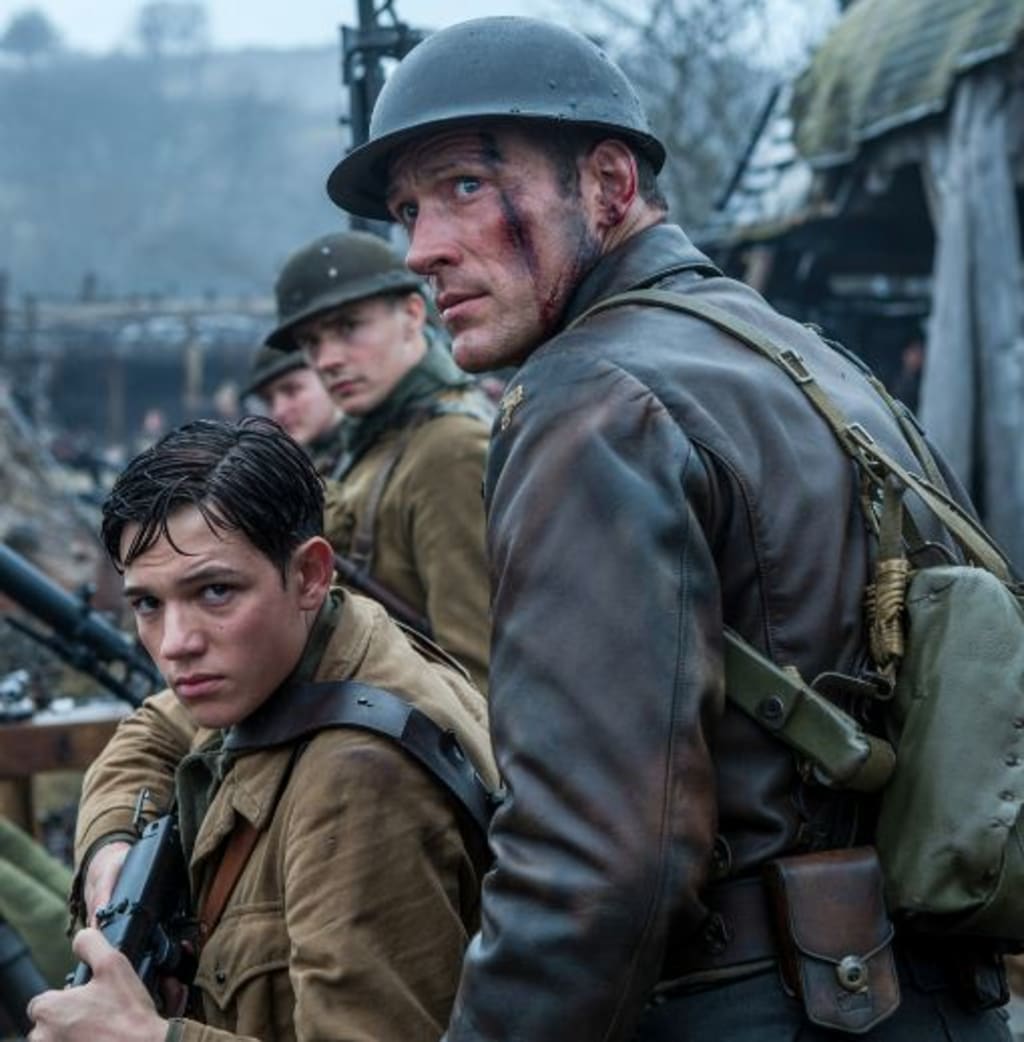
The year was 1915, and Europe burned with a fury the world had never seen. The Great War had swallowed entire generations, grinding men into the dirt of foreign fields. Amid the chaos, in the mud-clogged trenches of France, Private Elias Carter of the British Army waited—for orders, for dawn, for something he couldn't name but desperately hoped for.
Elias was only twenty, a boy in uniform, yet the weeks he'd spent at the front had aged him in ways time alone never could. His hands, once used to hold pencils and sketch out dreams of becoming an artist, now trembled from the weight of a Lee-Enfield rifle. His world was reduced to gunfire, rot, and the distant hope of survival.
But amidst this madness, there was Sergeant William Hawke—older, steadier, and as immovable as the stone walls of his Yorkshire village. Hawke was a man forged by war long before this one, a veteran of colonial campaigns who carried a scar across his cheek and a silence that unnerved even the most seasoned officers.
To Elias, Hawke was not just a superior officer—he was a mystery. A walking code of conduct. Never cruel, never kind. Just… fair. When a new recruit froze during a charge, it was Hawke who carried him back. When rations were short, Hawke ate last. And when Elias once asked him if he ever feared death, Hawke simply replied, “I fear forgetting why we fight.”
That stuck with Elias. What did that mean, why we fight? Wasn’t it just orders and survival? But as the months wore on, Elias began to understand.
He remembered the night they were ordered to storm a German trench. The moon was a sliver, the cold biting through their coats like knives. Elias felt the panic clawing up his throat. All around him, the men tensed. Some whispered prayers. Others clenched their jaws in silence.
Hawke stood before them, inspecting each one with his steel-blue eyes. Then he spoke—not loudly, not dramatically, but with a calm that cut through the fear.
“War doesn’t make you a man. It shows you what kind of man you already are. Out there,” he pointed toward the black, shell-ridden landscape, “you'll see things no man should. But remember this—courage isn't charging without fear. It's standing your ground when fear tells you to run. And when you fight, fight not for the brass back at HQ, but for the man beside you.”
Elias carried those words into the darkness.
The battle was savage—mud and blood, screams and smoke. Elias stumbled, slipped, fired blindly. He saw a friend fall, then another. Amid the chaos, he found Hawke, bayonet drawn, dragging a wounded soldier to safety while bullets ripped the air around him.
When it was over, Elias collapsed beside Hawke in the captured trench, his face caked with dirt and tears. Hawke didn’t speak. He simply placed a hand on Elias’s shoulder and nodded. That was all.
In the weeks that followed, Elias watched how men changed. How the war stripped away everything false. The cowards, the heroes, the broken—all revealed by fire and fear. But it was the code that kept them whole. The unspoken bond between soldiers: loyalty, honor, and the duty to protect one another.
Elias started keeping a journal. Not of battles, but of what he'd learned. He wrote of Hawke’s code—of the quiet strength that held the line when nothing else could. He wrote of the men who laughed in the face of death to keep others from despair. He wrote about what it meant to be a man, not by society’s standards, but by the values forged in the crucible of war.
In late autumn, a shell exploded near their trench. When the dust cleared, Hawke lay motionless. Elias ran to him, heart pounding. Hawke’s eyes opened slowly, pain etched deep into his face.
“Don’t let it make you hate the world,” Hawke whispered. “Let it teach you how precious peace can be.”
He died that night.
When the war ended, Elias returned home. The world was different, but so was he. He never did become a famous artist, though he painted often. Instead, he taught. Young boys and girls, mostly. He taught them about history, about art—but more importantly, about character.
And in every lesson, every brushstroke, Elias carried with him the code of Sergeant Hawke. A code written not in ink or blood, but in courage, sacrifice, and brotherhood.
Because some wars never truly end. They live on in the choices we make, in the stories we pass on, and in the quiet, steadfast way we choose to live.
About the Creator
nasrullah khan
ITS ABOUT LIFE OF MANS AND THERE STRUGGLES ON EARTH
Keep reading
More stories from nasrullah khan and writers in Criminal and other communities.
DISCOVERY OF WORLD
Cultural Discovery and Global Exchange The discovery of the world wasn’t just about finding new continents or drawing better maps—it was also about the meeting of people, ideas, and cultures. Throughout history, as humans ventured beyond their borders, they didn’t just bring goods; they brought languages, traditions, religions, and ways of life. These cultural exchanges shaped civilizations, inspired creativity, and sometimes even led to conflict. But in the end, they connected the world in powerful and lasting ways.
By nasrullah khan9 months ago in Earth
Trump’s Latest Statements Stir Global Debate With the UK NATO and Greenland
Trump’s Latest Statements Stir Global Debate With the UK NATO and Greenland In recent weeks, renewed attention has focused on former U.S. President Donald Trump following a series of statements and political positions that have reignited international controversy. Americans searching for the latest political news have shown strong interest in Trump’s comments involving the British royal sphere, his long running dispute connected to Greenland, and his continued criticism of NATO allies. Together, these issues reflect a broader pattern in Trump’s approach to foreign policy, one that emphasizes national interest, sharp rhetoric, and public pressure on allies.
By America today 3 days ago in Criminal


Comments
There are no comments for this story
Be the first to respond and start the conversation.