
Trump, Obama, and the “Apes” Controversy: A Political Storm That Shook American Discourse
Trump, Obama, and the “Apes” Controversy: A Political Storm That Shook American Discourse

**Trump, Obama, and the “Apes” Controversy: A Political Storm That Shook American Discourse**
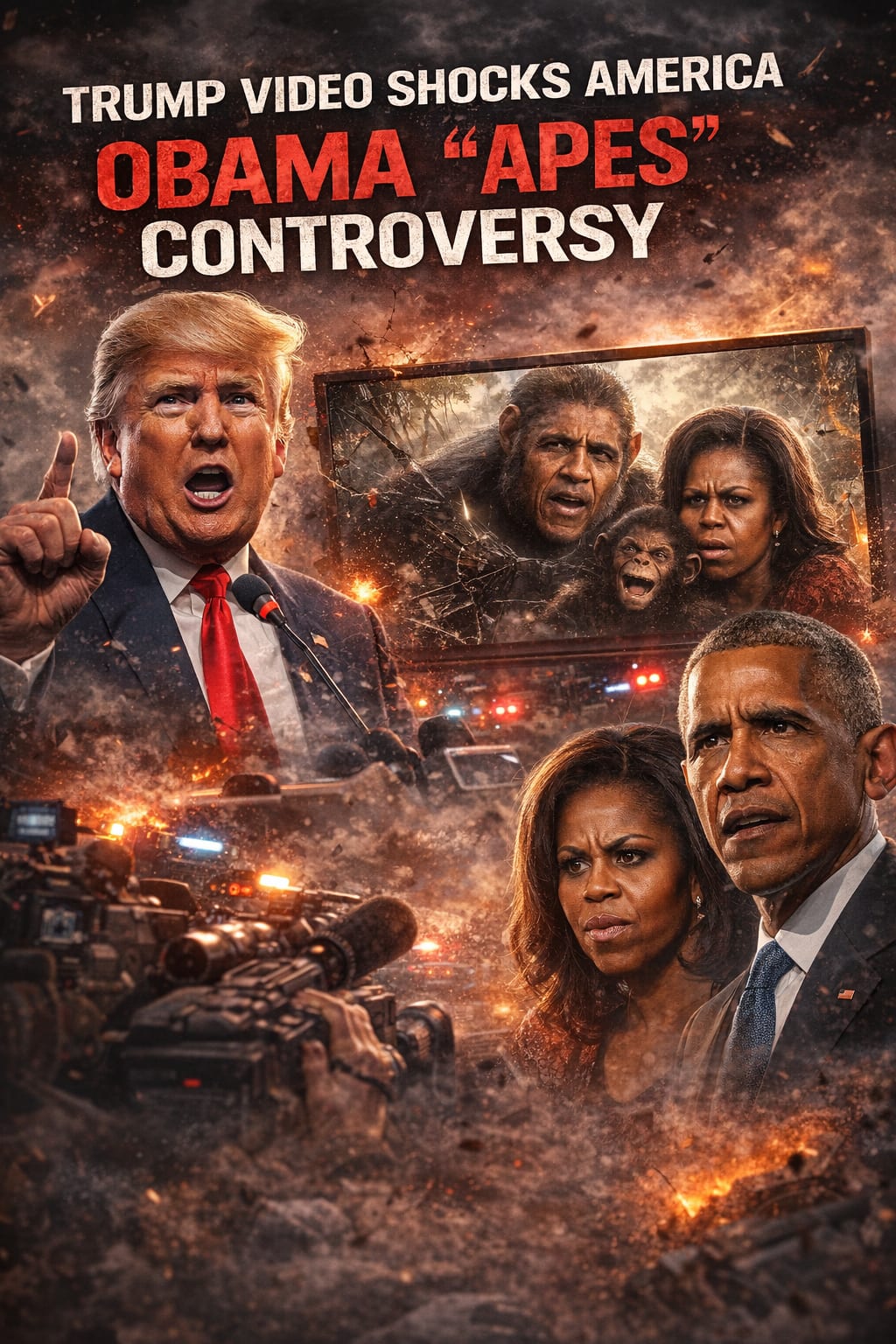
A new wave of controversy has swept through American politics after a video circulated online showing former President Barack Obama and former First Lady Michelle Obama depicted as apes. The clip, which was briefly shared from an account associated with former President Donald Trump, immediately ignited outrage, debate, and intense media attention. Even though the video was quickly removed, the incident reopened deep conversations about race, political rhetoric, and the power of imagery in modern politics.
This moment did not occur in a vacuum. It landed in a highly polarized environment where every symbol, joke, or visual carries amplified meaning. The reaction was swift and emotional, highlighting how sensitive and explosive political communication has become in the digital age.
**How Did the Trump–Obama Apes Video Spread So Quickly**
The video appeared as part of a longer political montage circulating on social media. While most of the clip focused on election-related themes and political opponents, a brief segment showing the Obamas portrayed as apes became the focal point. Screenshots and short recordings spread rapidly across platforms, ensuring that even after the original post was deleted, the imagery continued to circulate.
This rapid spread demonstrates how online content can escape control within minutes. Once shared by a high-profile figure or account, even a few seconds of offensive material can dominate headlines and public conversation.
**Why Was the Imagery Considered So Offensive**
The depiction of Black public figures as apes is widely recognized as a racist trope with a long and painful history. For many Americans, this imagery evokes decades of dehumanization and discrimination. That historical context is why the video was not viewed as harmless satire by critics, but rather as deeply insulting and dangerous.
The outrage was not limited to political opponents. Many observers argued that regardless of political affiliation, such imagery crosses a moral and cultural line, especially when associated with someone who has held the highest office in the country.
**What Was the Immediate Political Reaction**
Political leaders from across the spectrum reacted strongly. Democratic figures condemned the video as racist and unacceptable, calling for accountability and clearer standards for political communication. Some Republicans also expressed discomfort, noting that the imagery distracted from legitimate policy debates and damaged the tone of national discourse.
The backlash forced a rapid response. The video was removed, and explanations followed, including claims that it was shared unintentionally or without full review. However, for many critics, the damage had already been done.
**How Did the White House and Trump Allies Respond**
Initial responses from Trump allies attempted to emphasize context, arguing that the video was meant as political mockery rather than a racial attack. Supporters framed the outrage as exaggerated, insisting that opponents were using the moment for political gain.
This defense failed to calm the situation. As criticism continued to grow, the narrative shifted from justification to damage control. The focus turned toward how such content was approved and shared, and whether stronger oversight should exist for political social media accounts.
**Did Barack and Michelle Obama Address the Incident**
Barack and Michelle Obama did not issue a direct public response to the video. Their silence was notable but consistent with past behavior, as they have often chosen not to respond personally to offensive attacks. Instead, reactions came from allies, civil rights advocates, and public commentators who spoke on their behalf.
This lack of direct response also shifted attention away from personal conflict and toward broader questions about political culture and responsibility.
**What Does This Incident Reveal About Modern Political Communication**
The controversy highlights how political messaging has evolved in the age of social media. Visual content, memes, and short clips now shape public opinion as much as speeches or policy proposals. This environment rewards shock value and emotional reactions, often at the expense of nuance and respect.
It also raises concerns about oversight. When content can be shared instantly with millions, even a momentary lapse in judgment can lead to national outrage. Many analysts argue that this incident will intensify calls for stricter review processes and clearer ethical boundaries in political messaging.
**How Has the Public Reacted to the Trump Obama Apes Controversy**
Public reaction has been sharply divided. Many Americans described the video as racist and disturbing, arguing that it reflected a broader problem of dehumanizing language in politics. Others defended it as satire or claimed it was taken out of context.
Social media became a battleground of opinions, with debates about free speech, intent, and historical sensitivity dominating comment sections. This divide reflects deeper cultural fractures that extend far beyond a single video.
**Why This Moment May Have Lasting Impact**
While the video itself was brief, its implications are lasting. It has reinforced concerns about how race is weaponized in political conflicts and how easily offensive content can enter mainstream discourse. The incident may influence how campaigns, political offices, and public figures manage their online presence moving forward.
More importantly, it serves as a reminder that words and images matter. In a country still grappling with issues of race, identity, and unity, even a single image can reopen old wounds and shape national conversation.
In the end, the Trump, Obama, and apes controversy is not just about one video. It is about the boundaries of political expression, the responsibility of leadership, and the kind of discourse Americans are willing to accept in the digital era.
About the Creator
America today
Breaking news, political insights, real-time analysis, U.S. politics, global politics, elections, government policies, international relations, diplomacy, political debates, trending political stories, expert commentary, factual reporting,.
Keep reading
More stories from America today and writers in Criminal and other communities.
The Epstein Files: A Detailed and Professional Overview
The Epstein Files: A Detailed and Professional Overview The Epstein files refer to a vast collection of documents connected to Jeffrey Epstein, the disgraced financier whose criminal activities shocked the world and exposed serious questions about power, influence, and justice. These files include investigative records, legal documents, interviews, images, and internal reports gathered over many years by law enforcement and judicial authorities. Together, they provide a broad picture of Epstein’s activities, his connections, the crimes he was accused of, and the institutional responses to those crimes. The renewed attention to these files has made them a central topic in public discussion, media coverage, and political debate.
By America today 10 days ago in Criminal
Why the Epstein Network Was Never Fully Exposed
Why the Epstein Network Was Never Fully Exposed The most haunting question after the Jeffrey Epstein case is not what he did, but why so much remains hidden. Despite arrests, court documents, and years of investigation, the full network surrounding Epstein has never been completely exposed. This failure is not accidental. It reveals how modern power systems are designed to protect themselves, even when serious crimes are involved.
By Wings of Time 3 days ago in Criminal
The Girl Who Refused to Die
In the grim annals of true crime, there are stories that chill the bone, and then there are stories that redefine the very essence of human resilience. The story of Mary Vincent is both. It is a harrowing descent into the darkest depths of human cruelty, followed by an ascent fueled by a will to live that defied every law of medicine, logic, and fate.
By Mayar Younes3 days ago in Criminal



Comments (1)
Thank you 🦋꧁🌹꧂ ꧁🌹꧂꧁🌹꧂🦋🦋꧁🌹꧂ 🦋