
The Vanishing of Dorothy Arnold: New York's Oldest Missing Person Case
A wealthy heiress disappeared in 1910 without a trace. A century later, her fate remains one of the city’s strangest mysteries.

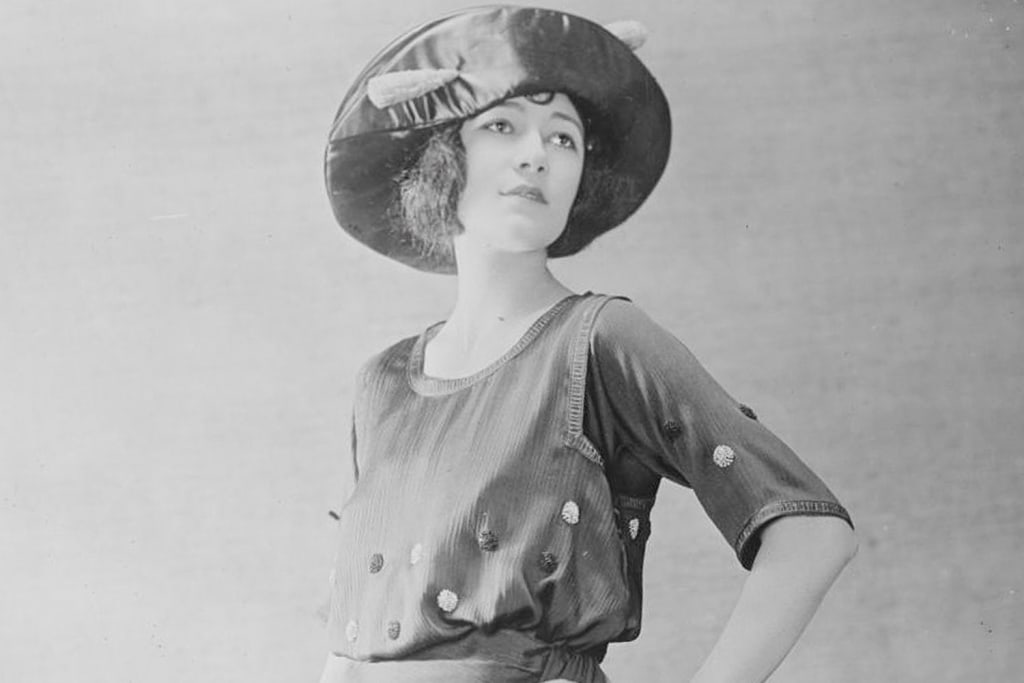
An Heiress Vanishes Without a Trace
The morning of December 12th, 1910, 25 year old socialite Dorothy Arnold stepped out of her family's mansion on New York's Upper East Side to shop for a dress. Her goal was simple: find the perfect dress for her younger sister’s debutante ball.
She told her mother she preferred to go alone, slipped $30 into her purse (about $1,000 in today's money), and strolled into Manhattan where she bought chocolates at Park & Tillford, and a book of humorous essays from Brentano's book shop.
Some time before 2pm she ran into a friend, and mentioned walking home through Central Park.
Then she vanished.
Dorothy’s disappearance would ignite a media storm, scandalize one of Manhattan’s most prestigious families, and spark over a century of speculation.
Despite widespread coverage, hundreds of leads, and even a public reward, Dorothy Arnold was never found. Her case remains the oldest active missing person investigation in New York City history.
A Life of Secrets
Born into wealth and lineage tracing back to the Mayflower, Dorothy lived a life of comfort, but not of freedom. A graduate of Bryn Mawr College with literary ambitions, she longed to be a published writer. She had submitted multiple short stories to McClure’s Magazine, all of which were rejected.
When she asked her father for permission to move to Greenwich Village and pursue writing more seriously, he scoffed. He reportedly told her that no “daughter of his” would live in a bohemian neighborhood or earn her living.
Undeterred, Dorothy secretly maintained a private post office box for her correspondence. Unknown to her parents, she had been seeing a 40-year-old man named George S. Griscom Jr., a Harvard-educated but jobless bachelor from Pittsburgh.
Griscom had a reputation for poor character and a broken engagement to another heiress. Dorothy’s parents strongly disapproved of him, but that didn’t stop her.
In September 1910, just months before she vanished, Dorothy pawned jewelry and used the money to fund a secret weeklong trip to Boston with Griscom, staying at the Hotel Essex. She told her family she was visiting a college friend in Cambridge.
The letters she sent to Griscom, some of them intimate, were later found by her brother and, reportedly, burned to preserve the family’s dignity.
The Delayed Investigation
When Dorothy failed to return home on the evening of December 12th, her family didn't immediately contact the police. Instead, they called friends.
The next day, they hired the Pinkerton Detective Agency, but still refused to alert authorities, their fear of a social scandal outweighing their urgency.
It wasn't until six weeks later, on January 25, 1911, that Dorothy’s father finally went public, holding a press conference and offering a $1,000 reward for information. Her face soon graced the front page of the New York Times.
The press ran wild. Tabloids speculated she had run off to elope. Others suggested suicide due to literary rejection or family tension. Still others floated more sinister theories—abduction, murder, or an accident covered up by powerful friends.
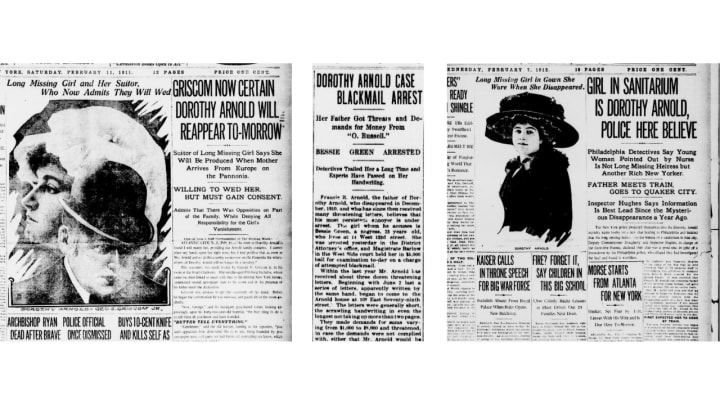
Theories and Rumors
Among the most persistent rumors is that Dorothy died from complications of a botched abortion. This theory emerged after a Manhattan physician claimed she had died on an operating table and that her body had been secretly disposed of.
Though unproven, it was a theory that gained traction, especially given the family’s tight-lipped behavior and the social stigma of the time.
Another claim, reported years later, suggested that Dorothy's body had been cremated at a local funeral parlor under a false name, possibly arranged by someone close to her. No solid evidence was ever produced.
In the midst of this, Griscom continued to receive letters from Dorothy, at least, according to him. He claimed that he had received mail from her even after the disappearance, though none were ever produced publicly.
When questioned, he denied any involvement but refused to travel to New York to face investigators directly. This only fueled suspicions.
The 1921 "Solved" Controversy
In 1921, a full decade after her disappearance, NYPD Captain John H. Ayers, head of the Bureau of Missing Persons, made a shocking announcement: the case had been solved, and Dorothy Arnold was no longer considered a missing person.
When pressed for details, however, Ayers refused to elaborate. The Arnold family was blindsided and furious. Ayers was forced to walk back his statement and later claimed he had only meant that the family might have resolved the matter privately.
The damage was done. The public was now convinced that something had been covered up—and the silence from both the police and the Arnolds only deepened the mystery.
A Chilling Legacy
Dorothy’s great-niece, Jane Vollmer, wouldn’t even learn of the case until decades later. She came across a “Justice Story” column in the Daily News and saw her family name in the headline.
Her mother, born five years after Dorothy disappeared, had never mentioned it.
“My grandmother would be absolutely horrified to have all this dug up a hundred years later,” Vollmer said. “But maybe it’s time someone told the truth.”
Despite thousands of tips, sightings, and false leads over the years, Dorothy Arnold was never seen or heard from again. Her name is etched into New York City history, not for who she was, but for the space she left behind.
Why We Still Talk About Dorothy Arnold
Dorothy’s disappearance offers a perfect storm of intrigue: a wealthy young woman ahead of her time, a secret romance, class expectations, media frenzy, and a suspicious silence from the people closest to her.
It asks the question: how can someone with everything—money, connections, ambition—vanish into thin air?
More than a century later, the case still haunts those who study it. Was it shame? A cover-up? Or was Dorothy simply in the wrong place at the wrong time?
No one knows for sure. But perhaps the silence, the refusals, and the quiet grief of a family more concerned with reputation than resolution—tells it's own kind of story.
__________________________________________
Thank you for reading!
Have a historical true crime case you'd like to see covered next? Drop it in the comments below—I'm always on the lookout for strange disappearances and forgotten headlines from the past.
__________________________________________
About the Creator
Riley Hartwin
From cold cases to hot romances — I cover true crime, curious places, and serialized love stories with a twist.
Keep reading
More stories from Riley Hartwin and writers in Criminal and other communities.
5 Real Places That Feel Like Fiction (But You Can Actually Visit Them)
Some places make you question whether reality glitched out and rendered a fantasy map instead. These five destinations look like they belong in novels, nightmares, or video games. But nope. They're very real. And yes, you can actually go there (if you’re brave, rich, or slightly unhinged).
By Riley Hartwin7 months ago in Wander




Comments (1)
This story is fascinating. It's crazy how someone can just disappear like that. Makes you wonder what really happened to her. I can't imagine the media storm it caused back then. And her family's reaction must've been intense. It's interesting how she had all these secrets, like the guy she was seeing and trying to pursue writing against her father's wishes. What do you think was the most likely reason for her vanishing?