
The Silent Heist
The city of Brookdale prided itself on being calm and predictable. Nestled between rolling hills and quiet rivers, it was the kind of place

M Mehran
The city of Brookdale prided itself on being calm and predictable. Nestled between rolling hills and quiet rivers, it was the kind of place where shopkeepers knew customers by name, and neighbors left pies on each other’s porches. But in late autumn, something unusual shattered the town’s sense of security: the silent heist.
It began with whispers. A jewelry store on Main Street was robbed overnight without a single broken lock or shattered window. The next week, a local bank reported missing cash, though no alarms were triggered. Then, an antique shop owner discovered half her collection gone—rare coins, old pocket watches, even a grandfather clock—all lifted without so much as a scratch on the door.
Detective Martin Hayes, a veteran with twenty years on the force, was puzzled. The town had seen its share of petty thefts, but this was different. “It’s like a ghost is moving through Brookdale,” he told his partner, Officer Lena Cruz. “No forced entry, no alarms, no noise. Just gone.”
Rumors spread quickly. Some said it had to be an inside job, others swore it was a professional crew passing through. Yet Martin noticed something odd: each of the victims was a longtime resident, people whose routines were easy to predict. Whoever was behind this wasn’t choosing at random.
The break in the case came one night when a bakery owner, Mrs. Ellison, heard faint footsteps in her shop’s back room. By the time she reached it, her safe was already open and cash gone, though the door hadn’t been touched. Shaken, she described a tall figure dressed in dark clothes, moving “like smoke.”
Martin and Lena traced the pattern and focused on a narrow alley behind the row of shops. The alley ended at an abandoned locksmith’s workshop, boarded up for years. Inside, they found dust, cobwebs, and what appeared to be old tools scattered around. But one detail caught Martin’s sharp eye: fresh footprints in the dust.
The investigation took weeks, but eventually, they uncovered the truth. The culprit was none other than Tyler Briggs, once a skilled locksmith and respected tradesman in Brookdale. Years ago, his shop had thrived, but after new technology replaced traditional locks, he lost his business and his livelihood. Bitterness grew, and in secret, Tyler began using his old expertise to outwit modern security systems.
His method was ingenious. He bypassed alarms not with brute force but with knowledge—tiny flaws in wiring, overlooked backdoors in electronic panels, weaknesses in safes he had once repaired for the same townspeople he now robbed. He moved silently, with precision, always leaving behind a mystery.
When Martin confronted him in the workshop one night, Tyler didn’t deny it. Instead, he smirked. “They replaced me with machines, detective. They thought I was obsolete. But every lock has a secret, and I know them all.”
The arrest shocked Brookdale. Many couldn’t believe the friendly locksmith they once trusted had turned criminal. His trial drew curious crowds, and his story quickly became front-page news. Tyler was sentenced to several years in prison, but the deeper wound was the betrayal felt by those who had once been his loyal customers.
For Martin, the case was a reminder that crime often came not from outsiders, but from within a community—ordinary people pushed down paths of resentment, desperation, or pride. “The hardest crimes to solve,” he later said, “are the ones committed by people we thought we knew.”
Brookdale eventually returned to its quiet rhythm, but with a sharper sense of awareness. Locks were upgraded, alarms tested, and residents more careful with trust. And though the silent heist ended with justice, its memory lingered as a lesson: even in the calmest towns, shadows can grow in the unlikeliest of places.
About the Creator
Keep reading
More stories from Muhammad Mehran and writers in Criminal and other communities.
Shadows in the Alley
M Mehran It was just past midnight when the quiet town of Greenford stirred with whispers of fear. For months, residents had been on edge—doors double-locked, windows barred, and curtains drawn tight. Something sinister was unfolding in their neighborhood, and no one knew who would be the next victim.
By Muhammad Mehran6 months ago in Criminal
He Confessed to Murder in My DMs: The Dark Side of Going Viral
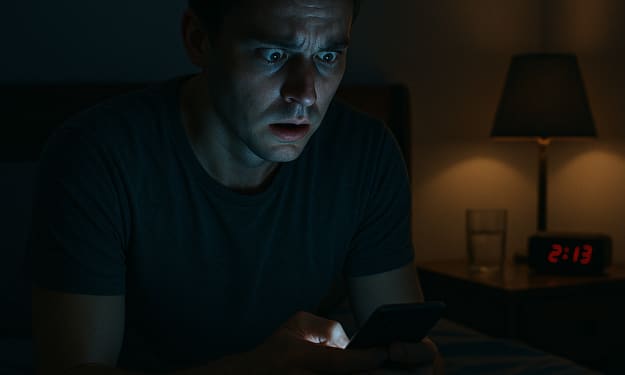
When your most-liked story becomes someone else's confession booth The message came in at 2:13 a.m. I saw the notification glow on my nightstand, that soft blue light that usually means spam, or a heart emoji, or someone asking, “Did this really happen?”
By abualyaanart6 days ago in Criminal
The 1995 Oklahoma City Bombing
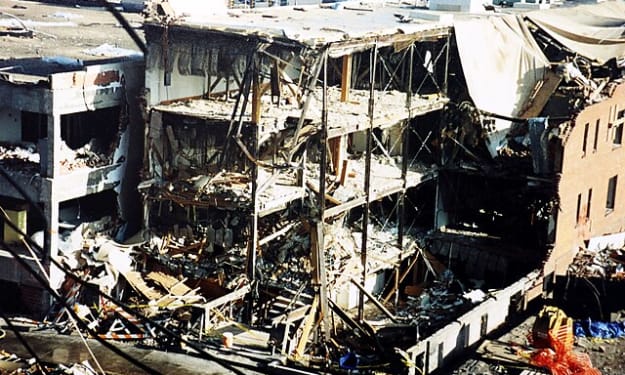
Terrorism and mass shootings no longer shock most Americans. We've heard and seen it all before, more than a few times. Nowadays, we scroll past the post or flip the TV channel without much thought. Perhaps terror attacks are so common that we expect them. We aren't surprised. It hasn't always been this way. There was a time when terror attacks and mass shootings rarely happened. Those rare events shocked people to their core. It left them fearful, yet communal, ready to come together for the betterment of our country.
By Criminal Matters6 days ago in Criminal
A Historic Declaration
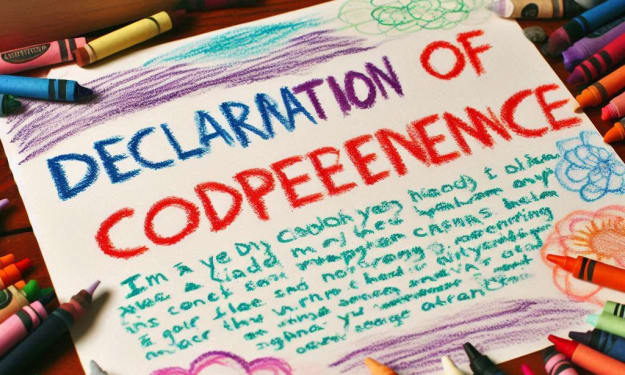
We the People of the Husbands of the United States of America, in Order to form a more perfect Union, and I mean you...with me...establish Justice, insure domestic Tranquility, provide for the common defence, promote the general Welfare, and secure the Blessings of Liberty to ourselves, after Puberty, do ordain and establish this Declaration of Co-Dependence.
By Gerard DiLeo5 days ago in Humans

Comments
There are no comments for this story
Be the first to respond and start the conversation.