
Shadows in the Alley
It was just past midnight when the quiet town of Greenford stirred with whispers of fear.

M Mehran
It was just past midnight when the quiet town of Greenford stirred with whispers of fear. For months, residents had been on edge—doors double-locked, windows barred, and curtains drawn tight. Something sinister was unfolding in their neighborhood, and no one knew who would be the next victim.
Detective Carla Jennings had been working the case for weeks. She was known for her sharp instincts and her ability to see through the smoke of lies that criminals often left behind. Yet, even she felt the weight of uncertainty pressing against her. Greenford had always been a safe place—farmers, shopkeepers, teachers, and families who trusted one another. But the string of burglaries and assaults was turning that trust into suspicion.
The criminals struck with precision. They knew when houses were empty, which families had valuables, and even how to silence barking dogs. It wasn’t random; it was organized. Some believed it was a gang moving through town, while others whispered that it had to be someone local—someone who blended in by day and hunted by night.
One victim, Mr. Harold Pierce, an elderly man who lived alone, described the intruders as “shadows with voices.” They never revealed their faces, always wearing masks, and spoke in short, sharp commands. He had been tied to a chair while his small savings and family heirlooms were taken. “They knew exactly where to look,” Harold had told the police. “That’s what scares me most. They knew my house better than I did.”
Carla pieced together the reports and noticed a troubling pattern. The criminals targeted people who lived on the edges of town, far from the main square where the police patrols were most frequent. It was as if they studied the rhythms of Greenford before making their move.
One rainy evening, a break came in the case. A young delivery boy, Marcus, had been cycling home when he saw suspicious movement near an abandoned warehouse by the river. He noticed two men carrying bags and slipping through the rusted doors. Curious and cautious, he reported it the next morning.
Carla and her team immediately launched a covert surveillance operation. They positioned themselves around the warehouse, waiting. Hours passed. Then, just before dawn, a van rolled up. Three masked figures unloaded boxes into the building. Inside those boxes, Carla later discovered, were stolen goods from multiple homes—jewelry, electronics, even children’s bicycles.
But what shocked her most was what they found next: detailed maps of the town, with certain houses circled in red. On the list were the names of future victims, including the mayor, a local business owner, and even the police chief. This wasn’t just a petty crime spree; it was a coordinated attempt to destabilize Greenford.
The criminals weren’t outsiders at all. Through forensic evidence and investigation, Carla uncovered the truth. The ringleader was a man named Daniel Cross, a former construction worker who had once been well-respected in the community. After losing his job during an economic downturn, Daniel grew bitter, feeling betrayed by the town he had helped build. He recruited two others who shared his resentment and knowledge of Greenford’s layout. Together, they orchestrated the crime wave, feeding off fear and power.
Carla prepared for the final move. She couldn’t risk another family falling victim. With a small team, she raided the warehouse one stormy night. The confrontation was tense—shouts, footsteps, and the echo of rain against metal walls. Daniel tried to escape through a hidden back door, but Carla anticipated his every step. She cornered him in the alley behind the warehouse, the dim glow of the streetlamp casting long shadows.
“Why, Daniel?” she asked, her voice steady but laced with disappointment.
His eyes, wild with anger, met hers. “Because this town turned its back on me. I gave my life to it, and it gave me nothing in return. Now they’ll know what it feels like to lose.”
But the people of Greenford never had a chance to answer him. The law did. Daniel and his accomplices were arrested that night. Evidence piled against them left no doubt about their crimes. The trial drew crowds from every corner of the county, and the story of betrayal and greed became the subject of headlines for months.
Though justice was served, the scars remained. Families who once left their doors open now checked the locks twice. Children no longer roamed freely after sunset. Trust, once so abundant in Greenford, became fragile.
Yet, in the aftermath, Carla believed something stronger would grow. The community, shaken but not broken, began to unite in ways it never had before. Neighbors looked out for one another, new neighborhood watch groups were formed, and the town worked to rebuild its sense of safety.
Greenford’s story was not just about crime—it was about resilience. The shadows that once haunted the alleys had been forced into the light, and though the night still carried echoes of fear, the dawn carried hope.
And for Detective Carla Jennings, it was another reminder that crime was never just about stolen goods. It was about broken trust, hidden pain, and the choices that turned ordinary people into criminals. But it was also about courage—the courage of a town that refused to be destroyed by fear.
About the Creator
Keep reading
More stories from Muhammad Mehran and writers in Criminal and other communities.
The Midnight Heist of Riverside Lane
M Mehran Riverside Lane had always been quiet, almost painfully so. Rows of brick houses, neatly trimmed hedges, and the soft hum of streetlights gave the illusion of safety. But beneath the calm surface, the neighborhood had a secret: for weeks, residents had been reporting missing items—small things at first, then more valuable: jewelry, electronics, even cash.
By Muhammad Mehran6 months ago in Criminal
The Enigmatic Death of Ellen Greenberg: A Case That Defies Explanation
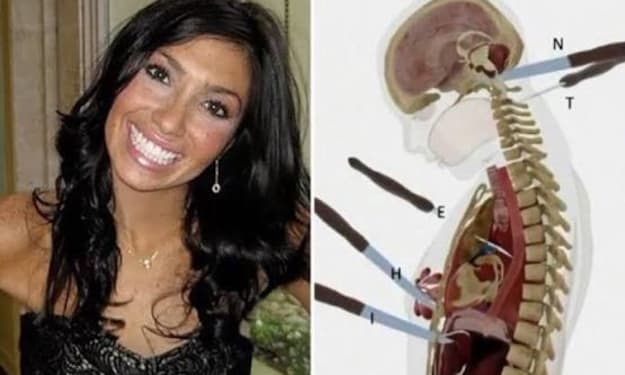
On a snowy January afternoon in 2011 the life of 27-year-old Ellen Rae Greenberg came to a tragic and baffling end. Ellen a vibrant first-grade teacher at Juniata Park Academy in Philadelphia was discovered lifeless on the kitchen floor of her Manayunk apartment. She had sustained an astonishing 20 stab wounds including deep penetrations to her chest neck abdomen, and even the back of her head. Some wounds were so severe they pierced her skull and damaged her brain and spinal cord. Her fiance Samuel Goldberg, found her after forcing his way into the locked apartment claiming he had stepped out briefly to the gym during a blizzard.Ellen was born on June 23, 1983, in New York City, but grew up in Harrisburg, Pennsylvania. Described by friends and family as outgoing, compassionate, and full of life, she had recently gotten engaged and was planning her wedding. She loved teaching young children, often sharing stories of her students' progress with her parents, Sandra and Joshua Greenberg. There were no overt signs of distress in her life, though reports later emerged that she had been experiencing anxiety and had sought psychiatric help shortly before her death. She was prescribed medication for anxiety, but nothing suggested she was suicidal.
By Kure Garba6 days ago in Criminal
Tatt~Master
— Assembly Line Tatt Machine ~ Impressions to Impress — As I begin to understand more about the Tattoo Phenomenon. I've written silly, yet verbatim, dating site anecdotes in 'Frazzled.' So let me ask you: Would you be More attracted to someone slathered with tattoos, or Less?
By Jay Kantor7 days ago in Humor



Comments
There are no comments for this story
Be the first to respond and start the conversation.