
The Shadow Empire: The Untold Story of the ‘Ndrangheta Mafia
Inside the world’s most dangerous and secretive crime family that controls billions from the shadows
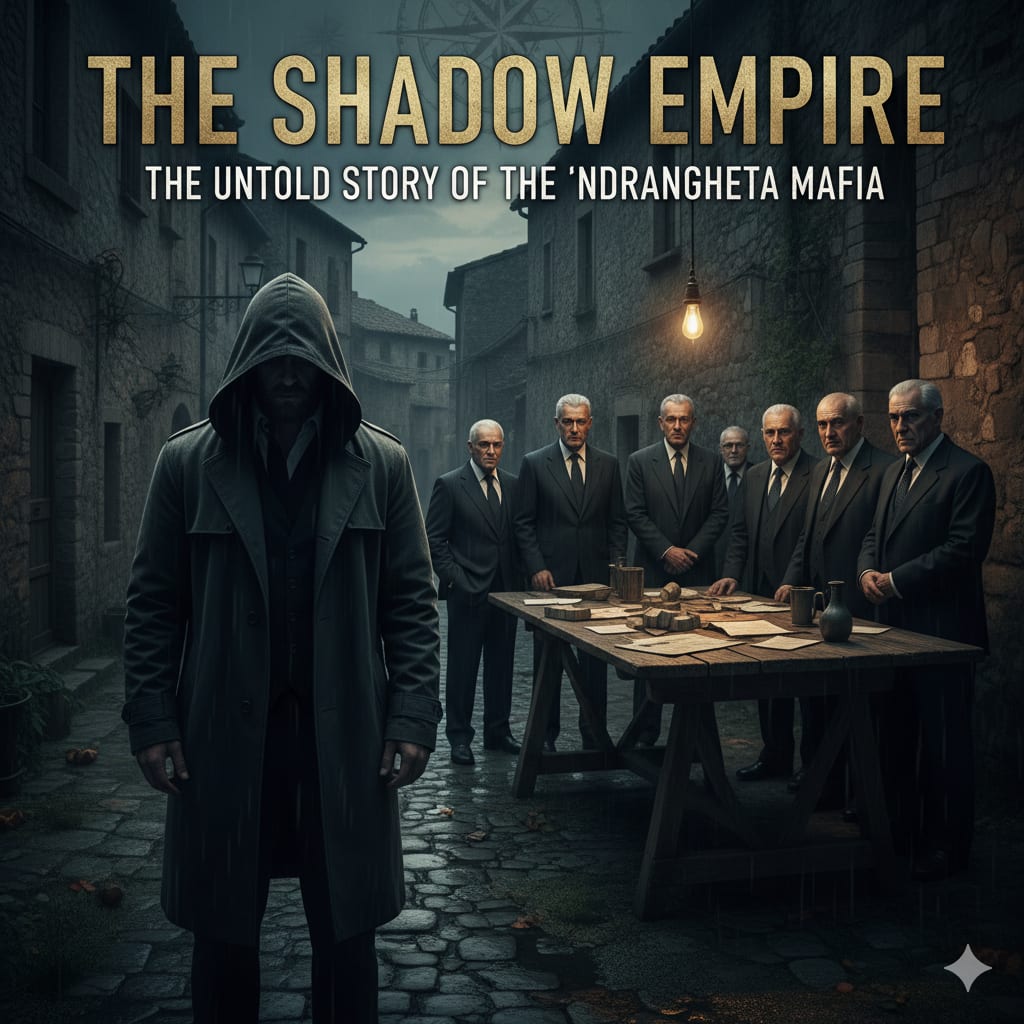
In the dimly lit hills of Calabria, southern Italy, a quiet storm brews beneath the rustic beauty of olive trees and ancient villages. To the outside world, Calabria looks serene, untouched by the chaos of modern life. But deep in the heart of this region, hidden in family ties and blood oaths, lies one of the most dangerous criminal empires ever known — the ‘Ndrangheta.
Unlike the infamous Sicilian Mafia or the flashy American mobsters of the past, the ‘Ndrangheta operates in silence. They don’t seek fame or recognition; they seek control. Their empire stretches from Italy to South America, Australia, Canada, and even the Middle East — a web of power spun through fear, family, and fortune.
Born from Poverty, Built on Blood
The ‘Ndrangheta’s origins trace back to the 18th century, when Calabria’s poor farmers and shepherds formed small clans for protection. Over time, these clans evolved into something far more sinister. Bound by loyalty, secrecy, and strict codes of silence known as omertà, they became a force of terror and power.
Each ‘Ndrangheta family, or ‘ndrina, operates independently but stays united under a council known as the Crimine. Blood relations keep everything sealed. Outsiders are never truly trusted. Betrayal is punished with death, and loyalty is rewarded with unimaginable wealth.
By the late 20th century, the ‘Ndrangheta had grown far beyond Calabria’s borders. While the Sicilian Cosa Nostra was collapsing under international crackdowns, the Calabrian mafia was quietly taking over global cocaine routes, partnering directly with South American cartels. They became the unseen hand moving billions across continents.
The Invisible Network
One of the ‘Ndrangheta’s most powerful secrets is its ability to remain invisible. Its leaders rarely appear in public. Its soldiers blend into society — running construction companies, logistics firms, and import-export businesses that act as fronts for money laundering.
Investigators describe their organization as “a spiderweb without a center.” Every family controls its own business but connects through bloodlines and marriages, making infiltration nearly impossible.
Law enforcement agents who dared to go after them faced not only death threats but also deep corruption within police and politics. In Italy, prosecutors have been assassinated. Witnesses have disappeared. In one chilling case, a journalist investigating the ‘Ndrangheta’s financial empire was found dead in his burned car, his story forever silenced.
Yet, the mafia’s influence continues to grow. From the ports of Antwerp and Rotterdam to the skyscrapers of Toronto and Sydney, the ‘Ndrangheta launders money through real estate, cryptocurrency, and shell companies. Their estimated annual revenue exceeds $60 billion, surpassing the GDP of many small nations.
The Cocaine Kings of Europe
The ‘Ndrangheta’s rise to global dominance came through one of the most lucrative trades in the world — cocaine. Unlike other mafia groups that relied on intermediaries, the Calabrians built direct relationships with Colombian and Peruvian cartels.
Their trusted emissaries traveled to South America, negotiated prices, and ensured secure routes through Europe’s ports. The city of Gioia Tauro, in Calabria, became the primary entry point for cocaine entering Europe. Hidden inside containers of bananas, coffee, and textiles, tons of cocaine passed through unnoticed.
By the early 2000s, nearly 80% of Europe’s cocaine trade was under ‘Ndrangheta control. Their wealth grew so large that they began financing legitimate businesses — hotels, supermarkets, and even football clubs — blending crime and commerce seamlessly.
The Family That Rules the Shadows
One name stands above all in the modern era of the ‘Ndrangheta: the Mancuso family. Based in the small town of Limbadi, the Mancusos are considered one of the most powerful clans. Their patriarch, Luigi Mancuso, was known as “The Uncle.” To his people, he was a man of honor; to prosecutors, he was a ghostly mastermind.
For decades, Luigi evaded justice, operating behind layers of family and false identities. His network reached judges, politicians, and businessmen. Even when arrested, the organization continued without pause — a testament to its deep structure.
In 2021, Italy launched the “Maxi Trial” of the century, charging over 350 ‘Ndrangheta members. Courtrooms were turned into fortified bunkers. Judges wore bulletproof vests. But even then, prosecutors admitted that cutting one head only made two more grow.
Why They’re the Most Dangerous
The ‘Ndrangheta’s true danger lies not just in their violence but in their invisibility. They don’t need guns to control governments — they use money, marriages, and influence. They don’t post online or brag on the streets. Their silence is their shield.
Unlike other mafias that crumble under greed or internal wars, the ‘Ndrangheta’s family structure ensures survival. Every child is born into the code. Every oath is taken in blood. They don’t just fear death — they embrace it for honor.
The Empire That Never Sleeps
Today, the ‘Ndrangheta operates like a multinational corporation of crime. Their investments flow through Dubai skyscrapers, Swiss banks, and African mining companies. Intelligence agencies across the world consider them the most powerful criminal network on Earth.
And yet, in the quiet villages of Calabria, life seems unchanged. The old men play cards in the square, women hang laundry under the sun, and children laugh in the distance. But everyone knows the truth — the shadow empire still rules from the hills.
The world may forget their name, but the ‘Ndrangheta never forgets those who stand in their way.
About the Creator
shakir hamid
A passionate writer sharing well-researched true stories, real-life events, and thought-provoking content. My work focuses on clarity, depth, and storytelling that keeps readers informed and engaged.
Keep reading
More stories from shakir hamid and writers in Criminal and other communities.
Goldy Brar: The Fugitive & the Fallout
His full name is Satinderjeet Singh Brar, born 11 March 1994 in Sri Muktsar Sahib, Punjab. But most people know him simply as Goldy Brar — a name that has loomed large in news reports, police investigations, and international manhunt lists.
By shakir hamid4 months ago in Criminal
The Facebook Marketplace of Horrors: Inside the groups where bones are traded like baseball cards.
It Wasn't the Dark Web When we hear about the illegal sale of human body parts, we imagine the "Dark Web"—encrypted Tor browsers, Bitcoin wallets, and shadowy Russian servers. The terrifying reality of the Jonathan Gerlach case is that he wasn't hiding in the digital shadows. He was hiding in plain sight.
By Sunshine Firecracker3 days ago in Criminal
What DHS Secretary Kristi Noem said vs. what the videos show
NBC News and PBS recapped the competinBelow is a structured, evidence-backed analysis of the Minneapolis ICE shooting and the claims made by DHS Secretary Kristi Noem—including the applicable federal laws/policies and how intent vs. recklessness factor into a potential case. I’ll keep this clear, precise, and grounded in the video evidence and governing law.
By Organic Products 6 days ago in Criminal



Comments
There are no comments for this story
Be the first to respond and start the conversation.