
The Root Cause Crisis
Why Incarceration Fails to Heal Trauma

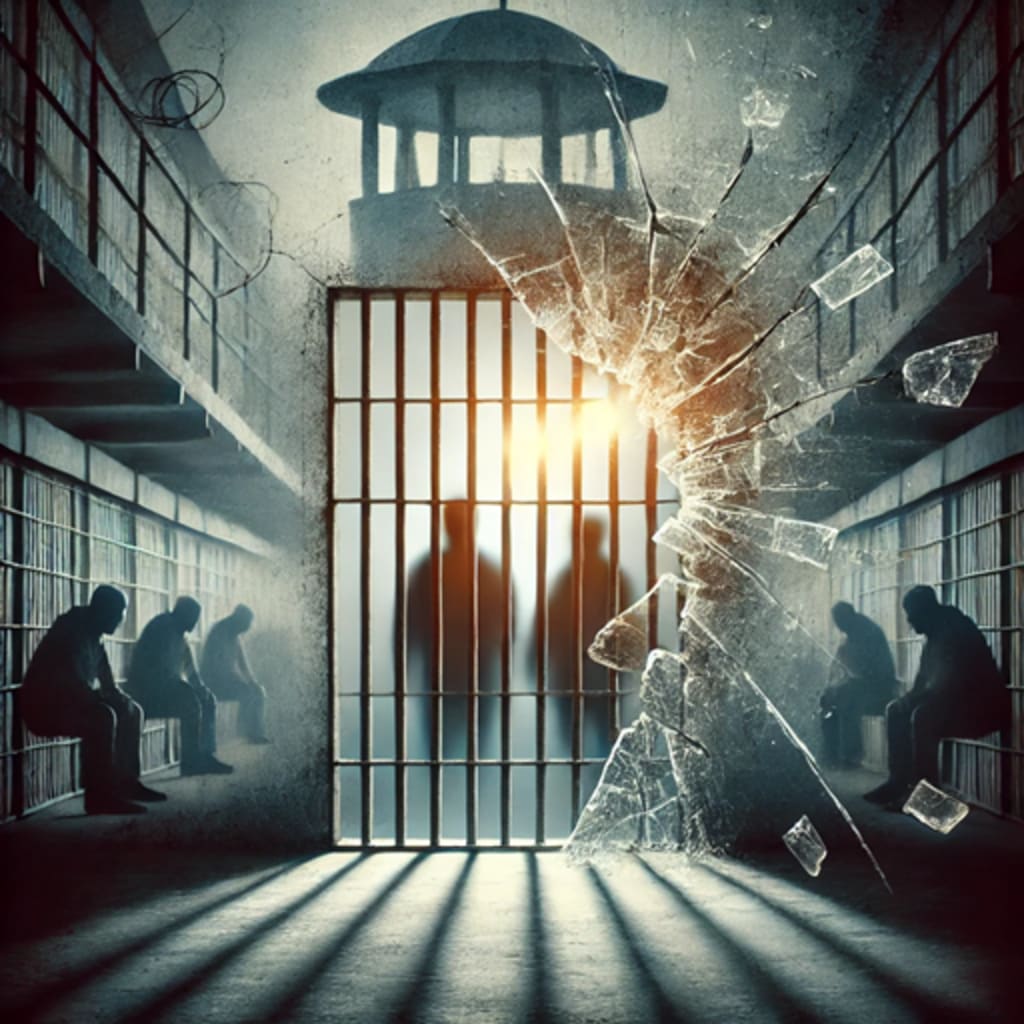
The criminal justice system is often seen as the solution to crime, yet it fails to address one of the most pressing issues facing incarcerated individuals: trauma. While mental health programs within jails and prisons are focused on managing the visible, immediate symptoms—agitation, anxiety, and aggression—they rarely tackle the root causes of trauma that many inmates bring with them when they enter the system.
This is a critical oversight.
Lesser-known research reveals that a staggering 60% of incarcerated individuals have experienced some form of childhood abuse, including physical, emotional, and sexual abuse. Many of these individuals enter the system with untreated PTSD, often compounded by experiences of violence and neglect. According to the National Institute of Corrections, over 90% of incarcerated individuals have experienced some form of trauma in their lifetime. Yet, despite this overwhelming evidence, the prison system’s approach is symptom-driven, focusing on managing the behaviors that stem from trauma rather than addressing the trauma itself.
There’s a misconception that incarceration is a one-size-fits-all solution. In reality, prison fails to treat the trauma that contributes to criminal behavior. Instead of providing trauma-informed care, the system often punishes the behaviors that are direct results of unresolved trauma. For example, a person who exhibits aggression might be treated with isolation or medication, but the underlying cause—perhaps a history of physical abuse or neglect—remains unaddressed. This not only leaves the trauma untreated but can exacerbate it, leading to worsening mental health over time.
The result? A revolving door of incarceration.
Studies show that individuals who do not receive proper trauma care are more likely to reoffend, not because they are inherently bad but because their underlying pain remains unresolved. Research from the National Institutes of Health highlights that trauma survivors who don’t have access to mental health treatment often turn to substance abuse, violence, or other destructive behaviors as coping mechanisms. These behaviors, in turn, get them arrested, and the cycle continues.
A lack of trauma-informed rehabilitation also ignores the fact that many of these individuals were victims before they became offenders. We often forget that trauma—especially childhood trauma—can fundamentally alter the brain’s structure and function. Neuroscience shows that chronic stress and trauma can impair areas of the brain responsible for impulse control, emotional regulation, and decision-making. So when we punish the symptom of aggression without understanding its root cause, we perpetuate a broken system that further traumatizes individuals instead of healing them.
The need for trauma-informed care is clear, but it’s also complex. It’s not just about providing therapy, though that is a crucial component. It’s about changing the entire approach to incarceration. We need systems that prioritize healing and rehabilitation, systems that understand how trauma rewires the brain and manifests in behaviors that society sees as criminal.
For real change, we must shift from simply managing behaviors to addressing the root causes of those behaviors. That means incorporating trauma-focused therapies like Cognitive Behavioral Therapy (CBT) or Eye Movement Desensitization and Reprocessing (EMDR) into prison systems, practices that are already proven to help individuals heal from trauma.
To truly break the cycle of recidivism, we must move past the myth that incarceration alone can solve the problem. Instead, we need a system that focuses on healing, not just punishment. Until we address trauma at its core, we will continue to trap people in a cycle of pain, punishment, and reoffending.
About the Creator
Dr. Mozelle Martin
Behavioral analyst and investigative writer examining how people, institutions, and narratives behave under pressure—and what remains when systems fail.
Keep reading
More stories from Dr. Mozelle Martin and writers in Criminal and other communities.
When Search Results Become Character Evidence
At 8:30 a.m. on a routine pretrial morning, a prosecutor refreshes a browser. A defense attorney does the same. Before the first witness is sworn, both sides have already reviewed what appears when the defendant’s name is typed into a search bar. That page is not evidence. It is not sworn testimony. Yet it often shapes strategy long before the rules of evidence are argued in open court.
By Dr. Mozelle Martin15 days ago in Criminal
Elon Musk
I was born in South Africa, in a household where strictness and violence were the norm. While other kids played, I hid. I was beaten at school, ignored during recess, and once thrown down the stairs, ending up in a hospital bed. But these challenges didn't crush me. They made me stronger.
By Tariq Pathan 5 days ago in Criminal
Convicted Murderer Escaped Prison 50 Years Ago
It is shocking to know that prison inmates had such freedom in the old days. Lester Eubanks should be in prison right now. He, instead, walked away from an inmate program 50 years ago and hasn't been seen since. By all appearances, he lived a normal life during this time. He worked, dated women, and hung out with friends. He maintained contact with his dad, Mose, until his death. He even attended his funeral. Why did Eubanks go to prison, and how did he elude authorities for so long?
By Criminal Matters7 days ago in Criminal




Comments