
The Plight of the Palestinians: A Struggle for Justice and Self-Determination
Struggle
****
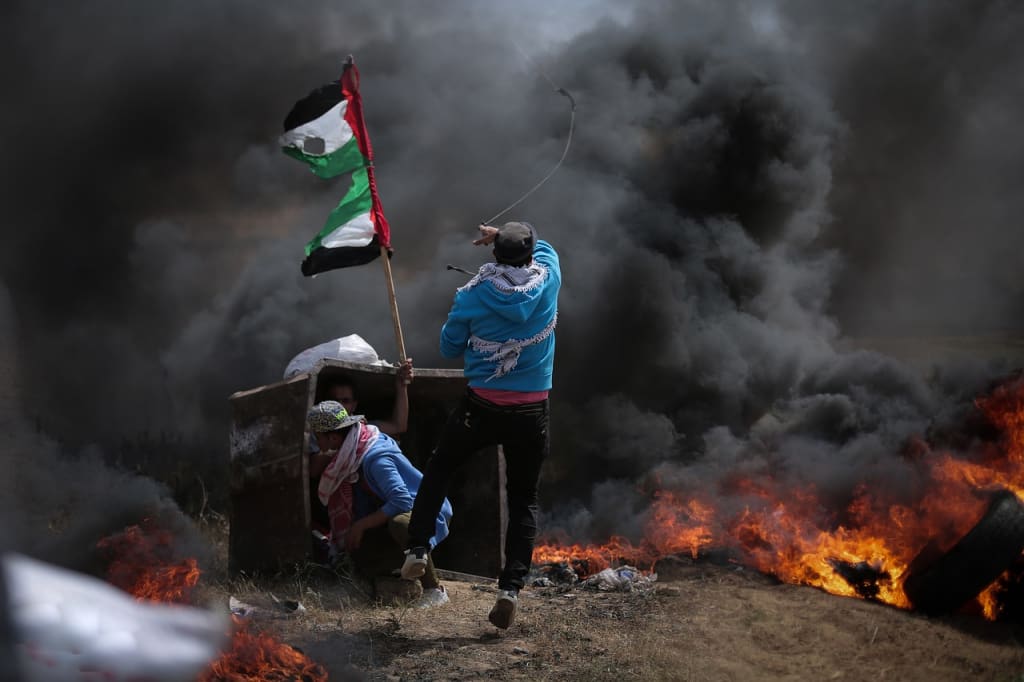
The Palestinian struggle for justice, self-determination, and statehood is one of the most protracted and contentious issues in modern history. For over a century, the Palestinian people have endured displacement, occupation, and systemic oppression, shaping a narrative of resilience and resistance. The conflict between Israelis and Palestinians is deeply rooted in history, politics, and religion, with both sides laying claim to the same land. However, the human cost of this conflict has disproportionately affected the Palestinian population, leaving them in a state of perpetual hardship. This article explores the historical context of the Palestinian plight, the ongoing challenges they face, and the quest for a just and lasting resolution.
### **Historical Context: The Roots of Displacement**
The origins of the Palestinian struggle can be traced back to the late 19th and early 20th centuries, during the decline of the Ottoman Empire and the rise of European colonialism. The Balfour Declaration of 1917, in which Britain expressed support for the establishment of a "national home for the Jewish people" in Palestine, marked a turning point. At the time, Palestine was predominantly Arab, with a small Jewish minority. The declaration, coupled with the British Mandate over Palestine (1920-1948), led to increased Jewish immigration and tensions between Jewish and Arab communities.
The United Nations Partition Plan of 1947 proposed dividing Palestine into separate Jewish and Arab states, with Jerusalem under international administration. While Jewish leaders accepted the plan, Arab leaders rejected it, arguing that it unfairly allocated land and ignored the rights of the indigenous Palestinian population. The subsequent 1948 Arab-Israeli War, known to Palestinians as the *Nakba* (catastrophe), resulted in the displacement of approximately 700,000 Palestinians from their homes. Many became refugees, fleeing to neighboring countries or living in camps within the West Bank, Gaza Strip, and surrounding regions.
### **Occupation and Fragmentation**
The 1967 Six-Day War further exacerbated the Palestinian plight. Israel occupied the West Bank, Gaza Strip, East Jerusalem, and the Golan Heights, territories that remain at the heart of the conflict. The occupation brought with it military rule, land confiscation, and the establishment of Israeli settlements, which are considered illegal under international law. Today, over 700,000 Israeli settlers live in the West Bank and East Jerusalem, fragmenting Palestinian territories and undermining the prospects for a contiguous Palestinian state.
The Gaza Strip, a small coastal enclave, has been under an Israeli-Egyptian blockade since 2007, following the takeover of the territory by Hamas, a Palestinian militant group. The blockade has severely restricted the movement of people and goods, leading to widespread poverty, unemployment, and a humanitarian crisis. Gaza's population of over two million people, most of whom are refugees, faces chronic shortages of electricity, clean water, and medical supplies.
### **Systemic Oppression and Human Rights Violations**
The Palestinian experience under Israeli occupation is characterized by systemic oppression and human rights violations. Palestinians in the West Bank live under military law, while Israeli settlers in the same area are subject to civilian law, creating a dual legal system that discriminates against Palestinians. Checkpoints, roadblocks, and the separation barrier restrict freedom of movement, making it difficult for Palestinians to access work, education, and healthcare.
House demolitions, forced evictions, and land confiscations are common, particularly in East Jerusalem and Area C of the West Bank, where Israel retains full control. These practices are often justified on security grounds or to make way for settlement expansion, but they disproportionately affect Palestinian communities. Additionally, the use of administrative detention—imprisonment without charge or trial—has been widely criticized by human rights organizations.
In Gaza, periodic military escalations have resulted in significant loss of life and destruction. The 2014 Gaza War, for example, killed over 2,200 Palestinians, including hundreds of children, and displaced thousands more. The use of excessive force by Israeli military forces and the targeting of civilian infrastructure have drawn condemnation from international bodies.
### **The Refugee Crisis and Diaspora**
The Palestinian refugee crisis remains one of the largest and longest-standing in the world. Today, there are over 5.7 million registered Palestinian refugees, many of whom live in camps in Jordan, Lebanon, Syria, the West Bank, and Gaza. The United Nations Relief and Works Agency for Palestine Refugees (UNRWA) provides essential services, but funding shortages and political challenges have strained its operations.
For many Palestinians, the right of return—the principle that refugees should be allowed to return to their homes—is a central demand. However, Israel has consistently rejected this right, fearing it would alter the demographic balance of the state. The refugee issue remains a key sticking point in peace negotiations.
### **The Quest for Statehood and International Recognition**
The Palestinian leadership has sought international recognition of statehood as a path to self-determination. In 1988, the Palestine Liberation Organization (PLO) declared the establishment of the State of Palestine, and in 2012, the United Nations granted Palestine non-member observer state status. Over 130 countries now recognize Palestine as a sovereign state, though key players like the United States and most European Union members do not.
Efforts to achieve a two-state solution—a Palestinian state alongside Israel—have repeatedly faltered. The Oslo Accords of the 1990s, which established the Palestinian Authority (PA) and envisioned a phased path to statehood, failed to deliver lasting peace. Issues such as borders, settlements, Jerusalem, and refugees remain unresolved, and trust between the two sides has eroded.
### **The Role of the International Community**
The international community has played a mixed role in addressing the Palestinian plight. While many countries and organizations have condemned Israeli policies and supported Palestinian rights, concrete action has been limited. The United States, a key ally of Israel, has often vetoed UN resolutions critical of Israel, while providing significant military and economic aid.
Grassroots movements, such as the Boycott, Divestment, and Sanctions (BDS) campaign, have sought to pressure Israel to comply with international law. However, these efforts have faced backlash and accusations of antisemitism, complicating their impact.
### **Conclusion: A Call for Justice and Peace**
The plight of the Palestinians is a story of resilience in the face of adversity, but it is also a call to action for the international community. A just and lasting resolution to the conflict must address the root causes of Palestinian suffering, including occupation, displacement, and systemic inequality. This requires a commitment to international law, human rights, and the principles of justice and equality.
For Palestinians, the dream of statehood, self-determination, and the right of return remains alive. Achieving this dream will require not only political will but also a recognition of the shared humanity of all people in the region. Only through dialogue, empathy, and a commitment to peace can the cycle of violence and oppression be broken, paving the way for a brighter future for both Palestinians and Israelis.Start writing...
About the Creator
Keep reading
More stories from Taiyab Ahmed and writers in Criminal and other communities.
The Amazon Rainforest: Earth's Lungs and a Biodiversity Hotspot
*** The Amazon Rainforest, often referred to as the "lungs of the Earth," is one of the most vital and diverse ecosystems on the planet. Spanning over 5.5 million square kilometers across nine countries in South America—Brazil, Peru, Colombia, Venezuela, Ecuador, Bolivia, Guyana, Suriname, and French Guiana—the Amazon is the largest tropical rainforest in the world. It is home to an unparalleled array of flora and fauna, indigenous communities, and natural resources that play a critical role in regulating the global climate. However, this magnificent ecosystem faces unprecedented threats from deforestation, climate change, and human exploitation. This article delves into the significance of the Amazon Rainforest, its biodiversity, its role in the global ecosystem, and the challenges it faces.
By Taiyab Ahmedabout a year ago in Earth
Killer Mike, Young Thug and others petition Supreme Court in death sentence of man who had rap lyrics used against him in court
The usage of lyrics to condemn a man to death is wrong. Rappers like Killer Mike who articulates the nature of the game well showed his prowess with the legal documents.
By Skyler Saunders5 days ago in Criminal




Comments
There are no comments for this story
Be the first to respond and start the conversation.