
The Mask Slipped: What Rory’s Old Tweets Reveal About Whiteness in Hip Hop Spaces by NWO Sparrow
Mocking Black women, Black children and entire communities reveals the gap between loving the culture and respecting the people who built it.


When the Jokes Ain’t Jokes: Rory’s Old Tweets and the Truth About Whiteness in Hip Hop

For years a section of Black audiences treated Rory as a friendly visitor inside the culture. Many people saw him as a harmless white guy who happened to sit beside Black men on a popular podcast. His presence never seemed threatening. He blended in. He dressed the part. He joked with the community. He moved in rooms built by Black creativity and felt almost absorbed into the fabric of hip-hop media. The truth is that many of us extended him a trust he never truly earned. Last night a wave of old tweets resurfaced and that trust cracked in half.
The tweets show a pattern of contempt disguised as humor. They expose an attitude rooted in a quiet disrespect toward Black people and Black culture. This is not simply about old posts from a younger version of a public figure. What surfaced reflects a mindset that is not accidental. It is not harmless. It is not buried in the past. It is part of a long history of white figures who benefit from the richness of Black culture while speaking about Black people with condescension when they think no one is listening.
One tweet mocked the hair of a Black child. He asked why there was not a comb on set for Blu Ivy. A grown man felt comfortable using a Black child as a punchline for public entertainment. Hair has always carried weight in our community. It holds identity. It holds history. It holds the scars of policing and judgment. The idea that a white man would joke about a Black child’s natural hair tells us exactly how he saw us at the time. Not as people with a cultural lineage. Not as a community shaped by generations of survival. Not as humans worthy of dignity. He saw us as a setup for his commentary.

Another tweet targeted a Black woman. Calling someone’s mother a black ass is not just an insult. It is a window into how he viewed our skin and our features. Dark skin becomes a slur in that sentence. It becomes a tool used to degrade someone. It becomes a shorthand for ugliness or mockery. This particular tweet mirrors a pattern we know too well. White comfort often relies on a social ladder that places Black women at the bottom. When a white person uses skin tone as the basis of an insult it reveals a resentment that lives beneath whatever cool persona they might show in public.
He also made a comment about how many poor Indian children might be bald because of Nicki Minaj’s career. That tweet is not only disrespectful to Nicki. It also shows how easily he reached for stereotypes tied to race and poverty. He reduced entire communities to comedic props. This type of thinking grows in people who believe they can speak about non white groups without consequence. People who see these communities as distant or insignificant. People who rely on racist imagery to get a reaction.

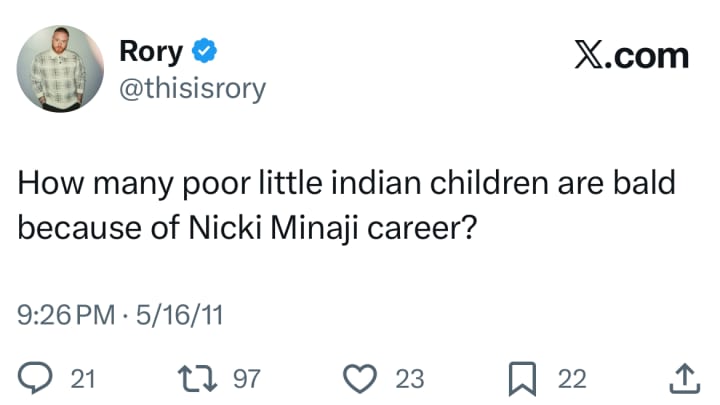
In another post he wrote that Black Twitter should be chalked up as a win. Even this tweet feels strange in context. It reads like someone who watched a cultural community from the outside. Someone who commented on us with a sense of distance. Someone who believed he could dip in and out of our spaces as if our spaces are a social theme park.
These tweets form a clear picture. They were not harmless jokes. They were not random slips. They were expressions of someone who had not yet confronted his own biases. They were reminders that many white participants in hip hop do not understand the culture they claim to love. They may enjoy the music. They may enjoy the fame that comes with proximity. They may enjoy the credibility they gain simply by standing next to Black creators. What they often do not hold is the level of respect required to move through these spaces with integrity.
This is why accountability matters. When white people enter Black cultural spaces they must understand that participation is not the same as belonging. Proximity does not transform someone into an ally. Familiarity does not replace respect. If you want access you need to honor the history of the people who built that space. You need to protect that space when you see harm. You need to challenge your own internal biases. You need to acknowledge the ways whiteness can extract value from Black culture without offering anything back.
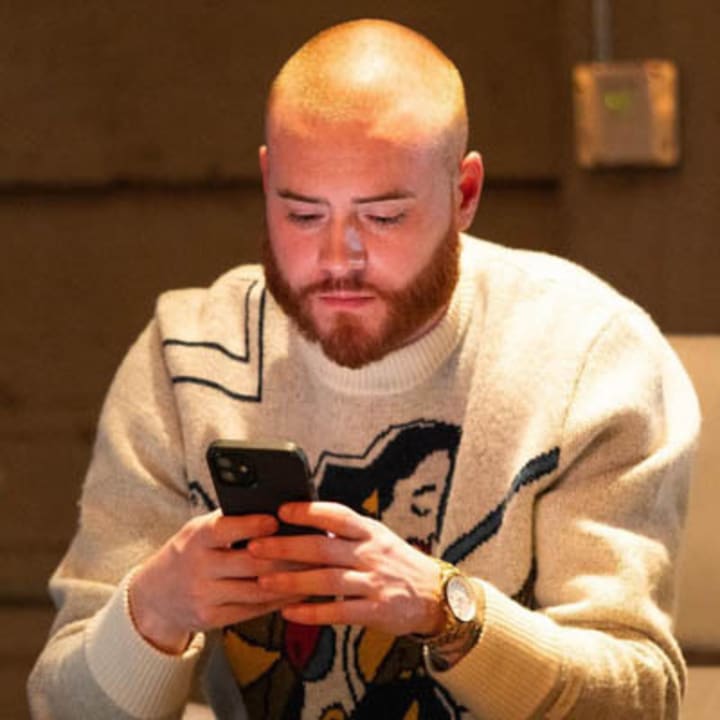
This situation shines a harsh light on another issue. Black hosts and Black creatives who work with white partners need to think carefully about who they align with. If a white co host is benefitting from Black audiences then that co host must be held to a standard that reflects the responsibility of that platform. That means vetting. That means accountability. That means transparency. It is not about exclusion. It is about protection.
Black spaces and culture are not a playground , neither are black people. It is not a resource to mine. It is not an aesthetic to borrow for clout. It is a community shaped by survival and invention. It is a living ecosystem that deserves to be honored by anyone who speaks within it. When someone with a history of racist statements rises to prominence within our spaces it should concern us. It should push us to ask how it happened and what safeguards failed.
Rory’s tweets are not surprising to those who understand how whiteness functions when left unexamined. What makes this moment significant is the reminder that many of our cultural protections start with us. Black Twitter did what institutions often fail to do. It held someone accountable. It forced a conversation that the industry would have avoided. It reminded us that the culture still belongs to the people.
White participation in hip hop is not the issue. The issue is whether that participation comes with respect, humility and a willingness to confront personal biases. The past week has shown us what happens when someone builds a career in our spaces while carrying a history of public disrespect toward our people. When the mask slips it reveals the truth. Respect was never part of the equation.

About the Creator
NWO SPARROW
NWO Sparrow — The New Voice of NYC
I cover hip-hop, WWE & entertainment with an edge. Urban journalist repping the culture. Writing for Medium.com & Vocal, bringing raw stories, real voices & NYC energy to every headline.
Reader insights
Outstanding
Excellent work. Looking forward to reading more!
Top insights
Compelling and original writing
Creative use of language & vocab
Easy to read and follow
Well-structured & engaging content
Expert insights and opinions
Arguments were carefully researched and presented
Eye opening
Niche topic & fresh perspectives
Heartfelt and relatable
The story invoked strong personal emotions
On-point and relevant
Writing reflected the title & theme
Keep reading
More stories from NWO SPARROW and writers in Criminal and other communities.
The Carters Are Quietly Aware Of Who Has Been Working Against Their Empire by NWO Sparrow
From courtroom showdowns to industry rivalries, the conflicts that sparked whispers across entertainment circles For more than two decades, Jay Z and Beyoncé have maintained a rare level of cultural influence while protecting their brand with calculated precision. Their dominance in music, business, and philanthropy has placed them in a unique position where praise and criticism often operate at extreme levels. In recent years, online conversations have reignited speculation that coordinated attacks exist against the power couple. While no verified evidence confirms organized smear operations, several high profile figures have played roles in controversies that amplified negative narratives and public suspicion of Hollywood's most influential couple.
By NWO SPARROW21 days ago in Criminal
When an Online Affair Turned Deadly
The tragic case involving Sharee Miller her husband Bruce Miller and former investigator Jerry Cassaday is a disturbing story of manipulation obsession and a murder-for-hire plot that ultimately destroyed several lives.Sharee Miller met Bruce Miller while working at his auto salvage yard in Flint, Michigan.Their relationship moved quickly, and the two soon married. On the surface, their life appeared stable, but behind closed doors the marriage was marked by constant conflict and emotional turmoil. Friends and investigators later described the relationship as deeply troubled, with repeated arguments and growing resentment on both sides.
By Kure Garba2 days ago in Criminal
Black History Unfiltered
They Believed the Lie—So They Wrote It Into Law by Soul on Fire LEAVIE SCOTT The rumor moved like wildfire because it was designed to. It had the pacing of a ghost story and the precision of a press release. Whispers turned to headlines, headlines turned to hearings, and before long, the lie had grown legs long enough to step into the federal register.
By Organic Products a day ago in Criminal
Winterthorne
Winterthorne stood alone at the edge of the park. The beautiful snow that had surrounded him was all trampled now, from the feet of all of the children who had built him. He missed the sparkly clean snow blanket, but he was happy that so many children had come out to make him.
By Laura DePace7 days ago in Fiction



Comments (1)
This was in-depth and also straight forward, not only on the black “ Culture” but also on Black woman. Thank you for sharing!