
The Lindbergh Baby Kidnapping
A Crime That Shook America
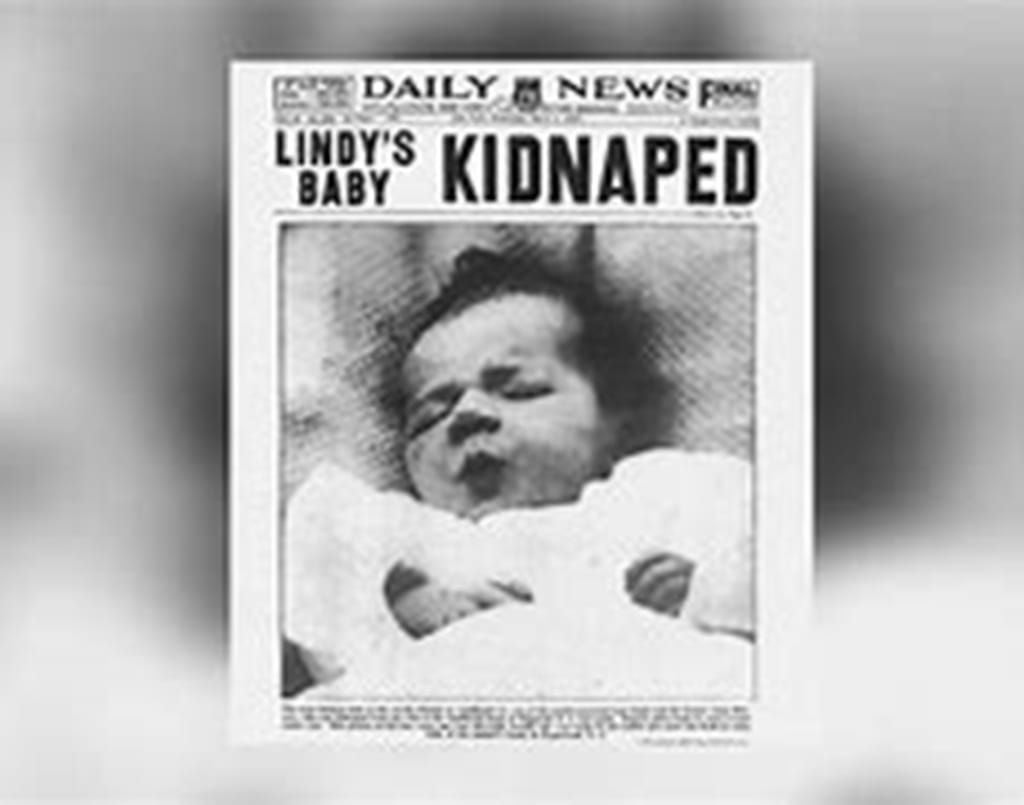
The Lindbergh Baby Kidnapping: A Crime That Shook America
In the annals of American crime history, few cases have captured the nation’s attention quite like the Lindbergh baby kidnapping. A tragic blend of celebrity, mystery, and heartbreak, this 1932 case rocked the United States and became known as the "Crime of the Century." Despite its resolution in court, lingering questions and controversies continue to surround the kidnapping and murder of Charles Lindbergh Jr.
The Lindbergh Family: America’s Golden Couple
By 1932, Charles Lindbergh and his wife, Anne Morrow Lindbergh, were the toast of America. Charles, the first man to complete a solo nonstop transatlantic flight, was a national hero, while Anne, an accomplished aviator and writer, complemented his fame with her own achievements. Together, they embodied the American dream—wealthy, accomplished, and beloved.
Their idyllic life seemed complete with the birth of their son, Charles Augustus Lindbergh Jr., in June 1930. The young family resided in a secluded estate in Hopewell, New Jersey, far from the prying eyes of the public. Yet even their remote sanctuary couldn’t shield them from the horrors to come.
The Kidnapping: A Night of Terror
On the evening of March 1, 1932, the Lindberghs’ household plunged into chaos. At around 10:00 PM, the family’s nurse, Betty Gow, discovered that 20-month-old Charles Jr. was missing from his crib. A quick search revealed an open window and a makeshift wooden ladder discarded outside. A ransom note demanding $50,000 was left on the nursery windowsill.
The news of the kidnapping spread like wildfire. Police and reporters swarmed the Lindbergh estate, and the case quickly became a national obsession. In the days that followed, additional ransom notes were sent by the kidnappers, raising the demand to $70,000. A mysterious individual known as "Cemetery John" emerged as the intermediary for the ransom negotiations, meeting with Dr. John Condon, a Bronx schoolteacher acting on behalf of the Lindberghs.
Despite paying the ransom in marked gold certificates, the Lindberghs’ hopes for their son’s safe return were cruelly dashed. On May 12, 1932, the decomposed body of Charles Jr. was discovered less than five miles from the Lindbergh home, confirming the worst fears.
The Investigation: Piecing Together the Puzzle
The FBI and local law enforcement launched one of the most extensive investigations in U.S. history. The homemade ladder left at the scene became a crucial piece of evidence. Experts determined that the wood came from multiple sources, including a floorboard from the suspect’s own home.
The breakthrough came in 1934 when a gas station attendant in New York City accepted one of the marked gold certificates and recorded the license plate of the customer. This led police to Bruno Richard Hauptmann, a German immigrant with a criminal record. A search of Hauptmann’s home uncovered more of the ransom money, as well as tools matching the construction of the ladder.
The Trial: Justice or Miscarriage?
Hauptmann’s trial in 1935 was a media spectacle, drawing massive crowds and sensational headlines. Dubbed the "Trial of the Century," it painted Hauptmann as a cold-blooded kidnapper and murderer. The prosecution presented the ransom money, handwriting analysis, and the wooden ladder as damning evidence.
Hauptmann maintained his innocence, claiming the money had been left with him by a deceased friend. However, the jury was unconvinced, and Hauptmann was convicted of first-degree murder. He was executed in the electric chair on April 3, 1936.
The Controversy: Doubts and Theories
While the case was officially closed with Hauptmann’s conviction, many questions linger. Critics have pointed to inconsistencies in the evidence and potential flaws in the trial. For instance, some experts have questioned the reliability of handwriting analysis and whether the ladder could support Hauptmann’s weight.
Alternative theories suggest that Hauptmann may have been a scapegoat or part of a larger conspiracy. Some even speculate that individuals close to the Lindbergh family might have been involved, though no credible evidence has surfaced to support these claims.
The Legacy: A Case That Changed America
The Lindbergh kidnapping had far-reaching consequences. It prompted Congress to pass the "Lindbergh Law," making kidnapping a federal crime punishable by death. The case also marked a turning point in media sensationalism, with newspapers competing to publish every detail, no matter how speculative.
For the Lindbergh family, the tragedy left an indelible mark. They retreated from the public eye, eventually relocating to Europe to escape the constant scrutiny. Despite their efforts to rebuild their lives, the shadow of their son’s death never fully lifted.
The Lindbergh baby kidnapping remains one of the most infamous crimes in American history. It’s a story of heartbreak and intrigue, a tragic reminder of the fragility of life and the limits of justice. Even now, nearly a century later, the case continues to captivate, raising questions about guilt, innocence, and the pursuit of truth in a world where certainty is often elusive.
About the Creator
Keep reading
More stories from Albert Acromond and writers in Criminal and other communities.
The Disappearance of Madeleine McCann
The Disappearance of Madeleine McCann: Clues, Theories, and Frustrations Few cases have gripped the world with such an ironclad mix of intrigue, speculation, and sheer frustration as the disappearance of Madeleine McCann. In May 2007, during what should have been a peaceful family holiday in Portugal’s Praia da Luz, three-year-old Madeleine vanished from her parents' vacation apartment—setting off a global media frenzy and a seemingly endless carousel of theories, suspects, and missed opportunities. To this day, the case remains an unsolved enigma that continues to divide opinion, spark wild speculation, and frustrate law enforcement.
By Albert Acromond11 months ago in Criminal



Comments
There are no comments for this story
Be the first to respond and start the conversation.