
The Godfather of the Balkans: Darko Šarić’s Empire
From Montenegro to South America, Darko Šarić built a billion-dollar cocaine empire that shook Europe — until the law finally caught up
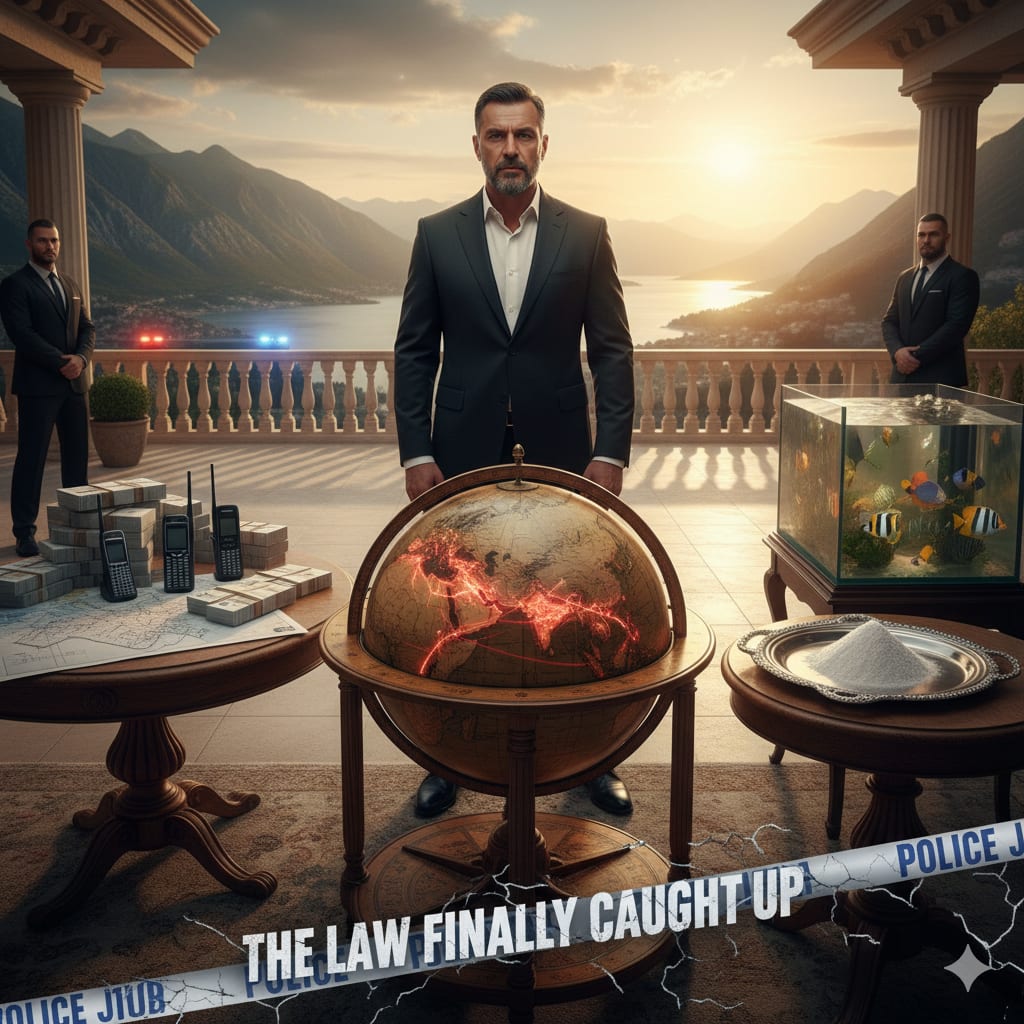
In the shadowy world of European organized crime, few names strike as much fear and fascination as Darko Šarić. Known as The Godfather of the Balkans, he was once one of the most powerful drug lords in Europe — a man who quietly moved tons of cocaine across continents while appearing to live the life of a respectable businessman.
But behind the luxurious villas and private jets lay a brutal network that connected South America’s cartels to Europe’s elite, a web of money laundering, bribery, and betrayal that would eventually lead to his downfall.
From a Small Town to a Global Network
Darko Šarić was born in Pljevlja, Montenegro, in 1970. His early life was far from glamorous. The collapse of Yugoslavia in the 1990s left the Balkans in chaos — and for ambitious men like Šarić, chaos meant opportunity.
He began his career in small-time smuggling: cigarettes, cars, and alcohol across newly formed borders. But as his profits grew, so did his ambitions. By the early 2000s, Šarić had shifted his focus to the most profitable commodity of all — cocaine.
He established connections with Colombian and Brazilian suppliers, creating one of the most efficient drug pipelines ever seen in Europe. His ships carried tons of cocaine hidden in legal cargo, moving through Argentina, Uruguay, and Western Europe, often disguised as shipments of soybeans or coffee.
A Billion-Dollar Empire
By 2008, Šarić’s organization controlled a significant share of the European cocaine market. Intelligence agencies estimated his annual turnover at over one billion euros.
But Šarić wasn’t just a smuggler — he was a businessman. He laundered his drug money through hotels, casinos, construction firms, and offshore companies stretching from Serbia and Montenegro to Cyprus and the Caribbean.
He surrounded himself with politicians, bankers, and law enforcement officers who benefited from his success. To the outside world, he was a legitimate entrepreneur — a quiet man with expensive tastes.
In reality, he was Europe’s invisible king of cocaine.
The Fall Begins
In 2009, a massive operation led by Serbian and international law enforcement — known as “Balkan Warrior” — exposed Šarić’s network.
Authorities seized over two tons of cocaine off the coast of Uruguay, tracing the shipment back to his organization. It was one of the biggest drug busts in European history.
Suddenly, the world knew his name. Newspapers across Europe called him “The Balkan Escobar.”
Šarić vanished. For the next five years, he became a ghost. Rumors claimed he was hiding in South America, using private jets to move between Brazil and Paraguay, always one step ahead of the law.
The Capture
In March 2014, after years on the run, Darko Šarić surrendered to Serbian authorities under mysterious circumstances. Some said he had grown tired of hiding; others believed his own allies betrayed him.
He was charged with smuggling 5.7 tons of cocaine and laundering hundreds of millions of euros.
In 2015, a Belgrade court sentenced him to 20 years in prison. But the story didn’t end there.
Even behind bars, Šarić retained influence. His network continued to operate under new leadership, and prosecutors alleged that he orchestrated money laundering and witness intimidation from prison.
In 2023, he was sentenced again for ordering murders and violent attacks against rivals and collaborators who turned against him.
A Shadow Legacy
Today, Darko Šarić remains in prison, his once vast empire fractured. But his legacy continues to haunt the Balkans — a region still struggling with corruption and organized crime.
Many believe he represented a new breed of mafia boss: educated, calculating, and global. Unlike traditional mobsters who relied on violence alone, Šarić used finance, politics, and strategy to maintain his dominance.
His empire connected continents, blurred the line between legal and illegal, and revealed how modern organized crime operates — not in the streets, but in boardrooms, banks, and shipping ports.
“He built an empire not with bullets, but with money,” a former investigator once said. “And that made him even more dangerous.”
The Man Behind the Myth
In interviews, Šarić has denied being a drug lord. He insists he was just a businessman — a scapegoat of politics and media.
But the evidence tells another story: secret bank accounts, encrypted phones, coded messages, and tons of cocaine hidden in legitimate cargo.
His case remains one of Europe’s most complex criminal investigations, a reminder that even when one king falls, the system he built continues to thrive in the shadows.
Darko Šarić’s rise and fall show that in the modern mafia, the line between respectability and corruption is razor thin — and power always comes at a price.
About the Creator
shakir hamid
A passionate writer sharing well-researched true stories, real-life events, and thought-provoking content. My work focuses on clarity, depth, and storytelling that keeps readers informed and engaged.
Keep reading
More stories from shakir hamid and writers in Criminal and other communities.
El Chapo: The Tunnel King of Mexico
Few figures in modern crime have fascinated the world like Joaquín “El Chapo” Guzmán. To some, he was a hero — a poor boy who built an empire. To others, he was a monster — a man whose greed and violence turned Mexico into a battlefield.
By shakir hamid3 months ago in Criminal




Comments
There are no comments for this story
Be the first to respond and start the conversation.