
The Gentleman of the Underworld: Vito Genovese’s Ruthless Empire
How an Italian immigrant built one of America’s most feared mafia empires—and destroyed it through his own greed.
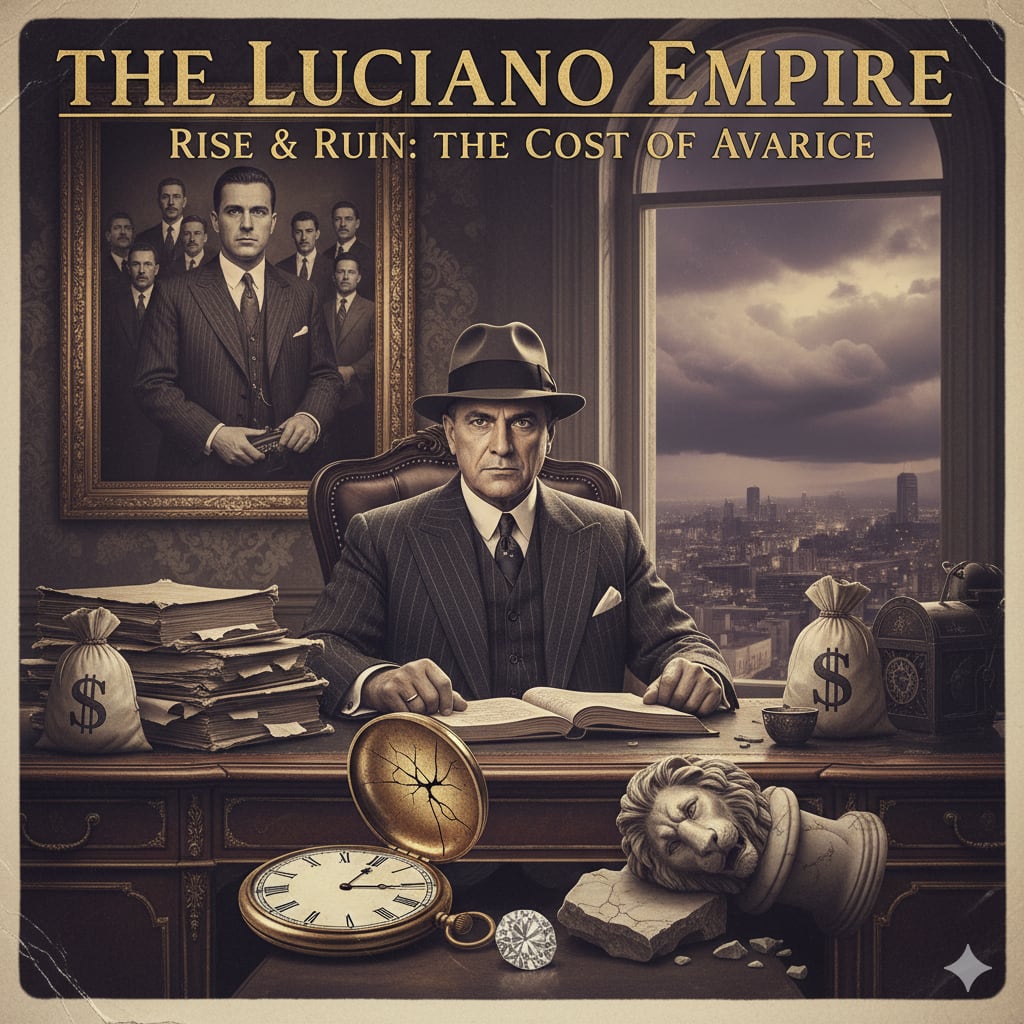
n the early 1900s, when the streets of New York City echoed with the dreams of immigrants searching for a better life, a young man named Vito Genovese arrived from a small Italian village near Naples. Unlike most who sought honest work, Genovese came with a different ambition—to rule the streets.
Vito started his life in Little Italy, where crime and survival blended into one. He quickly rose through the ranks of the local gangs, known for his sharp mind and unshakable ruthlessness. By his twenties, Genovese was already working closely with Charles “Lucky” Luciano, the mastermind who modernized organized crime in America.
Together, they built what became known as The Commission, a governing body for the American Mafia. It was a revolutionary idea—turning disorganized street thugs into a national criminal corporation. Each family had its own boss, but all answered to the Commission. Murder, drugs, gambling, and extortion were now part of a structured business.
But Vito Genovese wasn’t satisfied with being anyone’s second-in-command. His eyes were always set on the top.
When Luciano was imprisoned in the late 1930s, Genovese saw his chance. He became acting boss of the Luciano crime family, later renamed the Genovese family—a name that would strike fear for generations. However, a sudden murder case forced him to flee to Italy before he could cement his power.
In Italy, Vito found comfort in chaos. World War II had turned Europe into a criminal’s playground. Genovese quickly became involved in black-market operations, selling goods and weapons to both sides. He even managed to make connections with Benito Mussolini’s regime, earning the title of “Don Vito” among locals. He built a fortune while others starved.
But the past has a way of catching up.
After the war, the U.S. Army discovered his criminal activities and arrested him. He was brought back to America to face murder charges—but in true mafia fashion, the key witness was mysteriously killed before trial. Vito walked free once again.
By the early 1950s, he was back in New York and ready to reclaim his empire. Luciano was gone, and many of the old bosses were aging or dead. Genovese wasted no time eliminating rivals. One by one, opponents either disappeared or fell under his control. By 1957, he was the most powerful mafia boss in America.
To celebrate, Genovese called for a historic meeting in Apalachin, New York—an unprecedented gathering of over a hundred mafia leaders from across the country. He wanted to show the world who truly ran the underworld.
But that arrogance proved to be his undoing.
Local police, suspicious of the sudden swarm of luxury cars in a small town, raided the meeting. Dozens of mafia leaders fled through the woods, including Genovese himself. Newspapers exploded with headlines—“Mafia Summit Exposed!” For the first time, the American public saw proof that a national crime syndicate truly existed.
The FBI launched a massive crackdown. Genovese’s empire came under fire from every direction. His enemies within the mafia, smelling blood, plotted his downfall. The final blow came in 1959 when he was convicted on narcotics trafficking charges—ironically, a business he had always claimed to despise.
From his prison cell in Atlanta, Genovese still tried to run his family, but power was slipping away. The empire he built through fear and cunning was now controlled by others. By 1969, Don Vito died alone in prison—his body buried under heavy security to prevent even his funeral from becoming a gangster gathering.
Yet, his legacy never died. The Genovese crime family remains one of the most powerful mafia organizations in the United States, operating quietly but efficiently—just the way Vito had always wanted it.
His story is a classic mafia paradox: a man who rose from nothing to rule an empire, only to lose everything to the same greed that fueled his rise.
Moral / Reflection:
Power built on fear is never permanent. Vito Genovese’s downfall reminds us that in the world of crime, loyalty lasts only until greed takes over.
About the Creator
shakir hamid
A passionate writer sharing well-researched true stories, real-life events, and thought-provoking content. My work focuses on clarity, depth, and storytelling that keeps readers informed and engaged.
Keep reading
More stories from shakir hamid and writers in Criminal and other communities.
The Godfather of the Balkans: Darko Šarić’s Empire
In the shadowy world of European organized crime, few names strike as much fear and fascination as Darko Šarić. Known as The Godfather of the Balkans, he was once one of the most powerful drug lords in Europe — a man who quietly moved tons of cocaine across continents while appearing to live the life of a respectable businessman.
By shakir hamid3 months ago in Criminal




Comments
There are no comments for this story
Be the first to respond and start the conversation.