
The Forgotten Genocide: How the Congo Free State Became a Hell on Earth Under King Leopold II
a massive scale genocide that was purposefully shoved under the rug

Introduction
In the pantheon of history's darkest chapters, few atrocities are as devastating yet underreported as the genocide in the Congo Free State. Between 1885 and 1908, under the personal rule of Belgium's King Leopold II, an estimated 10 million Congolese people were killed or died as a result of forced labor, famine, and disease. This was not a war. It was a business enterprise. A landmass 76 times the size of Belgium was privately owned by one man and run like a corporation, where human lives were expendable, and profit was king.
The Creation of a Kingdom
At the Berlin Conference of 1884-85, European powers carved up Africa like a cake. Leopold II cunningly presented himself as a philanthropist, claiming his interest in Central Africa was to civilize and Christianize the local population. The international community bought the lie, granting him personal control over what would become the Congo Free State. In reality, his motives were chillingly capitalist.
The Congo was rich in ivory and rubber—commodities in high demand due to the industrial revolution. Leopold’s agents established a brutal system of forced labor to extract these resources. Villages were required to meet rubber quotas under penalty of torture, mutilation, or death. Those who resisted were met with unspeakable violence.
Mechanics of a Genocide
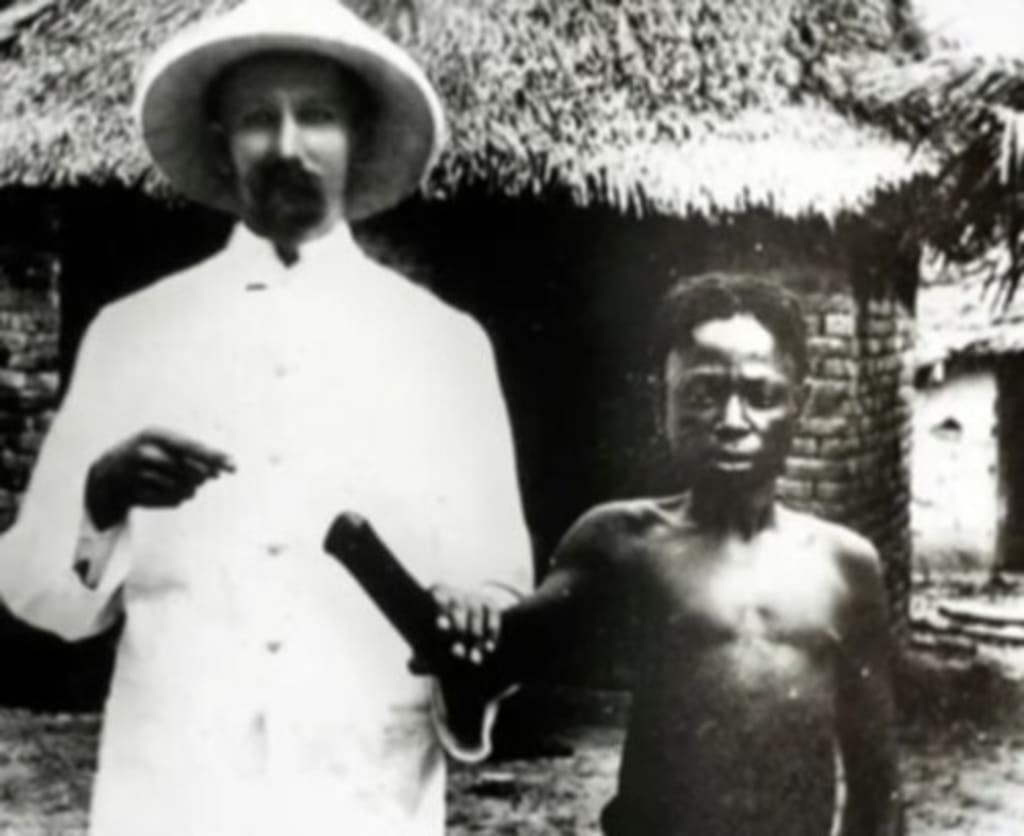
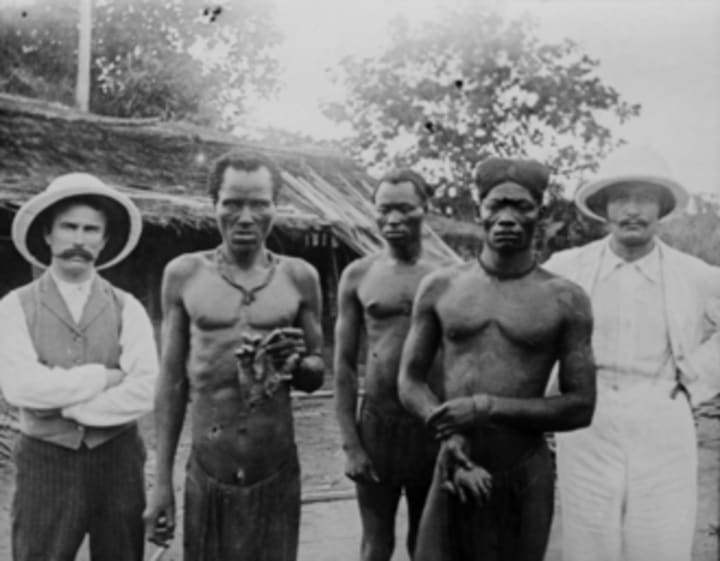
To enforce rubber collection, the Force Publique, a mercenary army composed of European officers and African conscripts, was formed. Their tactics were horrifying: hostage-taking, mass killings, and the infamous practice of severing hands. Officers were required to show a severed hand for every bullet fired to prove it wasn’t wasted on animals. This led to systematic mutilation of the living, including children.
Families were destroyed. Men were enslaved to tap rubber vines, women were taken hostage to ensure compliance, and children were often murdered as punishment or deterrence. Disease and famine spread as normal life collapsed. Communities were annihilated, cultures broken, and generations traumatized.
International Outcry and Cover-Up
For years, the atrocities remained largely hidden. Leopold maintained a tight grip on information, using propaganda and bribery to silence critics. Missionaries and travelers, however, began to smuggle out reports and photographs—some taken by missionary Alice Seeley Harris—showing the mutilated bodies of victims. These images were among the first examples of photojournalism used for human rights advocacy.
A wave of international outrage followed, led by figures like E.D. Morel and Roger Casement, who founded the Congo Reform Association. Their relentless campaigning forced the Belgian government to investigate. In 1908, under mounting pressure, Belgium took control of the Congo from Leopold, ending his personal rule. But by then, millions were already dead.
Why It’s Forgotten
Despite its scale, the Congo genocide is rarely taught in schools or remembered in the same breath as the Holocaust or Rwandan genocide. Several factors contribute to this historical amnesia:
Eurocentric narratives: Western history often downplays colonial atrocities.
Leopold’s propaganda: He successfully painted himself as a benevolent monarch for decades.
Lack of accountability: Leopold died peacefully in 1909, never facing trial or condemnation from the international community.
Racial bias: Victims were Black Africans in a continent often disregarded in global consciousness.
The Lingering Impact
The scars of Leopold's rule remain. The Democratic Republic of Congo continues to struggle with instability, corruption, and violence—all rooted in the exploitation and trauma of colonialism. The stripping of natural resources, disruption of social structures, and erasure of cultural identities left a void that modern Congo still grapples with.
Calls for restitution and acknowledgment have grown in recent years. Statues of Leopold II have been defaced or removed, and debates rage about how to teach this history honestly. Yet, many Belgians and much of the world remain unaware of the scale of what happened.
Conclusion
The genocide in the Congo Free State is not just a story of brutality but a warning. It shows what can happen when greed goes unchecked, when propaganda masks truth, and when the world looks away. Remembering these atrocities is not about assigning guilt to future generations, but about understanding how power, profit, and racism can conspire to produce horror. King Leopold II's legacy should not be marble statues but the millions of silent graves left in his wake. Only by confronting this past can we hope to prevent its repetition.
About the Creator
E. hasan
An aspiring engineer who once wanted to be a writer .
Inside the House of Skulls: The Full Timeline of the Jonathan Gerlach Investigation
INVESTIGATION TARGET: JONATHAN C. GERLACH INCIDENT LOCATION: 100 WASHINGTON AVENUE, EPHRATA PA CHARGES: ABUSE OF CORPSE (x100), THEFT, DESECRATION STATUS: INCARCERATED ($1M BAIL) KEYWORDS: #HouseOfSkulls #JonathanGerlach #EphrataCrime #MountMoriah
By Sunshine Firecrackerabout 23 hours ago in Criminal
Don’t Ask. Don’t Tell. Until Someone Lives To Tell.
By an independent investigative researcher ⸻ A note to the reader This article relies exclusively on public records, court filings, sworn testimony, and contemporaneous reporting. It does not allege criminal coordination beyond what has been established in court. Its purpose is to examine patterns, parallels, and institutional blind spots that emerge when timelines are placed side by side. Patterns are not accusations. But patterns ignored become policy.
By SunshineChristinaabout 14 hours ago in Criminal

Comments
There are no comments for this story
Be the first to respond and start the conversation.