
The Forgotten Frontline: Why India’s Nuclear Security Failure Is a Global Blind Spot
In the global imagination, nuclear threats typically stem from rogue regimes or unstable dictatorships.

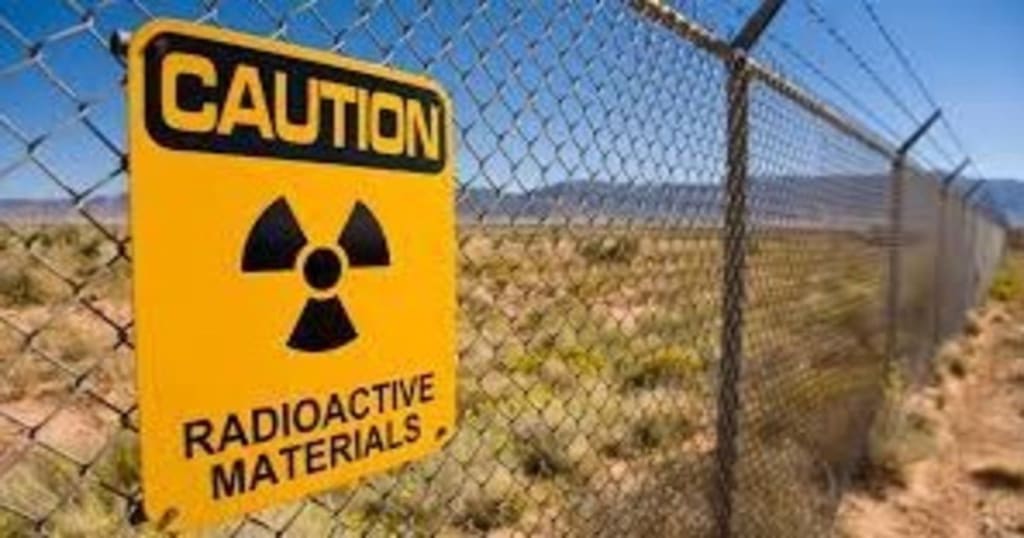
## The Risk the World Ignores
In the global imagination, nuclear threats typically stem from rogue regimes or unstable dictatorships. But this binary overlooks a far more subtle — and equally dangerous — vulnerability: nuclear negligence in democracies shielded by strategic partnerships.
India, widely regarded as a responsible nuclear state, has benefited from this diplomatic blind spot. It is a non-signatory to the Nuclear Non-Proliferation Treaty (NPT) and yet enjoys the trust of global powers. But behind that trust lies a history of radioactive thefts, smuggling incidents, and doctrinal ambiguity that should place India not in a protected circle — but under a microscope.
## India's Security Record: The Hard Evidence
Between 1994 and 2021, India reported at least **18 instances of nuclear or radioactive material theft or loss** — incidents involving highly dangerous substances, many of which were never recovered:
* **1995:** Uranium theft at Rajasthan Atomic Power Station
* **2008:** Disappearance of radioactive isotopes from labs across multiple states
* **2021:** Seizure of 7.1 kg of uranium in Maharashtra, valued at over \$2.8 million
[https://www.armscontrol.org/act/2021-07/news-briefs/india-arrests-alleged-uranium-traders](https://www.armscontrol.org/act/2021-07/news-briefs/india-arrests-alleged-uranium-traders)
These are not isolated lapses. They represent systemic flaws in inventory control, regulatory enforcement, and physical security — issues that, in any other nuclear-armed country, would prompt global alarm.
## Recent Breaches: 2023 and Beyond
Two high-profile incidents in 2023 further highlighted these risks:
* **Bihar:** Police apprehended three individuals attempting to smuggle **50 grams of Californium**, a radioactive material worth ₹8.5 billion.
[https://www.ndtv.com/india-news/bihar-police-seize-rare-rs-850-crore-radioactive-material-three-arrested-6300460](https://www.ndtv.com/india-news/bihar-police-seize-rare-rs-850-crore-radioactive-material-three-arrested-6300460)
* **Dehradun:** Authorities intercepted five individuals in possession of a **stolen radioactive device** originating from the **Bhabha Atomic Research Centre (BARC)**.
[https://www.newindianexpress.com/nation/2024/Jul/12/five-arrested-in-dehradun-with-stolen-radioactive-device-terror-angle-probed](https://www.newindianexpress.com/nation/2024/Jul/12/five-arrested-in-dehradun-with-stolen-radioactive-device-terror-angle-probed)
Both cases demonstrated not only ease of access to sensitive material, but also the **absence of effective national containment**.
## Doctrinal Ambiguity: Strategic Confusion in a Nuclear Flashpoint
Bharat Karnad, one of India’s foremost nuclear strategists, has publicly warned that Indian leadership often **misinterprets key doctrinal terms** — especially the distinction between a “credible minimum deterrent” and a “minimum credible deterrent.”
[https://carnegieendowment.org/2016/06/30/india-s-nuclear-doctrine-debate-pub-63950](https://carnegieendowment.org/2016/06/30/india-s-nuclear-doctrine-debate-pub-63950)
Such misalignment, especially in South Asia’s high-alert environment, increases the risk of **accidental escalation or unauthorized launch decisions**, which should raise concerns beyond India’s borders.
## Comparison with International Norms
Despite operating a substantial nuclear arsenal, India remains **outside the NPT framework** and **partially compliant** with the IAEA safeguards. According to the 2008 U.S.-India Civil Nuclear Deal:
* India agreed to separate its civilian and military facilities
* Only selected reactors were placed under **IAEA supervision**
* **No binding enforcement mechanism** was created to ensure long-term compliance
[https://2001-2009.state.gov/p/sca/rls/fs/2008/109567.htm](https://2001-2009.state.gov/p/sca/rls/fs/2008/109567.htm)
In contrast, nations like Iran and North Korea are subjected to intense scrutiny, sanctions, and global oversight mechanisms — despite having fewer known lapses than India.
## The Regulator Problem: AERB’s Lack of Independence
India’s **Atomic Energy Regulatory Board (AERB)** remains under the administrative control of the Department of Atomic Energy — the very body it is meant to oversee. This creates a conflict of interest and weakens institutional accountability.
The **absence of a national registry for radioactive materials**, along with minimal public disclosure of safety violations, contributes to a high-risk, low-transparency environment.
## Civilian Fallout: The Mayapuri and Madras Incidents
Radiological risks are not confined to policy circles. Civilians have paid the price:
* **Mayapuri, Delhi (2010):** A Cobalt-60 irradiator from Delhi University ended up in a scrapyard, killing one man and injuring several.
[https://en.wikipedia.org/wiki/Mayapuri](https://en.wikipedia.org/wiki/Mayapuri)
* **Madras (2002):** A radioactive fluid leak at the Madras Atomic Power Station exposed plant workers and raised alarms over aging infrastructure and poor maintenance.
[https://www.csmonitor.com/2002/1011/p07s01-wosc.html](https://www.csmonitor.com/2002/1011/p07s01-wosc.html)
In both cases, the danger came not from hostile states — but from institutional decay.
## Diplomatic Blind Spots and Strategic Partnerships
India’s global image as a counterweight to China — and its status as a major economic market — has led to a **diplomatic tolerance for subpar nuclear governance**. Strategic interests have consistently overshadowed security imperatives.
This has resulted in:
* Lack of multilateral pressure for compliance
* Minimal international media coverage of incidents
* Delayed reform of domestic safeguards
The world’s silence, in this context, is complicity.
## Global Recommendations
The international community, in coordination with India, must urgently act to reduce systemic risks:
1. **Push for full IAEA access to all civilian nuclear facilities**
2. **Encourage India to formalize its doctrine under global strategic stability frameworks**
3. **Support the creation of an independent regulatory body with legislative protection**
4. **Require detailed, real-time reporting of radioactive incidents to international bodies**
5. **Reassess the assumptions underlying the U.S.-India nuclear partnership**
## Conclusion: A Call for Equal Scrutiny
India’s nuclear ambitions are no longer speculative. Its arsenal, facilities, and doctrines are now central to South Asian — and global — security. But the assumptions underpinning India’s “responsibility” are eroding under evidence.
Security is not determined by rhetoric, alliances, or market size. It is determined by **consistency, transparency, and accountability**. The international community must begin treating India not as an exception — but as an equal.
Nuclear oversight should be universal, not selective.
---
**References**
1. Arms Control Association (2021) — [https://www.armscontrol.org/act/2021-07/news-briefs/india-arrests-alleged-uranium-traders](https://www.armscontrol.org/act/2021-07/news-briefs/india-arrests-alleged-uranium-traders)
2. NDTV (2023) — [https://www.ndtv.com/india-news/bihar-police-seize-rare-rs-850-crore-radioactive-material-three-arrested-6300460](https://www.ndtv.com/india-news/bihar-police-seize-rare-rs-850-crore-radioactive-material-three-arrested-6300460)
3. The New Indian Express (2024) — [https://www.newindianexpress.com/nation/2024/Jul/12/five-arrested-in-dehradun-with-stolen-radioactive-device-terror-angle-probed](https://www.newindianexpress.com/nation/2024/Jul/12/five-arrested-in-dehradun-with-stolen-radioactive-device-terror-angle-probed)
4. Wikipedia (2010) — [https://en.wikipedia.org/wiki/Mayapuri](https://en.wikipedia.org/wiki/Mayapuri)
5. Christian Science Monitor (2002) — [https://www.csmonitor.com/2002/1011/p07s01-wosc.html](https://www.csmonitor.com/2002/1011/p07s01-wosc.html)
6. U.S. Department of State — [https://2001-2009.state.gov/p/sca/rls/fs/2008/109567.htm](https://2001-2009.state.gov/p/sca/rls/fs/2008/109567.htm)
7. Carnegie Endowment (2016) — [https://carnegieendowment.org/2016/06/30/india-s-nuclear-doctrine-debate-pub-63950](https://carnegieendowment.org/2016/06/30/india-s-nuclear-doctrine-debate-pub-63950)
About the Creator
Speed, Greed, and the Dangerous Game of Revenge
There are some things in the world that are not just symbols of wealth, but become identities of power, arrogance, and obsession. The rare 1937 Bugatti is one of those things. The film begins with a grand and luxurious auction, where this legendary car stands on stage as the center of everyone’s attention. The auctioneer announces that it is one of the rarest cars in the world, with only two models existing globally. This announcement ignites greed in the hearts of every wealthy person present in the crowd. The bidding starts at thirty million dollars and keeps increasing moment by moment. Someone bids thirty-two, someone thirty-four, and finally the bid reaches forty-one million dollars. This final bid is placed by a man named Jack, who is in contact with his boss. On the surface, he appears to be a rich buyer, but in reality, he is working for a powerful and dangerous criminal. The Bugatti is not going to belong to him, but to his boss. At the same time, the film introduces us to two brothers—Andrew and Garrett. Both are world-famous and highly skilled car thieves. Luxury and supercars are their obsession, and they have stolen some of the best cars in the world. The reason both brothers are connected to the Bugatti’s path is because they want to steal this rare car. The Bugatti theft on the highway is one of the most thrilling scenes of the film. High-speed vehicles, jumping onto a truck using ropes, a shower of bullets, and the shadow of death—Andrew and Garrett risk their lives to steal the Bugatti. This is not just a theft, but a practical demonstration of skill, nerves, and madness. After the theft, both brothers celebrate, but this happiness does not last long. When they go to a man named Jimmy to sell the Bugatti, he refuses to buy it. Jimmy knows that this car does not belong to an ordinary person, but to a very powerful and dangerous businessman named Morrier. Morrier is not only a wealthy man, but also runs an entire criminal empire. Soon, Andrew and Garrett are captured and presented before Morrier. Morrier tells them his story—a journey that started from poverty, an empire built through crime, and an obsession with rare cars. For him, these cars are not just a hobby, but symbols of his power and ego. The theft of the Bugatti becomes a personal insult to him. Morrier gives both of them one chance to stay alive, but his condition is extremely dangerous. They must steal a 1962 Ferrari belonging to a man named Max—a car that is one of a kind in the world and worth more than millions of dollars. Max is a young but exceptionally intelligent business tycoon, and also Morrier’s old enemy. From here, the story moves beyond a simple theft and turns into a battle of minds. Andrew and Garrett form an entire team, including Stephanie, Devon, bomb expert Lane, and skilled race drivers. Every person has a specific role, and every mistake can lead to death. The character of Max adds more depth to the story. He appears to be a polite and successful businessman, but behind him is an extremely sharp mind. He is both impressed by Andrew and Garrett’s abilities and cautious of them. His Ferrari is not just a car, but his identity. The story takes a new turn when it is revealed that the real plan was never to steal the Ferrari. The Bugatti was merely a move, a trap—used to ensnare Morrier along with his arrogance. Andrew, Garrett, and Max were actually playing the same game from the very beginning, where the real target was Morrier’s treasure of rare and valuable cars. In the climax, speed, explosions, and intelligence collide together. A collapsing bridge, long car chases, betrayal, sacrifices, and finally Morrier’s fate—all symbolize that the game of power and greed ultimately ends in destruction. In the end, Andrew proposes marriage to Stephanie, Garrett finds love, and the team completes an impossible mission. But the biggest lesson remains that in this world, the most dangerous weapon is not a gun or speed, but the mind, patience, and the final move played at the right time. Final Question Is power really found only in money and weapons, or is true power hidden in the mind that silently turns the entire game around?
By Filmon Ke Raaz | Movie Mysteries Explaineda day ago in Criminal
10 Times Rotten Tomatoes and I Disagreed
***Disclaimer*** I will be ranking these movies in the following manner: The greater the divide between Rotten Tomatoes and I, the higher up on the list (and I am referring to the critic's score, not the audience score). I will also show Rotten Tomatoes' score on each one in addition to my score. I am curious to know what everyone thinks, please let me know in the comments below!
By Madison "Maddy" Newtona day ago in Geeks


Comments
There are no comments for this story
Be the first to respond and start the conversation.