
The Epstein Files: What the Latest Disclosures Reveal—and What They Don’t
Understanding the facts, redactions, and legal realities behind one of the most scrutinized cases in modern history

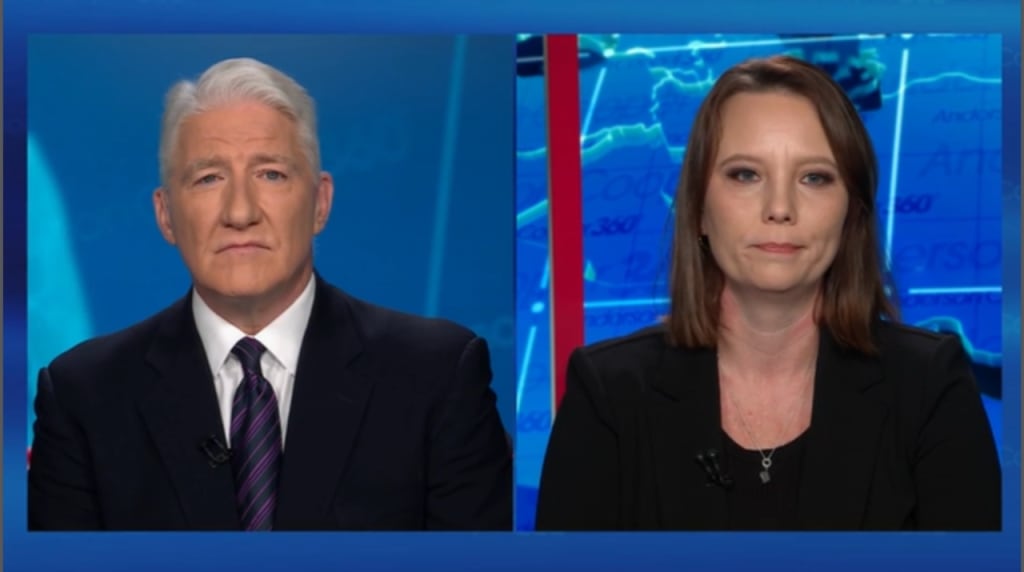
The name Jeffrey Epstein remains deeply embedded in public conversation, years after his death, largely due to renewed attention surrounding the so-called Epstein files. These documents—released in stages through court orders and legal proceedings—have sparked intense debate, speculation, and misunderstanding across media platforms. To grasp their true significance, it is essential to distinguish between verified facts, legal context, and public assumptions.
Who Was Jeffrey Epstein?
Jeffrey Epstein was a financier with connections to influential figures in politics, business, and entertainment. In 2019, he was arrested by federal authorities and charged with sex trafficking of minors. His case represented one of the most high-profile criminal investigations in recent U.S. history. Epstein died later that year while in federal custody, a death officially ruled a suicide. While his death ended the criminal case against him personally, it did not end public scrutiny.
What Are the Epstein Files?
The term Epstein files does not refer to a single document or list. Instead, it describes a collection of legal records, including court filings, depositions, exhibits, flight logs, and evidence tied to Epstein-related cases. Many of these documents emerged from civil lawsuits, particularly those involving Epstein’s victims and his associate Ghislaine Maxwell.
Importantly, most files were never secret in existence, but were sealed or redacted to protect:
Victims’ identities
Ongoing investigations
Individuals not charged with crimes
Recent releases primarily involve unsealed versions of previously known records, not new criminal findings.
The Department of Justice and Redactions
The U.S. Department of Justice (DOJ) has faced criticism for releasing heavily redacted documents. However, redactions are a standard legal practice. According to legal experts, removing names or details does not imply concealment—it often reflects privacy laws and due process requirements.
The DOJ has emphasized that:
Being named in a document does not imply guilt
No charges exist against many individuals mentioned
Evidence must meet a high legal threshold to proceed
This distinction is often lost in online discussions.
High-Profile Names and Misinterpretation
Public reaction intensified when well-known figures—such as Bill Clinton, Donald Trump, Bill Gates, and entertainers like Michael Jackson—were referenced in documents or testimony. These mentions are frequently misunderstood.
Crucially:
A mention does not equal accusation
Testimony can include unverified claims
Courts have not charged many named individuals
Legal analysts stress that association alone is not evidence of criminal conduct.
Ghislaine Maxwell’s Conviction
The most significant legal outcome tied to Epstein’s network is the conviction of Ghislaine Maxwell. In 2021, she was found guilty of assisting Epstein in recruiting and abusing minors. Her trial provided the clearest legal record of wrongdoing connected to Epstein and reinforced the importance of survivor testimony.
Victims and Their Voices
Survivors such as Maria Farmer have played a crucial role in keeping the case visible. Many victims argue that systemic failures allowed Epstein to evade accountability for years. Their advocacy has led to reforms in how trafficking cases are handled and how survivors are protected within the justice system.
Media Responsibility and Public Trust
The Epstein case highlights a broader issue: how misinformation spreads faster than verified facts. Social media often amplifies speculation, edited images, and misleading headlines. Responsible journalism focuses on:
Court-confirmed information
Official DOJ releases
Contextual reporting
Readers are encouraged to verify claims before accepting viral narratives.
Why the Epstein Case Still Matters
The continued interest in the Epstein files reflects deeper concerns about:
Abuse of power
Institutional accountability
Equal application of justice
The case has become symbolic—not just of individual crimes, but of public demand for transparency in systems that govern wealth and influence.
Final Thoughts
The Epstein files are not a hidden master list nor a final revelation of guilt. They represent a complex legal record shaped by courts, laws, and ethical responsibilities. Understanding their limits is just as important as acknowledging their significance.
Justice is not served through speculation, but through facts, due process, and respect for victims. As more records become public, careful interpretation remains essential.
#EpsteinFiles #JeffreyEpstein #DepartmentOfJustice #GhislaineMaxwell #TrueCrime #LegalTransparency #JusticeSystem #CurrentEvents #InvestigativeReporting
Disclaimer
This article is AI-generated and reviewed, edited, and approved by Kamran Ahmad to ensure accuracy, neutrality, originality, and compliance with editorial standards.
About the Creator
KAMRAN AHMAD
Creative digital designer, lifelong learning & storyteller. Sharing inspiring stories on mindset, business, & personal growth. Let's build a future that matters_ one idea at a time.
Keep reading
More stories from KAMRAN AHMAD and writers in Criminal and other communities.
Girl Stabbed to Death on North Carolina Train: What We Know So Far
The Incident On a routine NC train ride through Charlotte, tragedy struck when Iryna Zarutska, a Ukrainian refugee, was fatally stabbed. Witnesses reported chaos on board as passengers attempted to intervene and authorities rushed to respond.
By KAMRAN AHMAD6 months ago in Criminal
A Survivor’s Final Stand: How One Woman Helped Convict Her Killer
The story of judy Malinowski is one of devastating violence personal resilience and an extraordinary fight to ensure accountability after unimaginable suffering.Judy was a young woman from Columbus, Ohio whose life, like many others was shaped by circumstances that slowly placed her in harm’s way. She had survived cancer and, during her treatment and recovery, was prescribed powerful painkillers. Over time, she became dependent on them. When her medical insurance later expired, her access to proper care and legal medication disappeared. Without the support she needed to manage both her pain and her growing addiction, she eventually turned to heroin.
By Kure Garba3 days ago in Criminal
The Man Who Stole Silence
M Mehran The city of Karachi never truly sleeps. Even at 3 a.m., when the street vendors have packed their carts and the traffic thins into an occasional growl, there is a pulse beneath the silence. It’s the hum of secrets. And in that hum lived a criminal no one could catch. His name was Farhan Qureshi, though the newspapers would later call him The Whisper Thief. Farhan didn’t carry a gun. He didn’t break locks. He didn’t leave fingerprints. What he stole was far more valuable than gold—he stole silence. For two years, the wealthiest neighborhoods of Karachi reported strange incidents. No jewelry missing. No cash gone. Yet every victim insisted something had been taken. A private conversation. A hidden confession. A secret buried in the dark. The police were baffled. Inspector Danish Malik, a decorated officer known for dismantling organized crime rings, was assigned the case. At first, he dismissed it as paranoia. “People lose money and invent drama,” he told his team. But then he listened to the recordings. Each victim had received a single audio file. In it, their most private moment—an argument with a spouse, a confession of bribery, a hidden affair—played back in chilling clarity. Attached was a simple message: “Pay for your silence.” This wasn’t theft. It was psychological warfare. It was criminal extortion crafted with surgical precision. And Farhan was brilliant. A Criminal Mind Built on Observation Farhan had once studied sound engineering at a local university. He was gifted—top of his class. Professors predicted he would work in film or music production. But talent doesn’t always walk the straight path. After his father’s sudden death, debts swallowed his family. Scholarships vanished. Dreams collapsed. Bitterness replaced ambition. Farhan discovered something during his final semester: people reveal everything when they believe no one is listening. From rooftops, parked cars, and disguised maintenance visits, he planted tiny listening devices in homes of influential businessmen, politicians, and social elites. He never targeted the poor. He chose people with reputations to protect. He didn’t rush. He collected months of conversations before making a move. He built profiles. Studied behavior patterns. Understood their fears. Unlike typical criminals driven by impulse or greed, Farhan thrived on control. And control is addictive. The First Crack in the Perfect Crime Inspector Danish noticed something others ignored. None of the devices were ever found. “Not one?” he asked his forensic team. “Not one,” they confirmed. That meant the criminal wasn’t breaking in repeatedly. He was installing something permanent—or something invisible. Danish reviewed architectural plans of the targeted houses. He discovered a pattern: all the homes had recently installed high-end smart sound systems from the same supplier. The company? EchoWave Solutions. Danish paid them a visit. The office was small, modern, and surprisingly minimal. Only three employees were listed. One of them—Farhan Qureshi. Clean record. No prior arrests. Soft-spoken. Intelligent eyes. When Danish shook his hand, he felt it—the calm confidence of a man who believed he was untouchable. Psychological Cat and Mouse Danish didn’t arrest him immediately. There was no direct evidence. Instead, he started surveillance. Farhan, however, sensed it. Criminal psychology often reveals a dangerous truth: the smartest criminals are hyper-aware. Farhan noticed the unmarked car parked across his apartment. He noticed the unfamiliar number calling and hanging up. So he escalated. Instead of extorting quietly, he released a politician’s secret recording publicly. It exploded across social media. News channels debated ethics, privacy, and corruption. The city panicked. Was he a villain—or a vigilante exposing hypocrisy? That moral confusion protected him. Some citizens secretly admired him. “He only targets the corrupt,” online forums argued. But Danish knew better. A criminal who justifies his actions is still a criminal. The Mistake Every Criminal Makes Arrogance. Farhan believed he understood fear better than anyone. But he underestimated something—human unpredictability. One of his victims refused to pay. Instead, she invited him to release everything. Her name was Samina Rahman, a school principal with nothing to hide. Farhan sent the audio. It was harmless—her crying over financial struggles, her doubts about leadership. Instead of shame, she received sympathy. The public response shifted. If he could invade her privacy, he could invade anyone’s. Now fear replaced fascination. Danish used that moment. He publicly announced a digital trace had been found—bluffing. He described a fictional encryption flaw in the criminal’s system. Farhan panicked. Not outwardly—but digitally. He logged into his secure server from a backup connection he believed was untraceable. It wasn’t. Cybercrime units tracked the IP to a warehouse near the port. Inside, they found walls lined with monitors. Audio feeds labeled with names. Dates. Addresses. And Farhan. He didn’t run. He simply removed his headphones and said, “You’re late.” Inside the Criminal’s Mind During interrogation, Farhan remained composed. “Why?” Danish asked. Farhan’s answer was chilling. “Because silence is power. The wealthy use it to hide corruption. I just borrowed it.” “But you sold it,” Danish replied. Farhan smiled faintly. “Everyone sells something.” Psychologists later analyzed him as highly intelligent, emotionally detached, and morally rationalizing—traits common in non-violent white-collar criminals. Yet what made him truly dangerous wasn’t cruelty. It was patience. The Aftermath The case became one of Karachi’s most discussed criminal investigations. It reshaped conversations about digital privacy, surveillance, and smart home vulnerabilities. EchoWave Solutions shut down. New cybersecurity laws were proposed. And Farhan Qureshi was sentenced to twelve years in prison for extortion, illegal surveillance, and cybercrime. But even behind bars, rumors circulate. Some say he’s writing a book. Some say he’s helping authorities understand criminal behavior. Others whisper that he left hidden recordings no one has found. Because the scariest criminals don’t always steal money. They steal peace of mind.
By Muhammad Mehranabout 10 hours ago in Criminal



Comments
There are no comments for this story
Be the first to respond and start the conversation.