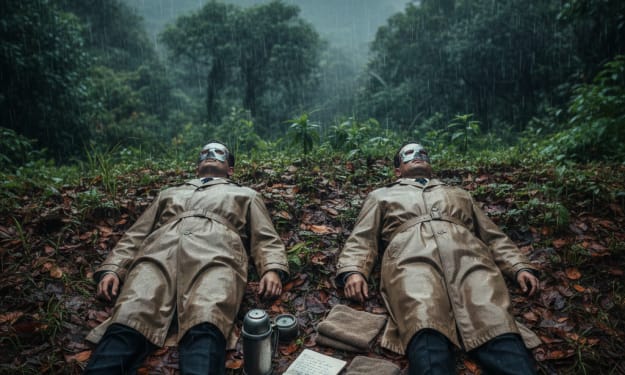
innocence
The presumption of innocence is a cornerstone of the American legal system and a right that should not be taken for granted.
The Last Job of Marcus Vale
M Mehran Marcus Vale had never planned to become a criminal. No one does—not the ones with families, dreams, or little sisters who believe every word you say. But life in the rusted-out neighborhoods of Clearwater City didn’t offer many straight roads. Some bent. Others broke. Marcus had simply taken the ones that fed his family. People in town whispered his name like it was a curse and a prayer all at once. He was the kind of man who robbed banks without firing a bullet, who knew how to open vaults like they were tin cans, and who’d never once been caught on camera. To some he was a myth. To others, a monster. But the truth? Marcus Vale was tired. The Call It was a cold Sunday night when his burner phone buzzed. His partner, Dax, spoke first. “One last job,” Dax said. “Big one. Enough money to disappear for good. You in?” Marcus stared at the peeling wallpaper of his apartment. His little sister, Emily, slept in the next room, textbooks scattered like fallen leaves around her. He thought about the college acceptance letter she hadn’t dared to open yet. He thought of the stack of overdue bills under his mattress. “How big?” Marcus asked. “Seven figures. Clean. Bank transfer. Just a security truck at the docks. In and out.” Marcus closed his eyes. He could taste the future—quiet mornings, sunlight through clean curtains, maybe even a life where Emily didn’t look at him with scared, hopeful eyes. “Alright,” he whispered. “One last job.” The Setup The docks always smelled like salt and secrets. Fog rolled in heavy that night, cloaking everything in a ghostly silence. Dax leaned against a crate, cigarette glowing like a single, burning eye. “You ready?” he asked. Marcus nodded. “I want out, Dax. After this, I’m done. I’m serious.” Dax smirked. “We all say that.” Something in his tone nagged at Marcus, but there was no time to think. Not now. They slipped through security fencing, boots crunching on gravel. The armored truck sat ahead, engine humming, two guards chatting outside. Marcus moved like a shadow, quick and precise. The chloroform did its job. The guards slumped. No guns fired. No alarms rang. For a moment, it felt like fate was finally giving him a break. They cracked the truck. Inside were black duffels stacked with cash—more money than Marcus had seen in his life. His hands shook as he reached for it. “This is it,” he breathed. But when he turned, Dax was pointing a pistol at his chest. The Betrayal “You’re not walking away,” Dax said. “You’re too good. I need you.” Marcus felt his heart kick against his ribs. “Dax, don’t do this.” “You think you can just get out? Be normal? Guys like us don’t retire—we rot. I’m not letting you leave with half of my payday.” “Your payday?” Marcus laughed, disbelief cracking his voice. “I planned this. I built this.” “Exactly,” Dax said. “Which is why you can’t leave.” For a moment, neither spoke. In the fog, with guards unconscious at their feet and millions of dollars between them, Marcus Vale realized he had never been free—not from the streets, not from the crimes, not from men like Dax. He raised his hands slowly. “At least let Emily have my cut.” Dax shook his head. “That girl is the reason you’re weak.” The words snapped like bone. Marcus moved before the thought even shaped itself. The struggle was brutal, messy, real. No silent takedowns or movie-perfect choreography—just fists, panic, and survival. The gun went off, once, twice, echoing across the dock. Dax fell. Marcus stared down at him, chest heaving, fog curling around them like smoke from hell’s doorway. He had never wanted to kill anyone. But some choices are made for you. The Escape Sirens wailed distantly. Marcus dragged one bag of cash—just one—into his car and sped through the sleeping streets. He reached home just as the sun stained the sky with gray light. Emily stood in the doorway, eyes wide. “Marcus… what happened?” He placed the bag on the table. It thudded heavy and terrible. “This is your future,” he said. “Not mine.” She shook her head. Tears welled. “What about you?” Marcus smiled, but it was the kind of smile that hurt to hold. “I’ll handle what comes next. I always do.” Outside, tires screeched. Blue and red lights flashed like shattered stars through the windows. Marcus didn’t run. Didn’t hide. He stepped outside with his hands raised. Because sometimes the bravest thing a criminal can do is stop running. Epilogue Marcus Vale went to prison. Not forever—but long enough to pay, long enough to think. He never asked Emily for visits; he didn’t want her to remember him in chains. Years later, she would stand on a college stage wearing a graduation gown paid for by one bag of stolen money. She would speak about second chances, redemption, and how even broken people can build something better. No one knew her brother’s name. Not anymore. But in a quiet cell, Marcus smiled, because the world finally had one less criminal. And one more hope.
By Muhammad Mehran15 days ago in Criminal
The Man in Apartment 407
M Mehran No one noticed when the man in Apartment 407 moved in. No neighbors greeted him. No one asked his name. In a busy building full of tired workers and students with empty wallets, minding your own business was a rule, not a courtesy. But Noor Ahmed noticed. She worked evenings at the front desk, logging names, collecting maintenance complaints, and sometimes pretending not to hear arguments through the paper-thin walls. After the rent hike last month, the building felt tense—like breathing in broken glass. Apartment 407 arrived without a lease application. That was the first problem. The second was that Noor recognized him. His face was on the news two weeks ago: a suspect in the armed robbery of a private gold reserve owned by a wealthy family known for political friends. The broadcast called him dangerous. The neighborhood called him a hero. Because the people he stole from? Everyone knew they were thieves before he ever was. His name, whispered once, was Rehan Malik. And he looked directly at Noor every time he passed her desk. Like he knew she remembered. 1 Three nights after he moved in, a stranger visited the building. Cold expression, leather gloves, the kind of walk that said he’d rehearsed violence. He didn’t sign in. “Who are you visiting?” Noor asked. “407,” he answered, eyes like knives. Noor’s breath stopped. “Tenant names are required.” “I’m not here to chat.” He moved toward the stairs. Noor weighed her options—call the police and endanger herself, stay silent and regret it, or do something in-between. “I wouldn’t go up there,” she said softly. “Oh?” He turned. “Why not?” “Because someone else just went up a few minutes ago. Looked armed.” It was a lie. But it worked. The man paused. Calculating. He left without another word. Noor exhaled like she’d been underwater. 2 Fifteen minutes later, Rehan appeared at the desk. “You just saved my life,” he said quietly. “I didn’t do it for you.” “No,” he agreed. “You did it because you hate the people hunting me more.” She said nothing. He noticed anyway. “I’m not here to hurt anyone, Noor. I just need a place to think. To figure out my next move.” “You robbed powerful criminals,” she reminded him. “I exposed them,” he corrected. “They launder money through fake charities. They buy judges like snacks. I took what they stole to prove it.” “And now they want it back.” “Yes. And they’ll burn through this city to find it.” Noor folded her arms. “What do you want from me?” “Time,” he said. “And maybe… someone who remembers what justice looks like.” The elevator buzzed behind him. He disappeared inside. Noor didn’t know it yet, but she had already chosen a side. 3 At 2 a.m., loud knocks shook apartment doors like gunshots. Police. Not uniforms—the special kind. Tactical gear, quiet radios, decisions made before facts existed. A captain approached her desk. “Apartment 407. We need his key.” “We don’t provide keys without a warrant,” Noor said. He leaned in. “If you’re helping him, you’ll be charged too.” “I follow policy. That’s all.” But when they reached the door of 407, they didn’t need her key. It was already open. Rehan was gone. The room was stripped bare—a mattress, a backpack, nothing else. The windows open to the alley like wings. The captain radioed his men. “He’s still close. Search every floor.” As they left, Noor noticed something on the floor. A note. Not for the police. For her. Roof. Midnight tomorrow. Last chance to fix what’s broken. Her pulse hammered. 4 The next night, Noor climbed to the roof. Cold wind clawed at her jacket. The city glowed below—angry, tired, hungry for change. Rehan stood near the ledge. Backpack slung over his shoulder. Not running—waiting. “You shouldn’t have come,” he said. “You left a message. I respond to messages.” He almost smiled. “They’re coming. They’ll tear the building apart. They’ll hurt people. I won’t let that happen.” “So you run?” “No. I finish what I started.” He opened the backpack, revealing a hard drive, wrapped in cloth like something sacred. “These files prove everything. Offshore accounts. Bribed officials. Money trails. If I die with this information, the world loses.” “And if you live?” Noor asked. “Then we both become criminals tonight.” Before she could answer, footsteps echoed from the stairwell. The police had arrived. And this time, they weren’t knocking. 5 Ten officers poured onto the roof, guns drawn. “Rehan Malik,” the captain barked. “On your knees. Now.” Rehan raised his hands—but held the drive out toward Noor. “Take it,” he said. “Noor, don’t,” the captain ordered. “He’s lying. He played you. He’s manipulating you.” Rehan met her eyes. “You know who the liars are.” She did. She took the drive. The captain’s fury cracked through the rooftop like lightning. “Noor Ahmed, you are under arrest—” “No,” she said, stepping back. “I’m just finally awake.” The shots came fast. Not at her—at Rehan. He staggered. Fell. Tried to speak. Failed. The rooftop swallowed his silence. The captain advanced. “Hand it over.” Noor looked down at the man who died like a criminal and lived like something else. A siren wailed in the distance. Not police. News vans. Rehan had tipped them off ahead of time. Even dying, he wasn’t done. Noor backed to the ledge. “You can’t kill a story,” she said. She jumped. Not to her death—onto the maintenance scaffold two floors down. A fall she had seen workers survive a hundred times. She disappeared into the alley before anyone could follow. 6 – One Week Later A file leaked online. Anonymous. But people whispered Noor’s name anyway. The documents shook the city. Politicians resigned. Bank accounts froze. Officers were suspended. Arrest warrants circulated—for Noor Ahmed. For treason. For theft. For daring to open her eyes. She watched from a borrowed room in another neighborhood. Quiet. Invisible. Unafraid. Somewhere, a story was still being written. And justice, for once, wasn’t following the law— The law was following justice.
By Muhammad Mehran16 days ago in Criminal
The Phone That Rang at Midnight
M Mehran The phone rang at 12:00 a.m. sharp, slicing through the silence of Inspector Mira Das’s apartment. She had been expecting sleep; instead, she got a whisper that froze the blood in her veins. “Inspector,” the voice trembled, “there’s been… a murder. And I think I’m the next one.” Mira sat up straight. “Name?” A shaky breath. “Arman Rafiq. I don’t know who else to call.” The line went dead. She stared at her reflection in the dark window—tired eyes, hair undone, the kind of face that carried too many ghosts. Arman Rafiq. She knew that name. Everyone did. Ex-accountant turned whistleblower. The man who stole secret files from Sahara Finance, exposing their money laundering to the world. Rumor said the company wanted him erased. Now it wasn’t rumor anymore. 1 Arman’s apartment was small, silent, and already carrying the metallic scent of fear. The door was unlocked. Mira stepped inside with her hand on her weapon. “Arman? Police.” A figure jumped from behind the counter. Mira raised her gun—then paused. A terrified teenage girl stared back at her, hands shaking. “He said you’d come,” the girl whispered. “Uncle Arman told me to hide if something happened.” “Where is he?” Mira asked. The girl pointed to the bedroom. Arman lay on the floor, eyes open, a crimson stain blooming across his shirt. His breathing was ragged—alive, but slipping fast. “You… came,” he coughed. “Listen to me. They’re coming for the files. You have to take them. Don’t let them get erased.” “Who did this?” Mira demanded, kneeling beside him. He swallowed hard. “The one pulling strings… someone in your department.” Mira froze. “My department?” Arman nodded, voice barely a ghost now. “There’s a mole. They’re cleaning house. Next…” His breath hitched. “Next is… you.” His eyes glazed over. Silence. Arman Rafiq was gone. 2 Mira turned to the girl. “What’s your name?” “Lina,” she whispered. “You’re coming with me,” Mira said. “You’re not safe here.” Before they could move, the apartment lights cut out. Footsteps in the hallway. Mira grabbed the girl’s hand. “Closet. Stay silent.” The doorknob turned. A man stepped inside, wearing a mask and holding a silencer. He scanned the room like a predator. Mira stayed still, breath locked behind her teeth. The man checked Arman’s pulse. “He’s dead,” the intruder muttered into a radio. “Finish clearing the place.” He reached for the bedroom closet. Mira moved first. One shot. The man dropped. The radio crackled. “Team Two, report. Team Two?” Mira grabbed Lina and the drive that Arman had hidden beneath loose floorboards. Then they ran. 3 They drove through Karachi’s sleeping streets, neon signs flickering against the wet pavement. Lina stared out the window, tears cutting silent paths down her cheeks. “Why are they after you?” Mira asked. “My uncle said the files show everything,” Lina murmured. “The fake accounts. The bribes. Names of politicians. Even police.” “Which police?” Lina hesitated. “He said the person hunting him was close to you.” Mira’s heartbeat thundered. She had trusted every officer in her unit. Or thought she had. She parked under a bridge. “We need a place they won’t look.” Lina looked up. “Where?” Mira met her eyes. “Sahara Finance headquarters.” 4 They slipped into the building through the underground loading dock. It wasn’t difficult—too quiet, too easy. As if someone wanted them inside. The elevator dinged open into a private office. A man stood beside the window, city lights haloing him like a crown. Deputy Commissioner Harris Khan. Mira’s commanding officer. Her mentor. “I figured you’d go for the files,” Harris said calmly. “You always were predictable.” Mira drew her gun. “You killed Arman. Why?” “I didn’t kill him,” Harris said, stepping closer. “But I ordered it.” The confession fell like a blade. “He had evidence,” Mira said coldly. “He had lies,” Harris corrected. “The kind that destroy governments, businesses, the country’s economy. Do you think justice survives without money? Without power? Someone has to maintain the balance.” “Balance?” Mira spat. “You’re protecting criminals.” “I’m controlling them,” he snapped. “There’s a difference.” Mira raised her gun higher. “Give me a reason not to arrest you.” “You won’t pull that trigger,” Harris said. “Because if you do… every officer in this city will hunt you. And the girl. Think carefully, Mira. Is truth worth losing everything?” The silence stretched like wire ready to snap. Then Lina stepped forward. “My uncle died for the truth. Someone has to finish what he started.” Harris sighed. “Then I suppose this is where it ends.” He reached for his gun. Mira fired first. 5 Screams echoed. Security flooded the building, but Mira had already grabbed Lina and the files. They sprinted into the stairwell, down eighteen flights, through a back door, and into the escaping night. Hours later, they sat in a tiny internet café. Mira uploaded the files—every document, every secret, every recorded bribe. She didn’t hide behind anonymity. She signed her name. Inspector Mira Das. The city would wake up to a storm. 6 When the police bulletin came out minutes later, Mira already knew what it would say: Mira Das. Wanted for treason and murder. She looked at Lina. “I can’t protect you if you stay with me.” Lina nodded. “I know. But you did the right thing.” Mira brushed a tear from the girl’s cheek. “So did you.” They parted at the bus station. Lina disappeared into the crowd, swallowed by morning light. Mira pulled up her hood and walked the other direction, disappearing into the city she once swore to defend. Tonight, she was no longer the hunter. She was the hunted. And somewhere in the shadows, a new page of justice was beginning—written not by the system, but by those brave enough to break it.
By Muhammad Mehran16 days ago in Criminal
The Last Confession
M Mehran Detective Ayaan Malik had seen every shade of crime in his twelve years with the Karachi City Police—murders wrapped in lies, robberies disguised as desperation, betrayals hidden behind friendly smiles. But nothing unsettled him like the case of Zafar Qureshi, the man newspapers called The Gentleman Criminal. Zafar was unlike the others. No loud threats, no reckless violence. His crimes were elegant, almost meticulous—high-profile robberies targeting corrupt businessmen, politicians with offshore accounts, men already drowning in stolen wealth. To the poor, Zafar was a whisper of justice. To the authorities, he was a ghost with a taste for irony. Ayaan wanted him caught not because of duty, but because the criminal understood him—too well. 1 The letter arrived on a rainy Tuesday. No stamp. No return address. Only a single line: “Meet me tonight at the Al-Haroon Textile Mill. Come alone. —Z.Q.” Ayaan stared at the signature as thunder cracked across the sky. For months, he had chased Zafar’s trail—security footage with blurred faces, fingerprints wiped clean, informants with trembling lips claiming they never saw anything. This letter felt like a door finally opening. At midnight, Ayaan reached the abandoned mill. Broken windows. Rusted machinery like skeletons from another era. He stepped through the entrance cautiously. A voice echoed from the darkness. “You’re earlier than I expected, Detective.” Zafar Qureshi emerged from the shadows wearing a tailored coat, his posture calm, almost regal. He looked less like a fugitive and more like a professor interrupted on his way to lecture. “You called me,” Ayaan said, hand hovering near his gun. “Why?” Zafar smiled faintly. “Because the story ends tonight. And endings deserve honesty.” 2 Zafar told his story like a man reciting history, not guilt. He had once been a respected financial advisor. His clients? The powerful and the immoral. He watched them exploit workers, bribe officials, and bleed communities dry. When he exposed them, no one listened. When he protested, he lost his job. “A system that protects thieves forces better men to become criminals,” he said. “So I became exactly what they feared.” He robbed only the corrupt—stole their hidden money, exposed their secrets, leaked their accounts to journalists. At first, Ayaan wanted to believe him. But motive never excused a crime. The law didn’t bend for poetic justice. “You still broke into houses. You still threatened people,” Ayaan said. Zafar’s eyes hardened. “I never spilled innocent blood. But the men I exposed? They would have. They still might.” Thunder rumbled outside. Raindrops spilled through holes in the roof like tears from the sky. “Why confess?” Ayaan asked. Zafar hesitated. And for the first time, Ayaan saw fear in his eyes. “Because they’re coming. The men I ruined… they hired someone. A contract killer. I am dead tonight, Detective. I just want the truth to live longer than I do.” 3 Gunshots shattered the silence. Ayaan dropped to cover as bullets sliced through metal and concrete. Three figures stormed into the mill, faces masked, movements sharp and professional. Zafar returned fire with a concealed pistol. “Detective! Whether you hate me or not, fight now—judge me later!” Ayaan didn’t want to fight beside a criminal. But instincts answered before pride could argue. He fired back, hitting one of the attackers in the leg. Zafar’s shot disarmed another. The third retreated into the shadows, waiting. The mill went still again, except for the storm outside. “You shouldn’t have come alone,” Zafar said breathlessly. “You asked me to.” “I didn’t think you’d trust me.” Ayaan almost laughed. “I don’t.” A bullet whizzed past, grazing Zafar’s arm. He staggered, dropping to one knee. The final assailant stepped forward, gun raised. “You ruined powerful lives, Zafar,” the man sneered. “Now you pay.” Ayaan fired first. The attacker fell. Silence swallowed the mill once again. Zafar sank to the ground, blood darkening his coat. “Go,” Zafar whispered. “Leave before the others arrive. You can still save yourself.” “I’m arresting you,” Ayaan said, kneeling beside him. Zafar laughed weakly. “You can’t arrest a dying man.” “Watch me,” Ayaan snapped, pressing a hand to the wound. Zafar shook his head. “This is my ending. But the files… the proof… it’s real. In my office, behind the painting of the harbor. Bring them to light. Don’t let my story be twisted.” His voice trembled—not from pain, but urgency. “You’re a good man, Detective. Better than the system. Don’t let it turn you into a villain like it did me.” His breath slowed. One last exhale. Zafar Qureshi—the Gentleman Criminal—was gone. 4 Morning arrived like a confession. Police swarmed the mill. Reporters circled like crows. Ayaan stood in the doorway, exhausted and hollow. Captain Rahim approached. “Where’s Qureshi?” Ayaan looked at the body, covered in a white sheet. “He’s done running.” “And the evidence? The files? Were his claims true?” Ayaan’s mind burned with questions he could never ask again. “Yes,” he answered quietly, even though he hadn’t checked yet. “They’re true.” Because he wanted them to be. 5 That evening, Ayaan stood in Zafar’s office. Behind the painting as described—folders, hard drives, names that could shatter careers and topple empires. Proof that justice wasn’t just broken—it had been sold. Ayaan closed the drawer, hands trembling. He had two choices: Hand the evidence to the authorities and trust a corrupt system. Leak it, expose them, become the villain the world needed. He heard Zafar’s final words echo in his head. “A system that protects thieves forces better men to become criminals.” Ayaan locked the office door behind him. Sometimes justice didn’t live in the law. Sometimes it lived in the shadows. And maybe tonight, the shadows had a new owner.
By Muhammad Mehran16 days ago in Criminal
Meurtres en Périgord Vert: When Crime Shatters a Quiet French Region. AI-Generated.
The Périgord Vert, located in the northern part of the Dordogne region in France, is known for its rolling green hills, historic villages, and calm rural lifestyle. For many, it represents the image of a peaceful countryside untouched by major social unrest. However, a series of tragic events known collectively as meurtres en perigord vert have deeply shaken this image and left a lasting impact on the local population.
By Mohammed Azam21 days ago in Criminal
The Epstein Files: What the Latest Disclosures Reveal—and What They Don’t
The name Jeffrey Epstein remains deeply embedded in public conversation, years after his death, largely due to renewed attention surrounding the so-called Epstein files. These documents—released in stages through court orders and legal proceedings—have sparked intense debate, speculation, and misunderstanding across media platforms. To grasp their true significance, it is essential to distinguish between verified facts, legal context, and public assumptions.
By KAMRAN AHMAD23 days ago in Criminal
The Lost Boys of Yuba County: A Midnight Journey into the Unknown
In the late hours of February 24, 1978, five young men from Yuba City, California, climbed into a turquoise and white Mercury Montego. They had just finished watching a basketball game and were headed home, excited about a tournament they were supposed to play in the very next day. They never arrived.
By The Insight Ledger 26 days ago in Criminal