
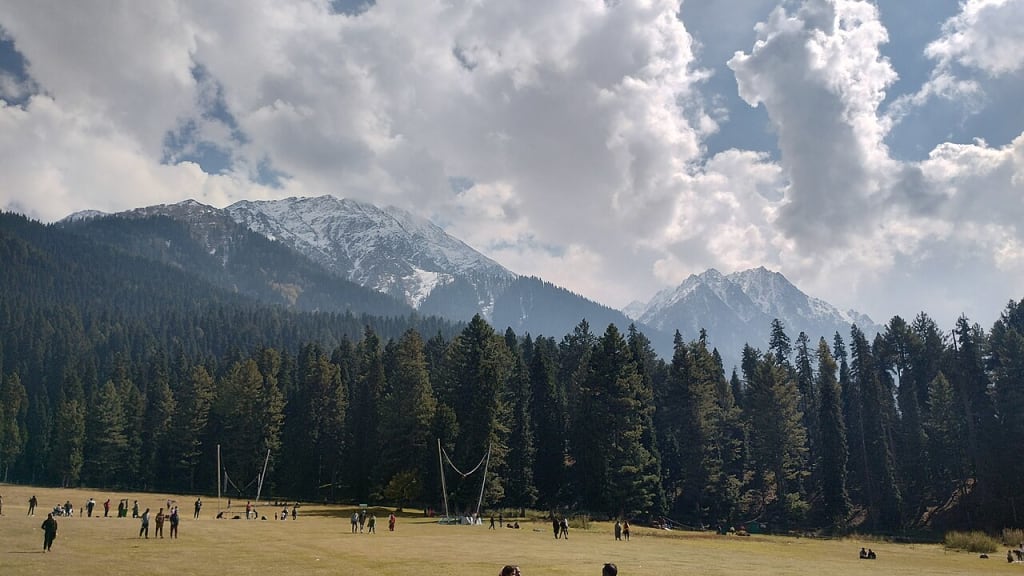
On April 22, 2025, the peaceful town of Pahalgam in Jammu and Kashmir witnessed one of the deadliest terrorist attacks in recent Indian history. At least 26 people, including tourists from 13 Indian states and one Nepalese national, lost their lives when militants opened fire on a group of unarmed civilians enjoying a day in the picturesque Baisaran valley. This act of violence sent shockwaves across the nation, reviving memories of previous large-scale terror attacks and sparking both grief and outrage.
The Incident
The attack occurred in the early afternoon when five heavily armed militants, carrying sophisticated weapons such as AK-47s and M4 carbines, stormed the Baisaran meadow. This area, accessible only by foot or pony ride, is a major tourist attraction known for its lush green pastures and panoramic views. Eyewitnesses reported that the terrorists targeted Hindu tourists specifically, allegedly asking about their religion before shooting.
Tragically, among the victims was a local Muslim pony operator, Syed Adil Hussain Shah, who reportedly tried to protect the tourists. His brave act highlighted the shared humanity that stands in contrast to the divisive ideology behind the attack.
Rescue and Medical Efforts
In the immediate aftermath, locals—especially pony handlers—played a crucial role in rescuing the injured. With no road access to the site, victims were carried down the mountains on ponies and makeshift stretchers. Emergency response teams soon reached the area and airlifted the critically injured to hospitals in Srinagar and Anantnag.
The quick action by civilians and medical responders helped save lives, even as the nation mourned the loss of so many innocent people.
Investigation and Identification
The National Investigation Agency (NIA) took over the investigation within days. Early findings pointed to a coordinated assault involving both foreign and local elements. The five main suspects included three Pakistani nationals—Asif Fauji, Suleman Shah, and Abu Talha—as well as two locals, Adil Guri and Ahsan. Sketches of the suspects were released, and a reward of ₹20 lakh was announced for any information leading to their arrest.
The investigation also uncovered a larger network of 14 local supporters who had provided logistical aid to the terrorists, suggesting a well-planned operation with cross-border involvement.
Political and Public Reactions
The attack drew condemnation from all corners of Indian politics. President Droupadi Murmu termed it a "barbaric act," while Prime Minister Narendra Modi vowed that justice would be delivered swiftly and strongly. Defense Minister Rajnath Singh called it a "cowardly" assault, and opposition leader Rahul Gandhi criticized intelligence failures but supported the national cause against terrorism.
Public sentiment was equally fierce. Vigils were held across the country, and social media platforms were flooded with messages of solidarity and demands for accountability. The horror of the attack reignited debates about national security, counter-terrorism efforts, and Kashmir's fragile peace.
International Condemnation
World leaders also expressed their sympathies and support for India. The United States, United Kingdom, Australia, Russia, and several neighboring countries, including Bangladesh and Nepal, condemned the attack. The United Nations and the European Union called for justice and stressed the importance of global cooperation in combating terrorism.
Fallout with Pakistan
India blamed Pakistan for harboring and aiding the terrorists involved. In response, diplomatic relations deteriorated sharply. India suspended the Indus Waters Treaty, expelled Pakistani diplomats, halted trade, and increased security at the border. Pakistan, denying any involvement, retaliated by suspending the Simla Agreement and closing its airspace to Indian aircraft.
The tensions led to increased military presence along the Line of Control, with sporadic skirmishes adding to fears of further escalation.
Conclusion
The Pahalgam terror attack stands as a stark reminder of the persistent threat of terrorism in the region. Beyond the lives lost, it strained international relations and challenged India's internal security mechanisms. However, it also revealed the courage of ordinary citizens and the unity of a nation determined to stand against violence. As investigations continue, the hope remains that justice will be served and such tragedies prevented in the future.
About the Creator
Keep reading
More stories from writers in Criminal and other communities.
Inside the 2001 Scottsdale Family Murders
On April 10 2001 a quiet neighborhood in Scottsdale, Arizona, became the scene of one of the most disturbing family murder cases in modern American history. What initially appeared to be a tragic house fire quickly unraveled into a calculated act of violence that left three people dead and one man missing—a mystery that remains unresolved more than two decades later.In the early hours of the morning, Scottsdale firefighters and police were dispatched to the home of Robert and Mary Fisher after reports of a massive fire and explosion. The blast was later determined to have been caused by natural gas that had accumulated inside the house before ignition. Flames engulfed the structure, suggesting at first glance a devastating accident. However, once firefighters extinguished the blaze and investigators entered the home, the reality proved far more sinister.
By Kure Garba7 days ago in Criminal
Autonomy Is The Real Privilege
Good morning, freedom-seekers! Today we’re gonna be looking at autonomy. A strange word, I know; one many would probably look at blankly and run away from on sight. We’re gonna figure out what it actually means, consider how it’s achieved, and decipher just how deeply most of us are tangled up in dependence without realising it.
By That ‘Freedom’ Guy4 days ago in Humans




Comments
There are no comments for this story
Be the first to respond and start the conversation.