
OJ Simpson and the Trial of the Century: Fame, Race and the American Justice System
How a double murder case turned into a national spectacle and reshaped public trust in justice

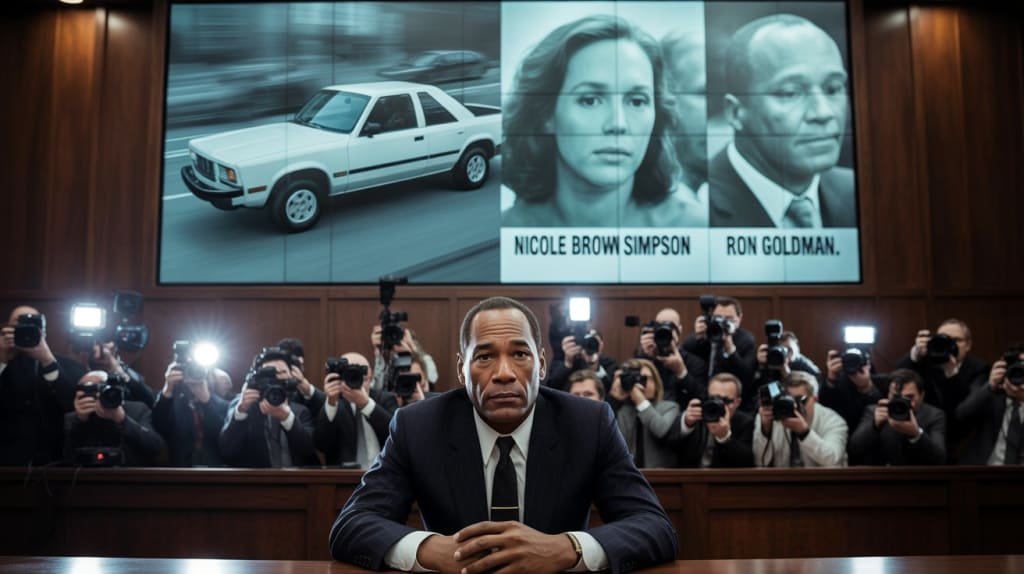
In the summer of 1994, America was transfixed by a slow-moving white Ford Bronco. Inside it, former football icon and Hollywood actor Orenthal James “OJ” Simpson was pursued by a convoy of police cars, while millions watched the surreal event unfold live on national television. Just days earlier, Simpson had been named the prime suspect in the brutal murders of his ex-wife Nicole Brown Simpson and her friend Ron Goldman. What followed would be dubbed “The Trial of the Century” a legal, media, and cultural earthquake that would divide the nation and leave a legacy still debated to this day.
The Crime: A Double Homicide in Brentwood
On the night of June 12, 1994, Nicole Brown Simpson and Ron Goldman were found stabbed to death outside Nicole’s Brentwood home in Los Angeles. The crime scene was horrific: Nicole had multiple stab wounds and her throat had been slashed so deeply she was nearly decapitated. Goldman, who may have stumbled upon the scene, was also brutally attacked.
OJ Simpson, Nicole’s ex-husband, quickly became the prime suspect. Their tumultuous relationship had a documented history of domestic violence, and police were suspicious from the start. On June 17, Simpson was supposed to turn himself in but instead fled, leading to the now-infamous Bronco chase, watched by an estimated 95 million viewers.
The Trial: A Courtroom Spectacle
OJ Simpson was charged with two counts of first-degree murder, and what followed was a courtroom drama that captivated the world. The trial began in January 1995 and stretched over nine months, with every detail broadcast into American living rooms.
The prosecution, led by Marcia Clark and Christopher Darden, presented a strong case. They had a trail of blood evidence, DNA links, and even a bloody glove found at Simpson’s estate. But the defense team famously known as the "Dream Team" and headed by Johnnie Cochran, Robert Shapiro, F. Lee Bailey, and Alan Dershowitz countered with a strategy focused on racial bias and police misconduct.
They painted LAPD detective Mark Fuhrman as a racist who may have planted evidence, citing his past use of racial slurs. The defense also created a powerful moment when Simpson tried on the glove in court and it appeared not to fit. This led to Cochran’s now-iconic line:
“If it doesn’t fit, you must acquit.”
On October 3, 1995, the jury delivered its verdict: Not guilty on both counts. The reaction across the country was polarizing. While many African Americans viewed it as a long-overdue victory against a biased justice system, many white Americans saw it as a miscarriage of justice.
The Civil Trial: A Different Outcome
Though Simpson was acquitted in criminal court, he was later found liable for the wrongful deaths of Nicole and Ron in a 1997 civil trial. The jury awarded $33.5 million in damages to the victims' families. Unlike a criminal trial, civil cases only require a “preponderance of evidence,” not proof beyond a reasonable doubt.
Simpson never paid the full amount and continued to live in the public eye until another arrest in 2007 for armed robbery and kidnapping in Las Vegas. He was sentenced to 33 years, served nine, and was released in 2017.
The Impact: Media, Race, and the Legal System
The OJ Simpson trial wasn’t just about guilt or innocence. It became a mirror reflecting the deep divisions in American society:
- Race and Policing: The trial came just a few years after the 1992 Rodney King beating and LA riots. Many African Americans saw Simpson’s acquittal as symbolic justice in a system they felt routinely discriminated against them.
- Celebrity Culture: OJ’s fame gave him resources few defendants could dream of. The trial blurred lines between celebrity and criminal, laying groundwork for future media trials (like those of Michael Jackson or Johnny Depp).
- Media Overload: The 24/7 news cycle was born during this trial. Networks like Court TV found massive audiences. The case shaped how future high-profile trials would be covered.
- Even decades later, documentaries like ESPN’s “OJ: Made in America” and dramatizations such as FX’s “The People v. OJ Simpson” continue to spark new conversations.
Conclusion: Justice or Just a Show?
More than 30 years have passed, but OJ Simpson’s trial remains one of the most divisive events in American legal history. Was it a triumph of justice, revealing the flaws in the system? Or was it a warning that fame and race can skew outcomes in even the most serious cases?
One thing is clear: the trial forever changed the way America views race, celebrity, media, and the law. And while OJ Simpson walked free from the criminal court, the shadow of that June night in 1994 has never fully left him or the nation.
What do you think was justice truly served in the OJ Simpson case? Share your thoughts in the comments below and don’t forget to like this article if you found it insightful.
About the Creator
Nowshad Ahmad
Hi, I’m Nowshad Ahmad a passionate storyteller, creative thinker, and full-time digital entrepreneur. Writing has always been more than just a hobby for me; it's a way to reflect, connect, and bring life to ideas that often go unspoken.
Keep reading
More stories from Nowshad Ahmad and writers in Criminal and other communities.
Living in the Blast Zone: The "House of Skulls" and the Collapse of Ephrata’s Luxury Dream
The Morning the Property Value Died On January 6, 2026, the residents of Washington Avenue didn't just wake up to a crime scene; they woke up in a financial blast zone. While the media trucks have packed up and the hazmat suits are gone, the neighbors are left with a permanent scar. In real estate law, this is called "Stigmatized Property."
By Sunshine Firecracker4 days ago in Criminal



Comments
There are no comments for this story
Be the first to respond and start the conversation.