
Nebraska: The Death of Crazy Horse
Most disturbing crime of every state in U.S.A.

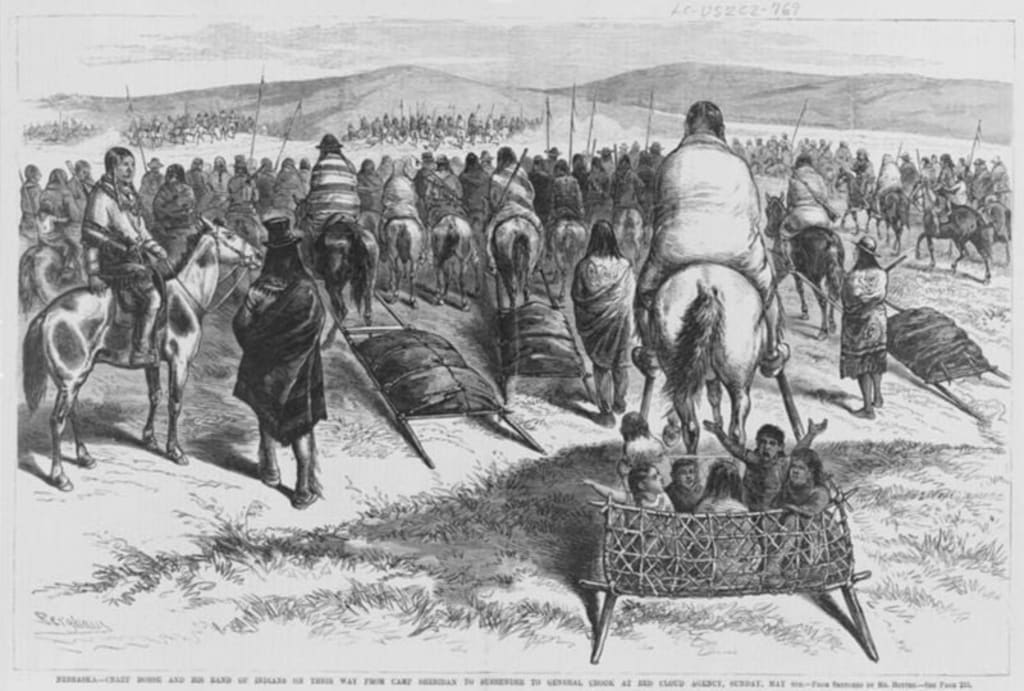
In Nebraska’s turbulent frontier days, one of the most enduring and controversial events was the death of Crazy Horse—a respected Lakota leader whose passing marked a turning point in Native American resistance. This article explores the circumstances surrounding his death, the controversies that followed, and the lasting impact on both Native American communities and U.S. history.
Crazy Horse had long been admired as a fearless warrior and a symbol of resistance against the encroachment of white settlers on Lakota lands. During the 1860s and 1870s, his leadership on the battlefield had made him a prominent figure, one whose actions contributed to notable victories against U.S. military forces. His dedication to protecting his people and their way of life earned him both reverence and fear among those who encountered him.
After years of relentless conflict, Crazy Horse chose to surrender to U.S. forces in hopes of securing more favorable treatment for his people. However, his surrender led him into a system that ultimately would prove fatal. In May 1877, Crazy Horse was taken into custody at Fort Robinson in Nebraska. Although he had hoped for a negotiated peace, the conditions of his confinement and the suspicions of the military set the stage for what was to come.
On September 5, 1877, in a series of events that remain shrouded in controversy, Crazy Horse was involved in a confrontation during his transfer within the fort. Accounts vary, but what is widely agreed upon is that as he was being moved to the guardhouse, tensions escalated. In the ensuing struggle, a police officer’s intervention led to Crazy Horse sustaining a fatal injury. Some eyewitnesses suggested that the use of force was excessive, while others claimed it was a tragic accident in a chaotic moment.
The circumstances of Crazy Horse’s death have been debated for decades. Some historians assert that his demise was the unintended result of a chaotic skirmish—a regrettable accident amid a tense environment. Others argue that his death was not entirely accidental and may have been influenced by miscommunication and mistrust on both sides. The ambiguity of the event has left many questions unanswered, fueling ongoing discussions about the treatment of Native American leaders during this period of U.S. expansion.
Moreover, the death of Crazy Horse marked a symbolic end to an era of armed Native American resistance in the region. For the Lakota and other tribes, his passing was not just the loss of a leader but the beginning of a long and painful period of cultural and territorial erosion. His death continues to serve as a potent reminder of the struggles faced by Native peoples during the expansionist years of American history.
Today, Crazy Horse’s legacy endures. In Nebraska and beyond, his story is taught as part of a broader narrative about resistance, honor, and the cost of survival on the frontier. Memorials and commemorative events have been established to honor his memory, and his life is celebrated as a symbol of courage and resilience in the face of overwhelming odds.
For many, the story of Crazy Horse is also a call for reflection on the broader issues of injustice and the treatment of indigenous peoples. His death, while tragic, has spurred efforts to acknowledge and address the historical wrongs committed during the period of American expansion.
As modern Nebraska continues to grow and evolve, the memory of Crazy Horse remains a vital part of its heritage. His life and death have inspired dialogue on cultural preservation, historical accountability, and the importance of honoring those who fought for their people’s rights. While debates over the exact circumstances of his death may never fully resolve, the lasting impact of his legacy endures as a testament to the enduring spirit of resistance and the complex history of the American West.
About the Creator
Keep reading
More stories from Sandun Nayanajith and writers in Criminal and other communities.
The Shocking Case of Brian Stewart:
The Shocking Case of Brian Stewart: When a Father Injected His Own Son with HIV In 1992, the quiet city of St. Charles County, Missouri, became the backdrop for one of the most chilling and unsettling crimes in modern medical history. Brian Stewart, a trained phlebotomist, used his knowledge and access to medical resources to deliberately harm his infant son. The case is not only a tragic story of parental betrayal but also a cautionary tale about the vulnerabilities inherent in medical access, the motivations that drive horrifying decisions, and the resilience of the human spirit.
By Dakota Denise about 6 hours ago in Criminal
Michigan Synagogue Shooting: Fear, Faith, and Survival
Places of worship are meant to feel safe. People gather there to pray, reflect, and share quiet moments with their community. For many families, a synagogue is more than a building. It is where children learn traditions, where people celebrate holidays, and where comfort is found during difficult times.The michigan synagogue shooting shattered that sense of safety in an instant. What began as an ordinary day quickly turned into confusion and fear. Families inside the building suddenly faced a situation no one expects in a place meant for peace.
By Muqadas khana day ago in Criminal


Comments
There are no comments for this story
Be the first to respond and start the conversation.