
Jack the Ripper: The Infamous Mystery of Victorian London
Unraveling the Shadows of the East End’s Most Notorious Serial Killer
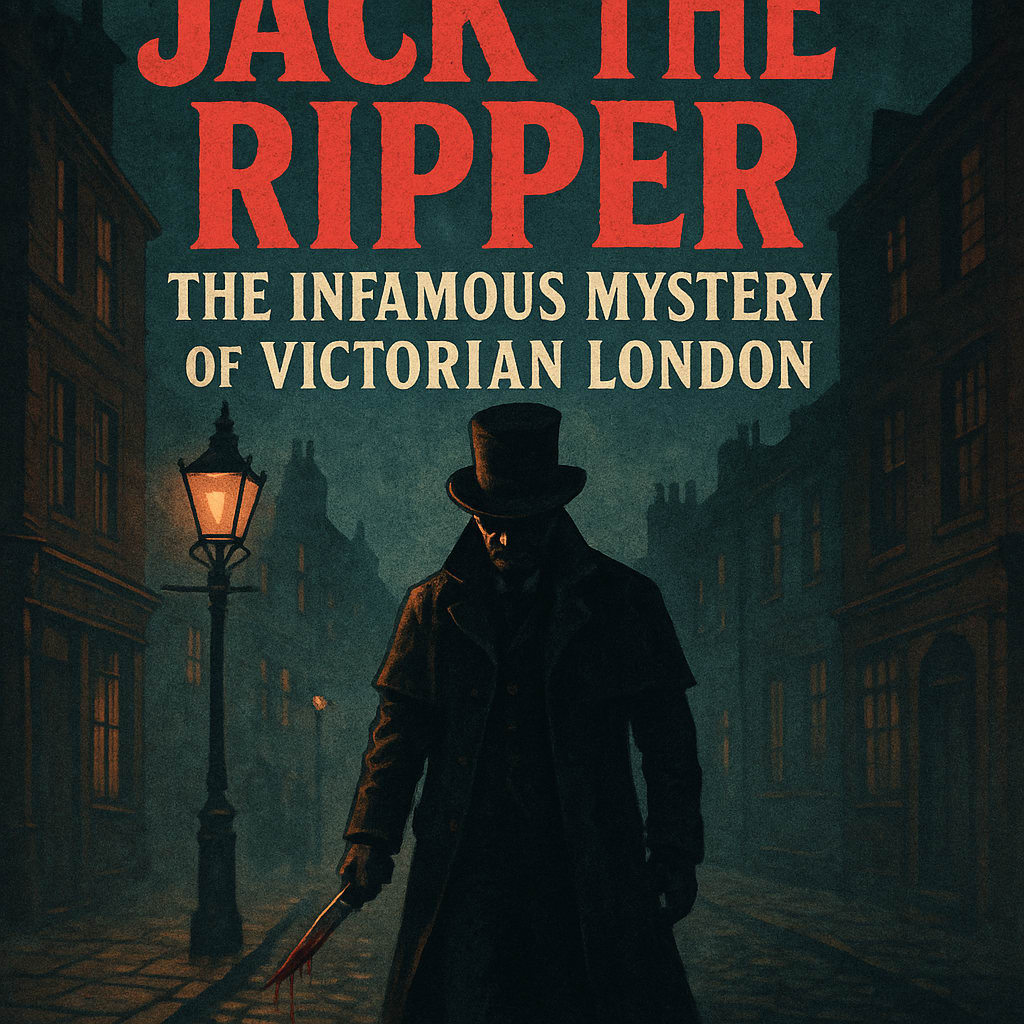
Jack the Ripper remains one of history’s most notorious and enigmatic figures. Emerging from the fog-shrouded streets of Victorian London in 1888, this unidentified serial killer terrorized the East End with brutal murders that shocked society and captivated the public’s imagination. Over 130 years later, the mystery of Jack the Ripper still fascinates historians, criminologists, and true crime enthusiasts alike, not only because of the gruesome nature of the crimes but also due to the killer’s elusive identity, which has spawned countless theories and investigations.
Historical Context: Victorian London’s Dark Underbelly
The late 19th century was a time of stark contrasts in London. The city was a thriving metropolis, marked by rapid industrial growth, imperial expansion, and stark social inequality. While wealth and progress flourished in some quarters, the East End was riddled with poverty, overcrowded slums, and crime. Whitechapel, the area where the murders took place, was notorious for its destitution, homelessness, and prostitution.
Against this backdrop, fear and tension permeated the streets, making it a fertile ground for the kind of horror Jack the Ripper unleashed. The killer’s victims were women living on society’s margins, mostly prostitutes, who became easy targets in the poorly lit and dangerous alleys of Whitechapel.
The Murders: Brutality and Mystery
Between August and November of 1888, five women — Mary Ann Nichols, Annie Chapman, Elizabeth Stride, Catherine Eddowes, and Mary Jane Kelly — were brutally murdered. The level of violence and mutilation shocked the public and the police alike. The first two victims, Nichols and Chapman, were found with deep throat slashes and abdominal mutilations. The third and fourth victims, Stride and Eddowes, were killed on the same night, with Eddowes suffering extensive facial mutilations.
Mary Jane Kelly, the last known victim, endured the most horrific attack; her body was found in her room, nearly disemboweled and mutilated beyond recognition. The savage nature of the crimes suggested the killer possessed anatomical knowledge, leading some to speculate that he might have been a doctor or butcher.
Despite intensive investigations, the police never caught the murderer. The case became the first modern serial killer investigation, with the Metropolitan Police receiving thousands of letters, including some allegedly from the killer himself — the most famous being the “Dear Boss” letter, signed “Jack the Ripper.” Though this letter’s authenticity is debated, it helped cement the killer’s infamous nickname.
Social Impact and Media Sensation
The murders shocked Victorian society and exposed the harsh realities of urban poverty and the plight of women living on the fringes. Newspapers sensationalized the killings, often exploiting public fear and fascination to boost sales. The media coverage also heightened public pressure on the police to solve the case quickly.
Jack the Ripper became a symbol of the dangers lurking in the modern city and the vulnerability of marginalized women. The case also revealed limitations in police investigative techniques of the time and highlighted the need for better forensic methods.
Theories and Suspects: Endless Speculation
Over the years, dozens of suspects have been proposed, ranging from local residents and medical professionals to members of the British royal family. Some popular suspects include Montague John Druitt, a barrister; Aaron Kosminski, a Polish immigrant and barber; and Walter Sickert, a well-known painter.
Despite many investigations, no conclusive evidence has ever identified Jack the Ripper. The mystery continues to provoke debate, with new theories emerging as forensic science advances. Recent DNA analysis attempts on surviving evidence have yielded inconclusive results but have kept public interest alive.
Legacy: Cultural and Historical Significance
Jack the Ripper’s impact goes beyond the crimes themselves. He has become an enduring figure in popular culture, inspiring countless books, movies, TV shows, and documentaries. The mystery of his identity feeds into a broader fascination with unsolved crimes and the darker side of human nature.
Historically, the case prompted changes in policing, such as improved record-keeping and the use of forensic science. It also raised awareness of social issues like poverty, prostitution, and the treatment of women in society.
Conclusion:
Jack the Ripper’s story is not just about the gruesome murders that terrorized Victorian London’s East End. It is also a reflection of the social conditions of the time, the evolution of criminal investigation, and humanity’s enduring fascination with the unknown. Over a century later, the fog still lingers around Jack the Ripper’s identity, ensuring that this dark chapter of history remains one of the most compelling and chilling mysteries ever recorded.
About the Creator
Keep reading
More stories from Anwar Jamil and writers in Criminal and other communities.
Charles Manson: The Cult Leader Who Terrorized a Generation
Charles Manson: The Cult Leader Who Terrorized a Generation Charles Manson remains one of the most chilling and enigmatic figures in American criminal history. Known primarily for orchestrating a series of brutal murders through his followers, collectively called the Manson Family, Manson’s story is a dark exploration of manipulation, charisma, and the destructive power of cult dynamics. His reign of terror in the late 1960s not only shocked the nation but also symbolized the darker undercurrents of a generation known for peace and love.
By Anwar Jamil7 months ago in Criminal
A Mother's Love Lost
It was December 30th, 1988, just two days before the New Year. Jack Dale Walker had convinced a coworker to drive him out to the trailer where his girlfriend lived. Hansel Norton, the co-worker, had known Jack for barely three full weeks. Hansel was trying to be a good friend to this new friend. So, Jack, was young, only 22 years old and appeared to be love sick for the girl who was the mother of his baby.
By Cassie Moore4 days ago in Criminal
Inside the House of Skulls: The Full Timeline of the Jonathan Gerlach Investigation
INVESTIGATION TARGET: JONATHAN C. GERLACH INCIDENT LOCATION: 100 WASHINGTON AVENUE, EPHRATA PA CHARGES: ABUSE OF CORPSE (x100), THEFT, DESECRATION STATUS: INCARCERATED ($1M BAIL) KEYWORDS: #HouseOfSkulls #JonathanGerlach #EphrataCrime #MountMoriah
By Sunshine Firecrackera day ago in Criminal


Comments
There are no comments for this story
Be the first to respond and start the conversation.