
Charles Manson: The Cult Leader Who Terrorized a Generation
The chilling story of a manipulative mastermind whose twisted vision and cult of followers led to some of the most infamous murders in American history
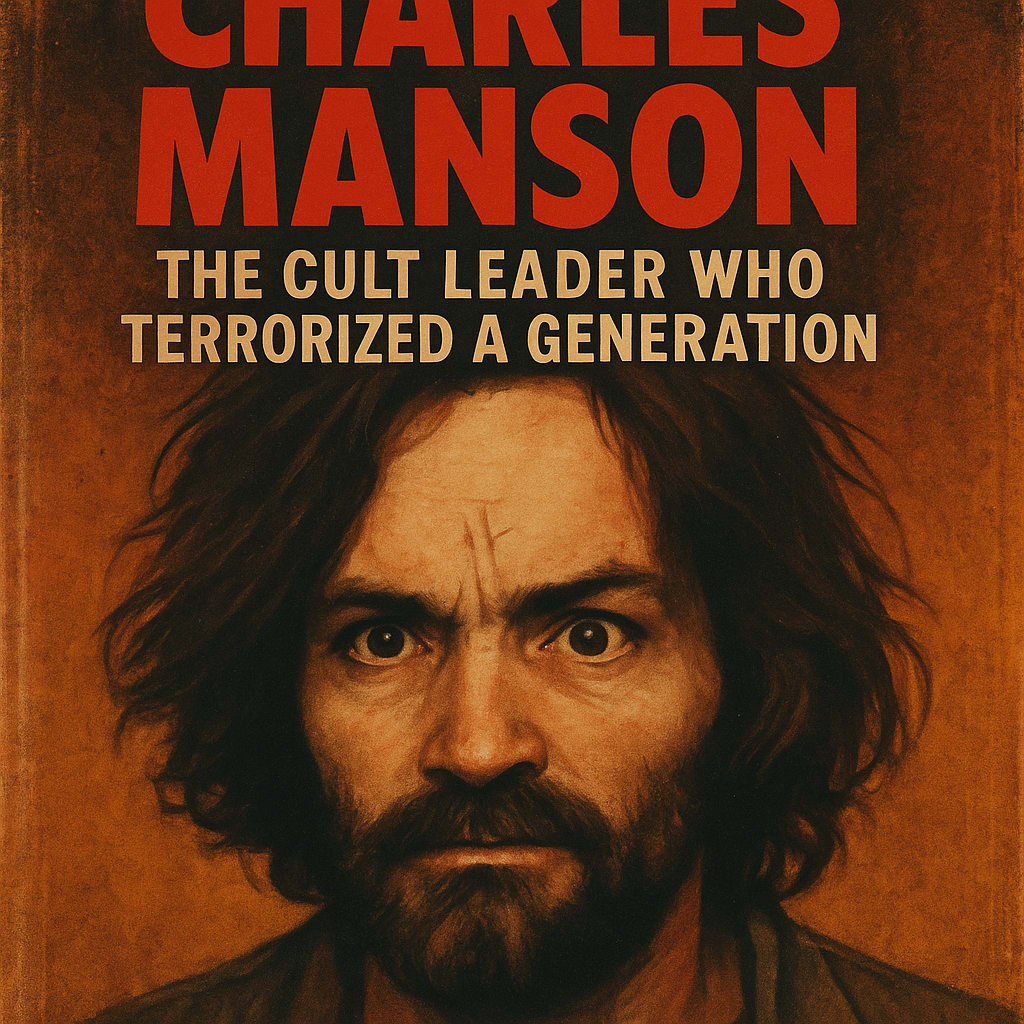
Charles Manson: The Cult Leader Who Terrorized a Generation
Charles Manson remains one of the most chilling and enigmatic figures in American criminal history. Known primarily for orchestrating a series of brutal murders through his followers, collectively called the Manson Family, Manson’s story is a dark exploration of manipulation, charisma, and the destructive power of cult dynamics. His reign of terror in the late 1960s not only shocked the nation but also symbolized the darker undercurrents of a generation known for peace and love.
Early Life and Troubled Youth
Charles Milles Manson was born on November 12, 1934, in Cincinnati, Ohio. His early life was marked by instability and neglect. Raised primarily by his mother, a convicted criminal with a history of incarceration, Manson spent much of his childhood in foster homes and juvenile detention centers.
From a young age, Manson exhibited signs of delinquency, engaging in petty crimes and showing a disturbing lack of empathy. By his teenage years, he was already cycling through prison sentences, learning how to manipulate and survive in harsh environments.
Formation of the Manson Family
In the mid-1960s, after being released from prison, Manson moved to California, where he began gathering a group of followers, mostly young, disenfranchised women seeking meaning and belonging. He created what would become known as the Manson Family, a quasi-communal group that lived a nomadic lifestyle centered around Manson’s teachings.
Manson’s charisma and persuasive skills enabled him to exert almost hypnotic control over his followers. He preached a bizarre philosophy that combined apocalyptic visions, racial tensions, and elements of The Beatles’ music—particularly their “White Album,” which Manson interpreted as a coded message predicting a coming race war he called “Helter Skelter.”
His followers believed in his prophetic vision and were willing to carry out his violent directives without question.
The Murders and Their Motives
Between August 8 and 10, 1969, the Manson Family committed a series of gruesome murders that stunned the world. The most notorious were the killings of actress Sharon Tate—who was eight months pregnant—and four others at her home in Los Angeles.
The victims were brutally stabbed and shot, with messages scrawled in blood on the walls, designed to incite racial unrest and confuse investigators. Shortly after, the Family murdered Leno and Rosemary LaBianca in a similar fashion.
The motives behind these killings were complex and twisted. Manson believed that these acts would trigger “Helter Skelter,” a race war he thought would allow him and his followers to emerge as leaders of a new social order. The murders were meant to ignite chaos and bring about this apocalyptic future.
Investigation and Trial
The investigation into the murders was extensive and challenging, as the crimes were meant to mislead authorities. However, inconsistencies and the eventual capture of some Family members led police to Manson.
Manson was arrested and charged with first-degree murder and conspiracy to commit murder. The trial, held in 1970, was a media sensation, revealing the disturbing inner workings of the cult and Manson’s manipulative power.
Manson’s behavior during the trial was erratic and bizarre, further fueling public fascination. He and several followers were convicted and sentenced to death, though their sentences were later commuted to life imprisonment when California temporarily abolished the death penalty.
Psychological Profile
Charles Manson is often studied as a classic example of a charismatic psychopath and cult leader. His ability to control, manipulate, and inspire devotion in others is a hallmark of destructive cult dynamics.
Manson displayed traits such as grandiosity, lack of empathy, and a profound capacity for deceit. His use of psychological manipulation exploited the vulnerabilities of his followers, leading them to commit acts they might never have considered on their own.
The Manson Family murders also highlighted the dangers of extremist ideology combined with charismatic leadership.
Life in Prison and Death
Manson spent the remainder of his life in prison, where he continued to attract media attention. Despite numerous parole hearings, he was never released. Over time, his health declined.
Charles Manson died on November 19, 2017, at the age of 83. His death marked the end of a dark chapter in American criminal history but did not diminish the horror and fascination surrounding his life and crimes.
Legacy and Cultural Impact
The Manson murders left an indelible mark on American society. They shattered the idealistic aura of the 1960s, exposing a brutal underside to a decade often associated with peace and love.
Manson became a cultural symbol of evil and manipulation, inspiring countless books, films, and documentaries exploring his life and crimes. His story serves as a cautionary tale about the dangers of cults, blind obedience, and the dark potentials within human psychology.
Conclusion
Charles Manson’s life is a stark reminder of how charisma, manipulation, and extremist ideology can combine to devastating effect. His ability to corrupt and command others led to horrific violence that shook a nation and continues to fascinate and horrify people today.
More than just a criminal, Manson represents the terrifying potential for human evil when twisted leadership meets vulnerable minds. His legacy challenges us to remain vigilant against the forces of manipulation and violence in all their forms.
About the Creator
Keep reading
More stories from Anwar Jamil and writers in Criminal and other communities.
Al Capone: America’s Most Notorious Gangster of the Prohibition Era
Al Capone: America’s Most Notorious Gangster of the Prohibition Era Alphonse Gabriel Capone, better known as Al Capone, is one of the most infamous figures in American criminal history. His life story epitomizes the rise of organized crime during the Prohibition era—a time when the illegal production and sale of alcohol fueled the growth of powerful criminal syndicates. Capone’s blend of brutality, business acumen, and public persona helped him dominate Chicago’s underworld and become a cultural icon, while his criminal activities left a lasting impact on law enforcement and American society.
By Anwar Jamil9 months ago in Criminal
Ken Childs and the Shadow Network Behind Celebrity Surveillance
Hollywood is no stranger to intrigue. Behind the red carpets, blockbuster premieres, and glamorous headlines lies a parallel world where privacy is fragile and information can be extremely valuable. Over the years, celebrities have faced stalkers, hackers, and fraud schemes designed to exploit their wealth and visibility. Recently, reports circulating online have drawn attention to a controversial narrative involving private investigator Ken Childs and allegations that place him near the center of a disturbing story about celebrity surveillance.
By Shane Smith4 days ago in Criminal
Murdering the love of Sarah Magurie
January 2022, it was a cold winter in Tulsa, Oklahoma, one that felt colder than most for some of us in the city. If one were to be out in the evening air of the cold, it was bone chilling to the soul. On an evening like this one who wouldn’t enjoy a good home cooked meal by someone who seemed to care about them? Right, Folks?
By Cassie Mooreabout 19 hours ago in Criminal



Comments
There are no comments for this story
Be the first to respond and start the conversation.