
George Stinney Jr.: The Youngest Person Executed in 20th Century America
The Heartbreaking Story of George Stinney Jr., the Youngest Person Executed in 20th Century America, and the Racial Injustice That Led to His Tragic Fate

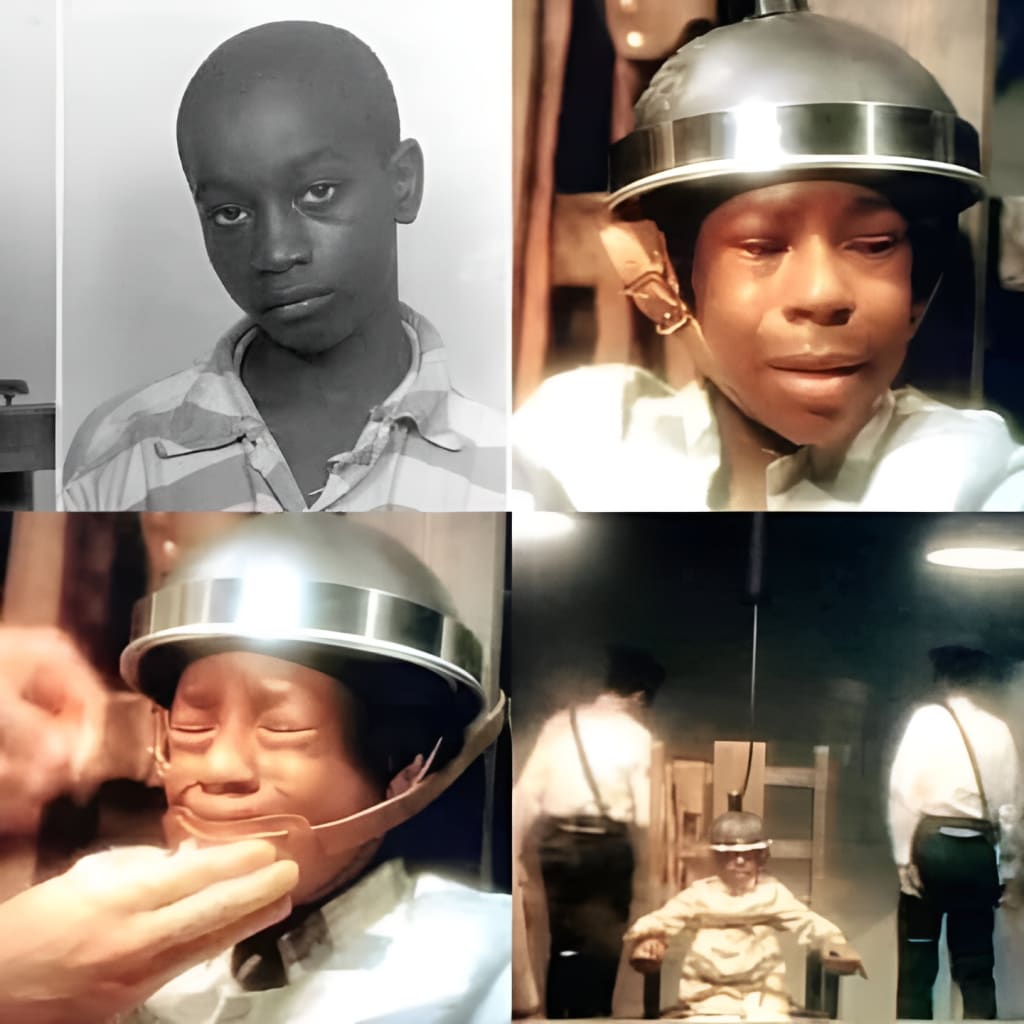
On June 16, 1944, George Stinney Jr., a 14-year-old African American boy, was executed by electric chair in South Carolina. His case remains one of the most tragic and controversial events in American legal history. George Stinney Jr. was the youngest person to be sentenced to death and executed in the United States during the 20th century, and the circumstances surrounding his case reflect the deep racial injustice and flawed legal system of that era.
The Crime: A Town's Tragedy
In March 1944, two young white girls, 11-year-old Betty June Binnicker and 7-year-old Mary Emma Thames, were found brutally murdered in the small, racially segregated town of Alcolu, South Carolina. Their bodies were discovered in a ditch, and the news of their deaths sent shockwaves through the tight-knit community.
George Stinney Jr., who lived in the town with his family, was quickly accused of the crime. At the time, racial tensions were high, and the social and political landscape of the South was deeply marked by segregation and prejudice. George was arrested after a brief interrogation by police, during which he was allegedly questioned without a lawyer, his parents, or any legal representation present. The police claimed that George had confessed to the murders, but no written or signed confession was ever produced.
A Flawed Trial and Conviction
The trial of George Stinney Jr. began on April 24, 1944, just a month after his arrest. From the start, the proceedings were deeply flawed. George’s court-appointed defense attorney, Charles Plowden, provided little to no defense. There was no investigation into the police’s methods, no challenge to the supposed confession, and no cross-examination of the prosecution’s witnesses. Moreover, there was no physical evidence linking George to the crime, and his conviction relied solely on the alleged confession, which had serious credibility issues.
The entire trial lasted only a few hours. The jury, composed entirely of white men, deliberated for just 10 minutes before delivering their guilty verdict. George was sentenced to death by electric chair, and his execution was scheduled just two months later. At no point during the trial did George have a fair chance to defend himself or prove his innocence.
Racial Injustice and a Tragic Execution
George Stinney Jr.'s execution took place on June 16, 1944, when he was just 14 years old. At barely 5 feet tall and weighing only 95 pounds, he was so small that he had to sit on a Bible in the electric chair to fit into the apparatus. Witnesses to the execution later described the scene as harrowing, with the large electrodes barely fitting his head, and the young boy visibly trembling as the execution was carried out.
The execution of George Stinney Jr. became a stark symbol of the racial injustice that permeated the American South during the Jim Crow era. African Americans were systematically marginalized, and the justice system often failed them, particularly in cases involving white victims. The case highlighted the deep flaws in a system that was supposed to protect the innocent but instead furthered racial inequality and injustice.
A Fight for Justice: The Overturning of the Conviction
For decades, George Stinney’s case remained a painful chapter in American history. However, his story was not forgotten. In 2014, 70 years after his execution, a South Carolina judge vacated George’s conviction, stating that he had not received a fair trial. Judge Carmen Mullen ruled that the case against George was severely compromised by legal misconduct, lack of due process, and racial bias.
In the ruling, Judge Mullen cited the failure of George’s defense attorney to provide adequate representation, the dubious nature of the supposed confession, and the deeply prejudiced environment in which the trial took place. She acknowledged that George was wrongfully convicted and that his trial had been a miscarriage of justice.
The overturning of George Stinney’s conviction, while symbolic, could never undo the tragic events that led to his execution. But it did offer some measure of closure to his family and served as a powerful reminder of the need for a fair and unbiased legal system.
The Legacy of George Stinney Jr.
George Stinney Jr.’s story is a haunting reminder of the racial inequality and injustice that defined much of 20th century America. His case continues to resonate today, as the fight for racial justice and reform in the legal system remains ongoing. His wrongful conviction and execution at such a young age underscore the devastating consequences of a biased and unjust legal system, particularly for marginalized communities.
Though his life was cut short, the case of George Stinney Jr. has sparked important conversations about the death penalty, juvenile justice, and racial discrimination in America. His memory lives on as a testament to the importance of ensuring that justice is blind, fair, and accessible to all, regardless of race or background.
In the end, George Stinney’s story serves as both a cautionary tale and a call to action. It reminds us of the human cost of injustice and the importance of fighting for a more just and equitable world, where no child, regardless of their background, is treated as George Stinney Jr. was.
About the Creator
William Henry
Writing has been a hobby of mine for years, and I’m excited to share my work here! Besides writing, I’m passionate about dogs and love to travel.
I hope you enjoy my creative journey!
Keep reading
More stories from William Henry and writers in Criminal and other communities.
Affordable Breakfast Ideas for Students: Stay Full for 3-4 Hours Without Breaking the Bank
As a student, managing expenses while staying healthy can feel like a challenge, especially when it comes to food. Breakfast is often called the most important meal of the day, but many students skip it or opt for unhealthy options due to time constraints or tight budgets. However, with a little planning, it’s possible to have a nutritious breakfast that won’t hurt your wallet and will keep you full for 3-4 hours. In this post, we’ll explore some simple, affordable, and healthy breakfast ideas perfect for students who need energy and focus to power through their day.
By William Henryabout a year ago in Lifehack
In Cold Blood: Anatomy of a True Crime Classic
The True Crime Reader: Truman Capote’s 'In Cold Blood' Welcome to The True Crime Reader, the podcast where literature meets real life—and the line between truth and narrative blurs. I’m your host, and today we’re journeying into the heart of rural 1950s America to examine Truman Capote’s genre-defining work, In Cold Blood. This episode, we’ll peel back the layers of a book that didn’t just recount a murder—it transformed journalism, challenged the ethics of true crime, and left a profound mark on how we tell stories about violence, psychology, and the American Dream.
By Kristen Barenthaler4 days ago in Criminal
The Town That Slept: How Ephrata's Obsession with "Curb Appeal" Hid a House of Horrors
The "Perfect" Borough Ephrata, Pennsylvania, prides itself on its image. It is the home of the historic Ephrata Cloister, a site of religious devotion and discipline. It is a town of "Main Street" revitalization projects, boutique coffee shops, and carefully managed public relations. The Borough Council and its various sub-committees spend hours debating the aesthetics of the town. They want Ephrata to look safe, prosperous, and inviting.
By Sunshine Firecracker4 days ago in Criminal



Comments
There are no comments for this story
Be the first to respond and start the conversation.