
Fraud Prevention and Detection in the Banking Industry - Facts, Statistics, and Real Use-Cases
AI systems are evolving, and there is great hope that one day they will reach that level of development in order to cope with global problems. Financial fraud is one of them. Read how AI helps in dealing with this right now.


Technologies that were originally designed to make our lives more comfortable are developing, and fraudsters do not get tired of looking for new online loopholes to gain access to other people's assets. This is like running in a circle - in response to new security systems, attackers create new ways to trick them.
Cyber fraud is a new problem for the whole world, however, artificial intelligence has a good potential to become a powerful means of struggle, and in the financial industry as well. In this article, we talk about how AI development helps banks and other financial institutions prevent fraudulent attempts and improve the level of their service due to increasing security.
Fraud Prevention and Detection Statistics
Artificial Intelligence helps banks cope with the growing security challenges facing the modern world. Statistics show that this is a global problem that requires work at all levels - from informing users about possible tricks of fraud and ending with monitoring financial transactions at the interstate level.
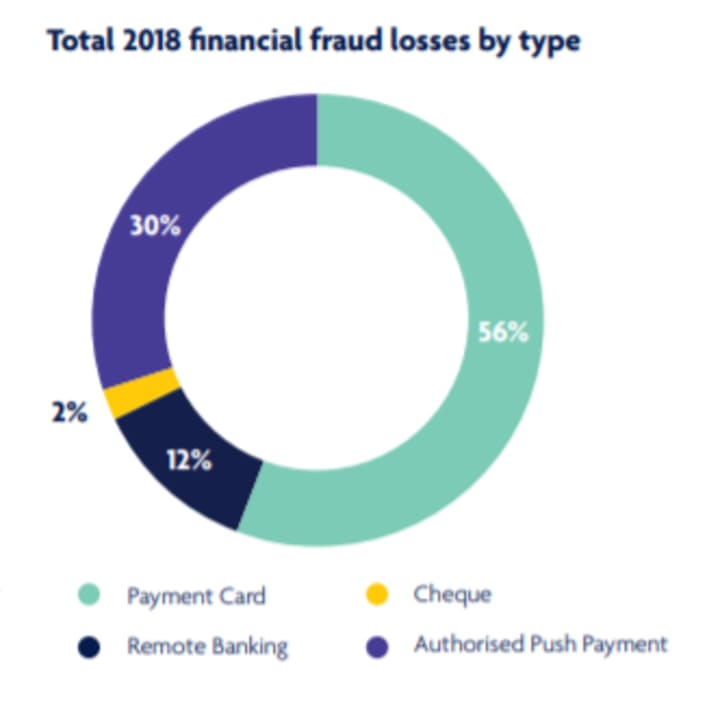
- According to a Nilson report, losses from card fraud alone will amount to $ 35 billion by 2020. In addition, credit card fraud is the most common type of fraud.
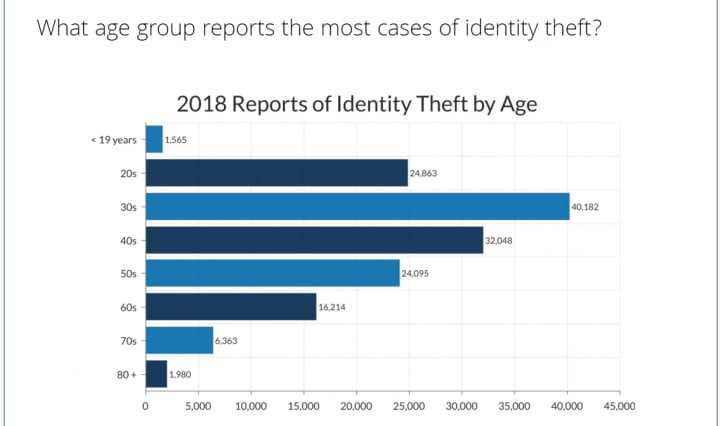
- A generation of millennials who freely share their data on social networks and other sources, as well as in most cases prefer to pay for purchases online or by card, are the most attractive victims for scammers - for the above reasons.
AI in Banking - How Is It Used to Ensure Users’ Safety
But even despite these statistics, it can be said that banking operations have become safer and more thoughtful compared to the period when financial institutions could not have the technology at their disposal. Here are a few examples of how AI in the banking industry helps combat financial fraud.
Machine-Learning Bank Transactions to Issue Smart Loans
Previously, when deciding whether to grant a loan, banks used only two types of data - data on the client’s salary for a certain period, plus his credit history. Naturally, the decision was made by people on the basis of common sense. Today, artificial intelligence is able to assess credit risks by analyzing a much larger number of factors that at first glance may not be related to solvency - for example, the user's tendency to impulsive purchases, the likelihood of the user belonging to illegal organizations, the history of searches from his devices, recording telephone conversations, even posts on social networks - and much more. This gives banks the opportunity to give more deliberate loans that will surely be paid and save themselves from the judicial red tape associated with the recovery of collateral.
Anomaly Detection with Machine Learning
At the moment, a lot of credit card issuers use AI to analyze how holders use their cards. Any violations are immediately recorded for decisive action.
For example, the Bank of England has teamed up with AI startup Mindbridge to analyze and manage data to help identify financial anomalies. The strength of AI lies in the fact that it is able to study patterns of behavior and sift through huge volumes of data, revealing any discrepancies more thoroughly and faster than people. The simplest examples of an anomaly are:
- the incorrect entry of a PIN code or password in a financial application,
- several attempts to receive cash or pay for goods in geographically distant locations,
- crediting an abnormally large amount to a user's card,
- an attempt to report a PIN code or CVV in a telephone conversation, and the like.
Fraud Prevention in Bank Transactions
When users enter Internet banking from a new device, conduct unusually large cash transactions or too many payments in a short time, the bank will warn of possible fraud. AI algorithms help financial institutions detect suspicious financial transactions and notify the user by phone, email, text or PUSH notification.
In some cases, users will even have to call the bank and personally confirm the transaction by answering additional security questions.
AI in the Finance Industry to Combat Money Laundering
In the world, the volume of annual laundered income, even according to fairly conservative estimates, amounts to 2-5% of world GDP, or from 800 billion to 2 trillion dollars. Money laundering occurs both in countries with a sound financial system and in countries with less controlled banking systems. Machine learning algorithms can be used to identify new behaviors for criminals that could encourage a financial institution to conduct additional investigations. AI systems can process a lot of data in real-time — emails, phone calls, expense reports — and identify patterns of behavior that people might not notice.
AI in Retail for Safe Purchases
Most cases of fraud are somehow related to purchases - online or offline. For example, in the case of physical theft of a credit card that was not password protected (or theft of a mobile phone that supports contactless payment), cameras with face recognition can determine whether the card (including the virtual one in the case of a smartphone) is in the hands of its legitimate owner.
Or if the system receives data that several purchases were made from different IP addresses but from the same credit card, this may also be a basis for suspicion. Especially if the IP address that is considered to belong to the user was not in the list of addresses from which purchases were made. AI systems can also use IP address data to predict intentions - if any address has already been marked as potentially suspicious. For example, if the fraudster plans to make a purchase, and then return the fake goods.
The Case of Reverse Efficiency - How AI Helped Steal Money
Yes, artificial intelligence has every chance to eradicate such a thing as financial fraud, but there is a flip side to the coin. Sometimes systems turn out to be too smart and can do harm in the hands of smart scammers. For example, at the end of 2019, attackers used AI algorithms to impersonate the acting director of a German company - a partner of one British energy firm whose name was not disclosed.
During a falsified telephone conversation, they tricked his subordinate into making a large money transfer. The victim made a transfer to the Hungarian supplier company and received appropriate confirmation. In this case, the AI of the financial institution that carried out the transfer did not recognize any anomalies, and the payment was made according to the procedure.
However, in practice, this case should become a real precedent and an occasion to train AI systems to analyze even more data, including telephone conversations of transaction participants checking their competence.
New Ways to Prevent Fraud - Master Card’s Fraud Prevention System
But as we have said, the more fraud attempts, the more data for training smart systems to block these attempts. So, Master Card created the Threat Scan system, which is honing its ability to recognize suspicious actions in hundreds of specially generated scenarios. Each fulfilled scenario is another array of data that is used for comprehensive and ongoing training. Thus, there is hope that the analysis of a large number of scenarios and choices, together with predictive analytics, will give the system the opportunity to go through 99.9% of fraudulent attempts and become perfect.
Conclusion
So, we have given enough reason to think that your financial institution and your clients also need protection against fraud in the form of an AI system. SPD Group has experience and expertise in creating such solutions and can become your reliable partner in the joint fight against fraud.
About the Creator
Helen Kovalenko
I am working in a Data Science Team over the NLP, Computer Vision, and Fraud Detection solutions, and gladly shares her researches and developments in her blog posts. IT Project Manager at SPD Group.
Keep reading
More stories from writers in Criminal and other communities.



Comments
There are no comments for this story
Be the first to respond and start the conversation.