
France: daring daytime heist at the Louvre Museum in Paris
louvre robbery

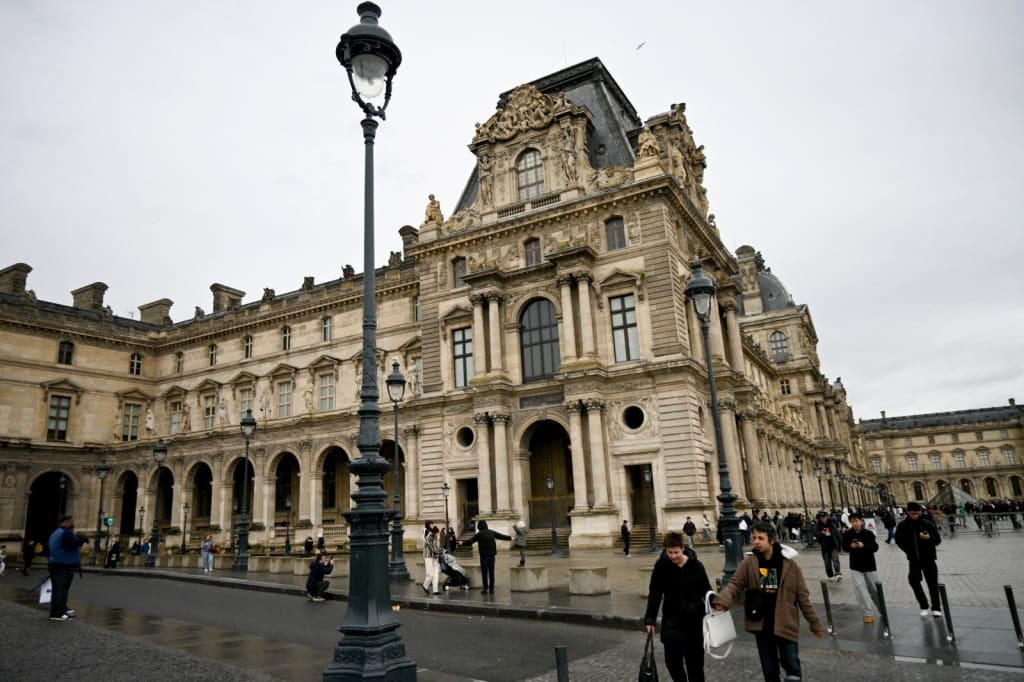
The Louvre Robber
The Louvre Museum in Paris is one of the world’s greatest cultural institutions. It holds thousands of priceless artworks and historical artifacts, including masterpieces such as the Mona Lisa and the Venus de Milo. Known for its beauty and significance, the Louvre attracts millions of visitors every year. However, in October 2025, this symbol of art and heritage became the scene of a shocking robbery that left the public and authorities stunned. A group of organized thieves managed to break into the museum and steal valuable Napoleonic jewels, raising serious questions about how such a crime could occur in one of the most secure museums on earth.
What Happened
On the morning of October 19, 2025, just after the museum opened, a group of robbers carried out a highly coordinated and daring theft inside the Louvre. They targeted the Galerie d’Apollon, the grand gallery where the French crown jewels and jewelry linked to Napoleon and his family are displayed. Witnesses and reports describe that the criminals used a mechanical lift to reach a high window on the side of the building. The window was likely chosen because it was near an area undergoing renovation, which might have had less security than usual.
Using power tools, the thieves cut through the window and entered the gallery quickly. Once inside, they smashed glass display cases and seized several priceless jewelry pieces. The entire operation took only a few minutes, with some estimates saying it lasted between four and seven minutes. The robbers then escaped using motorbikes waiting nearby. One damaged crown was later discovered outside the museum, apparently dropped as they fled.
The stolen items are believed to be of enormous historical and cultural value rather than simply monetary worth. The jewels represented part of France’s royal and imperial history, making the theft not just a loss of property, but a loss of national heritage.
-### Investigation and Response
Immediately after the incident, the Louvre was closed for the rest of the day while police, forensic teams, and museum officials examined the crime scene. Security footage was reviewed, and investigators began tracking possible escape routes. French authorities described the robbery as a major and professional operation, suggesting that the criminals had studied the museum’s layout and schedule beforehand.
The police investigation is focused on organized crime groups that specialize in high-value thefts. The rapid and methodical nature of the robbery suggests that the thieves were well-trained and experienced. There were no reports of injuries or confrontations during the event, which implies that the operation was planned to minimize attention and avoid violence.
Historical Background
The 2025 robbery is not the first theft in the history of the Louvre. The museum was also the site of one of the most famous art crimes ever committed — the theft of the Mona Lisa in 1911. In that case, an Italian handyman named Vincenzo Peruggia hid inside the museum overnight and stole the painting, which was later recovered in Italy two years later. Over the years, there have been other minor thefts, but none as bold or as symbolically significant as this most recent one.
The Louvre’s immense size and historical architecture make complete security difficult. The museum covers several acres and contains thousands of rooms, galleries, and corridors. Balancing accessibility for millions of visitors each year with strict security measures has always been a challenge.
Common Questions People Are Asking
What exactly was stolen?**
Reports indicate that several pieces of Napoleonic jewelry were taken from the Apollo Gallery. These included crowns, necklaces, and ornamental gems associated with the French Empire.
How long did the robbery last?**
The entire incident reportedly lasted less than ten minutes. The thieves acted with precision and left before police or security could respond.
Were there any injuries?**
No injuries or violent acts were reported. The thieves avoided harming anyone and appeared to focus only on their target.
How did they get in and out?**
They used a cherry picker or mechanical lift to reach an upper-level window and gained entry using cutting tools. After collecting the jewels, they escaped on motorbikes, disappearing into the busy streets of Paris.
Why was the museum vulnerable?**
The robbery took advantage of construction work around the museum, which created temporary weaknesses in its security. It also happened early in the morning when staff numbers were lower.
Significance and Impact
The robbery has caused deep concern in France and throughout the art world. The stolen jewels are not only valuable for their materials but also for their connection to national history. They reflect centuries of craftsmanship and represent the legacy of French royalty and empire. Losing such items is considered a blow to cultural identity and pride.
The event has also led to renewed discussions about museum security. Experts are now calling for advanced technology, improved monitoring systems, and stricter control of renovation zones. Other museums around the world are also reviewing their safety protocols to avoid similar incidents.
Beyond the material loss, the robbery has a symbolic impact. It challenges the perception that famous museums are impenetrable and secure. It also reminds people that cultural treasures, no matter how well protected, remain vulnerable to those who plan carefully and act decisively.
The 2025 Louvre robbery will likely be remembered as one of the most daring and sophisticated museum thefts of the century. In a matter of minutes, a small group of thieves managed to outsmart security, seize irreplaceable jewels, and escape without injury or immediate capture. The investigation continues, but regardless of the outcome, the incident has already changed the way museums and cultural institutions think about protecting their collections. The Louvre, once again, finds itself at the center of a global story — not because of the art it displays, but because of the art and history that have been stolen from it.
About the Creator
America today
Breaking news, political insights, real-time analysis, U.S. politics, global politics, elections, government policies, international relations, diplomacy, political debates, trending political stories, expert commentary, factual reporting,.
Keep reading
More stories from America today and writers in Criminal and other communities.
The “No Kings” Movement — A New American Call for Democracy
The “No Kings” Movement — A New American Call for Democracy** In recent weeks, the “No Kings” movement has emerged across the United States as a powerful social and political statement. The phrase, simple yet deeply symbolic, represents a growing call among Americans to reaffirm democratic values and resist any sign of authoritarianism or excessive concentration of power in the hands of political leaders. Although the slogan is new, the idea behind it is rooted in the very foundation of American history — a nation born out of opposition to monarchy and built on the principles of equality and shared governance.
By America today 3 months ago in Criminal
Multinational Crisis
Part One: Nigeria You have all heard about Nigerians, Nigeria in general. The infamous scammer country. But let’s have a real conversation. Let me give you some extremely boring stats, so we are on a level playing field, on my thoughts. I’ll be as brief as possible considering, no one wants an hour long dissertation on economic issues.
By Alexandra Grant4 days ago in Criminal
Oklahoma Murder for Hire
Murder for hire in 1988 must have been a real monster of a time to find for a woman who was bored, and just lazy. A woman that claimed she was abused, knew how to work a young man up, back in those days it was much easier to find “a knight in shining armor”. Men all over wanted to be one, no man how scuzzy they really were.
By Cassie Moore5 days ago in Criminal


Comments
There are no comments for this story
Be the first to respond and start the conversation.