
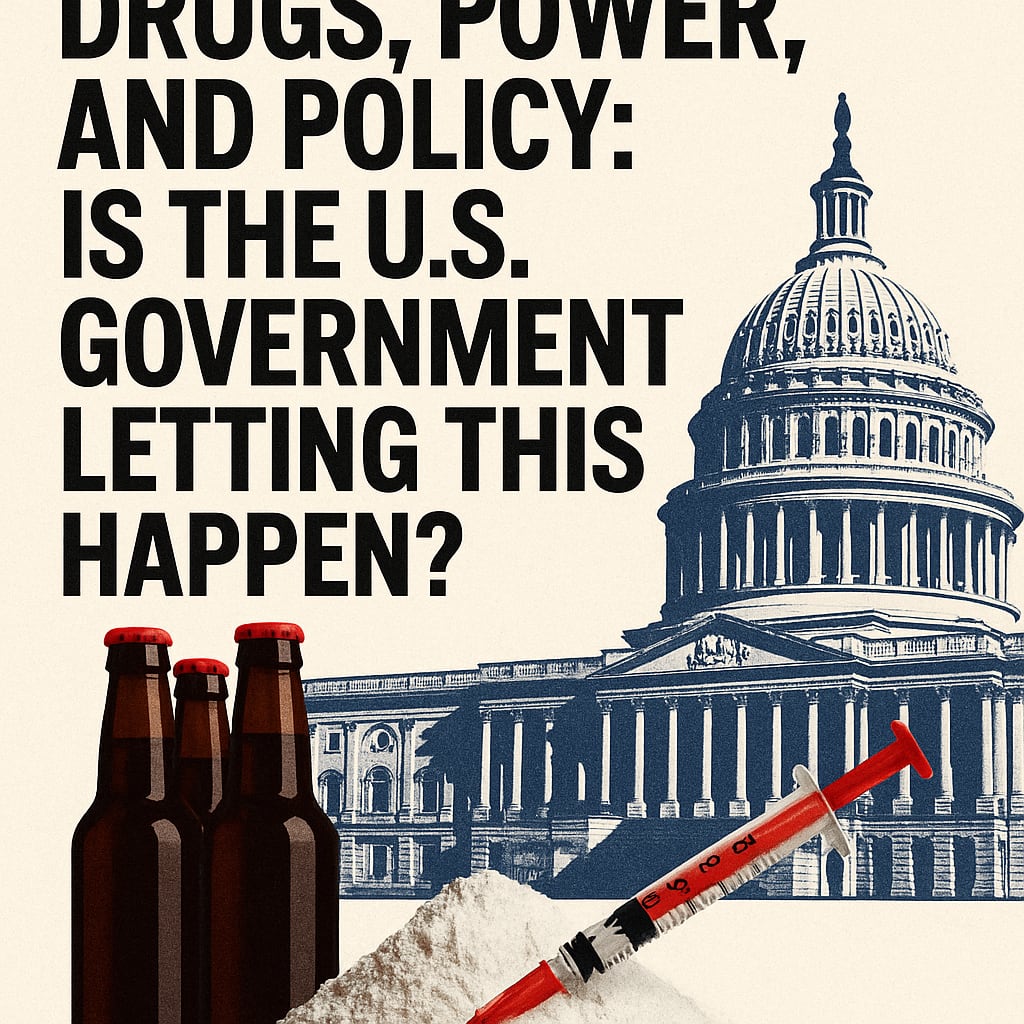
Drugs, Power, and Policy: Is the U.S. Government Letting This Happen?
While thousands of Americans die every week from drug overdoses, deadly substances continue to flood across the borders. Who’s responsible—and who’s staying silent?

1. Introduction: Death in the Shadows of Power
Every five minutes, someone in the United States dies from a drug overdose. These aren’t just individual tragedies—they represent a national failure. As synthetic opioids like fentanyl sweep across the country, killing tens of thousands every year, the question arises: where are these drugs coming from, and why can’t the government stop them?
The reality may be darker than most people imagine. This is not just a story about smugglers and addicts—it's a story of governments, corporations, silence, and profits.
---
2. Where Do the Drugs Come From?
The current wave of drug deaths is driven largely by fentanyl, a synthetic opioid 50 times stronger than heroin. This deadly drug originates mainly in China, where chemical precursors are legally produced. These substances are then shipped to Mexico, where powerful drug cartels like the Sinaloa Cartel and CJNG (Jalisco New Generation Cartel) convert them into street-ready fentanyl and smuggle them into the U.S.
Heroin, on the other hand, still originates from opium poppies grown in countries like Afghanistan, and makes its way through Pakistan, Iran, and Turkey before arriving in the West.
Methamphetamine (meth), cocaine, and other synthetic drugs follow similar routes, often with cooperation from criminal networks spanning continents.
---
3. The Open Border Paradox
Despite spending billions of dollars on border security, the U.S. has failed to stop the inflow of these substances. Some of the drugs cross through legal border checkpoints, hidden in vehicles or cargo. Others come through underground tunnels, drones, or by mail.
If the U.S. is capable of launching satellites and controlling global digital surveillance, why is it failing to detect drug shipments entering its own territory?
Some experts suggest that it’s not about inability—but about unwillingness.
---
4. Did the CIA Play a Role? A Troubling History
The idea that the U.S. government may have allowed, or even facilitated, drug trafficking is not new.
In the 1980s and 1990s, journalist Gary Webb exposed a shocking link between the CIA, Nicaraguan Contras, and the crack cocaine epidemic in American cities. According to his reports, the CIA turned a blind eye to cocaine trafficking to fund anti-communist forces in Central America. Though Webb faced massive backlash and died under suspicious circumstances, his claims were partially confirmed by government investigations years later.
This raises an uncomfortable question: If the U.S. government has looked the other way before, could it be doing so again?
---
5. Big Pharma: Legal Dealers in Plain Sight
Not all drug dealers operate in secret. Some wear suits and occupy boardrooms.
Purdue Pharma, the maker of OxyContin, played a central role in the rise of the opioid epidemic. The company aggressively marketed addictive painkillers while downplaying the risk of addiction. The result? Millions got hooked on prescription opioids, which often led them to cheaper, illegal alternatives like heroin or fentanyl.
The Sackler family, who owned Purdue, made billions of dollars, and despite public outrage and lawsuits, many of them remain free and wealthy today.
This is not just a failure of law enforcement. It is a failure of policy, accountability, and ethics.
---
6. The Government Response: Too Little, Too Late
While local law enforcement agencies fight small battles, the larger war seems to be slipping through federal fingers. Programs to combat drug use often focus on arresting users rather than disrupting supply chains or regulating pharmaceutical companies.
Yes, agencies like the DEA and FBI do conduct major raids. But these victories are temporary and reactive, not structural.
Some believe that as long as the system profits—whether from prison labor, pharmaceutical stocks, or border security contracts—there is little incentive to truly end the drug crisis.
---
7. A Cycle of Profit and Pain
Here’s how the cycle works:
1. Pharmaceutical companies make addictive drugs and sell them legally.
2. When people get addicted, they turn to illegal drugs like fentanyl.
3. Drug cartels profit—and so do the companies that make antidotes like naloxone (Narcan).
4. The prison-industrial complex benefits from arrests and incarceration.
5. Politicians get donations from both law enforcement unions and pharmaceutical giants.
Every stage of this crisis benefits someone—except the victims.
---
8. Who’s Dying, and Why It Matters
The overdose epidemic does not affect all Americans equally. Statistics show that the majority of overdose victims are:
Young
Poor
Black, Hispanic, or Native American
This has led some to argue that the drug crisis is a form of "soft genocide"—a method of quietly eliminating marginalized populations while pretending to fight for them.
---
9. What Needs to Change?
The solution is not simple. But certain steps are obvious:
Crack down on pharmaceutical companies that push addictive drugs.
Increase regulation and transparency on chemical imports.
Hold corrupt officials accountable.
Shift focus from punishment to prevention and rehabilitation.
End the political lobbying power of corporations tied to drugs and prisons.
Most importantly, the public must stop accepting silence as an answer.
---
10. Final Thoughts: A Nation in Denial
It’s easy to blame cartels or addicts. But the truth is more complex and more terrifying: this crisis is sustained by policies, profit motives, and power structures that allow it to exist.
When a government can track your phone in real-time but can’t stop deadly drugs from crossing its borders—ask why.
When corporations make billions from addiction and then billions more from treatment—ask who benefits.
When politicians make promises but deaths keep rising—ask who’s really in control.
The answers won’t be easy—but asking is where change begins.1. Introduction: Death in the Shadows of Power
Every five minutes, someone in the United States dies from a drug overdose. These aren’t just individual tragedies—they represent a national failure. As synthetic opioids like fentanyl sweep across the country, killing tens of thousands every year, the question arises: where are these drugs coming from, and why can’t the government stop them?
The reality may be darker than most people imagine. This is not just a story about smugglers and addicts—it's a story of governments, corporations, silence, and profits.
---
2. Where Do the Drugs Come From?
The current wave of drug deaths is driven largely by fentanyl, a synthetic opioid 50 times stronger than heroin. This deadly drug originates mainly in China, where chemical precursors are legally produced. These substances are then shipped to Mexico, where powerful drug cartels like the Sinaloa Cartel and CJNG (Jalisco New Generation Cartel) convert them into street-ready fentanyl and smuggle them into the U.S.
Heroin, on the other hand, still originates from opium poppies grown in countries like Afghanistan, and makes its way through Pakistan, Iran, and Turkey before arriving in the West.
Methamphetamine (meth), cocaine, and other synthetic drugs follow similar routes, often with cooperation from criminal networks spanning continents.
---
3. The Open Border Paradox
Despite spending billions of dollars on border security, the U.S. has failed to stop the inflow of these substances. Some of the drugs cross through legal border checkpoints, hidden in vehicles or cargo. Others come through underground tunnels, drones, or by mail.
If the U.S. is capable of launching satellites and controlling global digital surveillance, why is it failing to detect drug shipments entering its own territory?
Some experts suggest that it’s not about inability—but about unwillingness.
---
4. Did the CIA Play a Role? A Troubling History
The idea that the U.S. government may have allowed, or even facilitated, drug trafficking is not new.
In the 1980s and 1990s, journalist Gary Webb exposed a shocking link between the CIA, Nicaraguan Contras, and the crack cocaine epidemic in American cities. According to his reports, the CIA turned a blind eye to cocaine trafficking to fund anti-communist forces in Central America. Though Webb faced massive backlash and died under suspicious circumstances, his claims were partially confirmed by government investigations years later.
This raises an uncomfortable question: If the U.S. government has looked the other way before, could it be doing so again?
---
5. Big Pharma: Legal Dealers in Plain Sight
Not all drug dealers operate in secret. Some wear suits and occupy boardrooms.
Purdue Pharma, the maker of OxyContin, played a central role in the rise of the opioid epidemic. The company aggressively marketed addictive painkillers while downplaying the risk of addiction. The result? Millions got hooked on prescription opioids, which often led them to cheaper, illegal alternatives like heroin or fentanyl.
The Sackler family, who owned Purdue, made billions of dollars, and despite public outrage and lawsuits, many of them remain free and wealthy today.
This is not just a failure of law enforcement. It is a failure of policy, accountability, and ethics.
---
6. The Government Response: Too Little, Too Late
While local law enforcement agencies fight small battles, the larger war seems to be slipping through federal fingers. Programs to combat drug use often focus on arresting users rather than disrupting supply chains or regulating pharmaceutical companies.
Yes, agencies like the DEA and FBI do conduct major raids. But these victories are temporary and reactive, not structural.
Some believe that as long as the system profits—whether from prison labor, pharmaceutical stocks, or border security contracts—there is little incentive to truly end the drug crisis.
---
7. A Cycle of Profit and Pain
Here’s how the cycle works:
1. Pharmaceutical companies make addictive drugs and sell them legally.
2. When people get addicted, they turn to illegal drugs like fentanyl.
3. Drug cartels profit—and so do the companies that make antidotes like naloxone (Narcan).
4. The prison-industrial complex benefits from arrests and incarceration.
5. Politicians get donations from both law enforcement unions and pharmaceutical giants.
Every stage of this crisis benefits someone—except the victims.
---
8. Who’s Dying, and Why It Matters
The overdose epidemic does not affect all Americans equally. Statistics show that the majority of overdose victims are:
Young
Poor
Black, Hispanic, or Native American
This has led some to argue that the drug crisis is a form of "soft genocide"—a method of quietly eliminating marginalized populations while pretending to fight for them.
---
9. What Needs to Change?
The solution is not simple. But certain steps are obvious:
Crack down on pharmaceutical companies that push addictive drugs.
Increase regulation and transparency on chemical imports.
Hold corrupt officials accountable.
Shift focus from punishment to prevention and rehabilitation.
End the political lobbying power of corporations tied to drugs and prisons.
Most importantly, the public must stop accepting silence as an answer.
---
10. Final Thoughts: A Nation in Denial
It’s easy to blame cartels or addicts. But the truth is more complex and more terrifying: this crisis is sustained by policies, profit motives, and power structures that allow it to exist.
When a government can track your phone in real-time but can’t stop deadly drugs from crossing its borders—ask why.
When corporations make billions from addiction and then billions more from treatment—ask who benefits.
When politicians make promises but deaths keep rising—ask who’s really in control.
The answers won’t be easy—but asking is where change begins.
About the Creator
Donald Trump Withdrawing U.S. Forces From Qatar Amid Fears of Iranian Escalation
Donald Trump Considers Withdrawing U.S. Forces From Qatar Amid Fears of Iranian Escalation The recent killing of approximately 2400 protesters in Iran has once again drawn global attention to the deep political and security crisis inside the country. These deaths, linked to widespread demonstrations against economic hardship, political repression, and government authority, have intensified regional tensions and raised serious concerns about Iran’s internal stability. As unrest grows and the risk of external escalation increases, the security balance in the Middle East has come under renewed scrutiny.
By America today 5 days ago in Criminal


Comments
There are no comments for this story
Be the first to respond and start the conversation.