
Donald Trump Withdrawing U.S. Forces From Qatar Amid Fears of Iranian Escalation
Donald Trump Withdrawing U.S. Forces From Qatar Amid Fears of Iranian Escalation

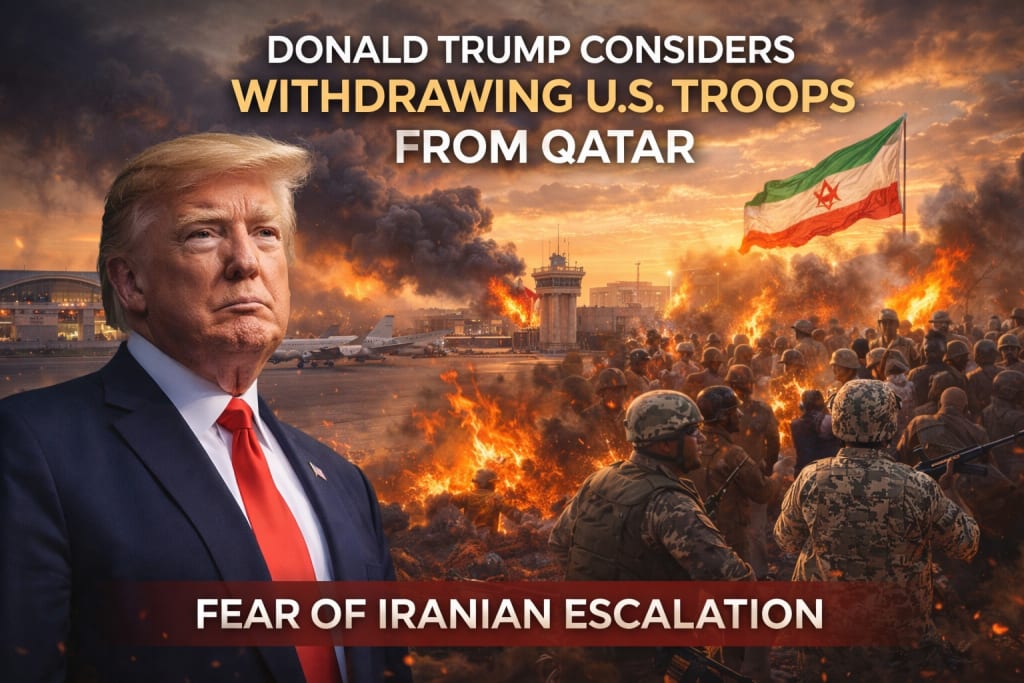
Donald Trump Considers Withdrawing U.S. Forces From Qatar Amid Fears of Iranian Escalation
The recent killing of approximately 2400 protesters in Iran has once again drawn global attention to the deep political and security crisis inside the country. These deaths, linked to widespread demonstrations against economic hardship, political repression, and government authority, have intensified regional tensions and raised serious concerns about Iran’s internal stability. As unrest grows and the risk of external escalation increases, the security balance in the Middle East has come under renewed scrutiny.
Against this backdrop, former U.S. President Donald Trump has reportedly considered the possibility of withdrawing American forces from the U.S. military base in Qatar. The move is described as a precautionary step driven by fears of potential Iranian retaliation or escalation that could place U.S. troops at risk. This development highlights how domestic unrest in Iran can quickly evolve into a broader regional and international security issue.
Why Is Iran Experiencing Widespread Protests**
Iran has faced recurring waves of protests in recent years due to rising inflation, unemployment, currency collapse, and restrictions on political freedoms. Demonstrators have repeatedly taken to the streets demanding accountability, reforms, and basic economic relief. The reported killing of 2400 protesters reflects the scale and severity of the government’s response, further fueling anger among the population and increasing international concern.
These protests are not isolated incidents but part of a larger pattern of internal instability that places pressure on Iran’s leadership and influences its foreign policy behavior.
Why Is Qatar Strategically Important to the United States**
Qatar hosts one of the most critical U.S. military installations in the Middle East. The base plays a central role in regional surveillance, air operations, and coordination across the Gulf region. Its strategic location allows the United States to respond rapidly to threats, support allies, and maintain deterrence against hostile actions.
Any decision to reduce or withdraw forces from Qatar would represent a significant shift in U.S. military posture in the region and could alter existing security calculations.
Why Would Donald Trump Consider Withdrawing Troops From Qatar**
Donald Trump has consistently emphasized minimizing direct military exposure while maintaining pressure through strategic deterrence. The consideration to withdraw troops from Qatar reportedly stems from concerns that escalating tensions with Iran could turn U.S. bases into potential targets.
From this perspective, reducing troop presence could be seen as a way to avoid direct confrontation while reassessing broader regional strategy. It reflects a risk management approach rather than a complete disengagement from the Middle East.
How Does Iranian Escalation Affect U.S. Military Decisions**
Iranian escalation, whether through direct actions or proxy forces, significantly impacts U.S. military planning. Increased threats to American personnel require constant reassessment of force deployment, base security, and regional alliances.
The killing of protesters may push Iranian leadership to adopt a more aggressive external posture as a means of deflecting internal pressure. This possibility raises concerns that U.S. assets in the Gulf could become symbolic or strategic targets.
What Would a U.S. Withdrawal Mean for Regional Security**
A partial or full withdrawal from Qatar could have ripple effects across the Middle East. Allies may interpret the move as a reduction in U.S. commitment, while adversaries could view it as an opportunity to expand influence.
At the same time, such a decision could force regional partners to increase their own defense coordination and assume greater responsibility for security. The long-term impact would depend on whether withdrawal is accompanied by alternative deterrence measures.
How Could This Decision Affect U.S. Relations With Iran**
Withdrawing troops could either reduce immediate tensions or embolden Iran, depending on how the move is perceived. If viewed as a de-escalation effort, it might lower the risk of direct conflict. However, if interpreted as weakness, it could encourage further pressure from Tehran.
Donald Trump’s approach has historically combined economic pressure with selective military restraint, making this potential decision consistent with a strategy of avoiding large-scale conflict while maintaining leverage.
What Are the Political Implications Inside the United States**
Any decision involving troop withdrawal carries domestic political consequences. Supporters may see it as protecting American lives and reducing foreign entanglements, while critics may argue it undermines U.S. credibility and regional stability.
The situation in Iran, particularly the killing of protesters, also raises ethical and human rights concerns that influence public debate and policy discussions in Washington.
What Happens Next in the Gulf Region**
The situation remains highly fluid. Continued protests in Iran, potential retaliatory actions, and shifting military postures will shape the next phase of regional dynamics. Decisions regarding troop deployment in Qatar will likely depend on intelligence assessments and the broader geopolitical environment.
As tensions persist, the link between internal unrest in Iran and international security becomes increasingly clear. The reported consideration by Donald Trump to withdraw U.S. forces from Qatar underscores how rapidly domestic crises can transform into strategic challenges, with consequences that extend far beyond national borders.
About the Creator
America today
Breaking news, political insights, real-time analysis, U.S. politics, global politics, elections, government policies, international relations, diplomacy, political debates, trending political stories, expert commentary, factual reporting,.
Keep reading
More stories from America today and writers in Criminal and other communities.
The Global Power Struggle in 2026: Why Are Tensions Rising Between the United States, Russia, China, and Venezuela?
f tensions between the United States and each of Russia, China, and Venezuela. These tensions cannot be understood as isolated events or temporary crises; rather, they are a direct reflection of a deeper struggle over global influence, strategic resources, and the future shape of the international order. At the center of this complex scene, Venezuela has emerged as a major flashpoint, while Russia and China play the role of supporters and counterweights to U.S. actions.
By America today 6 days ago in Criminal
Living in the Blast Zone: The "House of Skulls" and the Collapse of Ephrata’s Luxury Dream
The Morning the Property Value Died On January 6, 2026, the residents of Washington Avenue didn't just wake up to a crime scene; they woke up in a financial blast zone. While the media trucks have packed up and the hazmat suits are gone, the neighbors are left with a permanent scar. In real estate law, this is called "Stigmatized Property."
By Sunshine Firecracker4 days ago in Criminal




Comments
There are no comments for this story
Be the first to respond and start the conversation.