
Beneath the Blue Lights: Why Are Knives and Skin Tones Treated So Differently on Australian Streets?
The Two Realities of Police Response

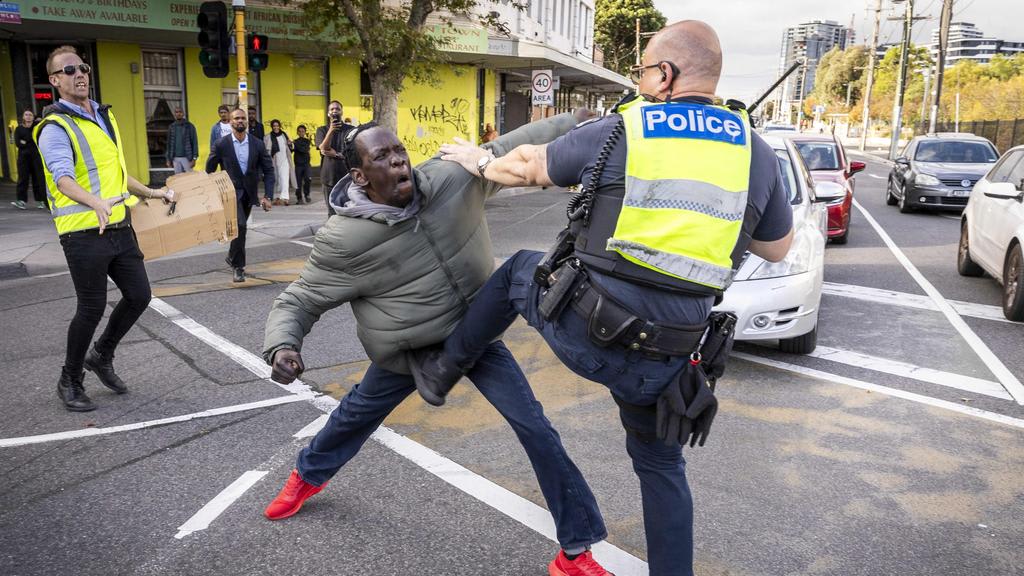
Somewhere in Melbourne Victoria, under the cold pulse of neon streetlights and the weary sigh of city wind, a young man stands clutching a kitchen knife. His mind is a hurricane: pain, confusion, grief. The police arrive, blue uniforms, radios crackling. What happens next depends on something more arbitrary than intent or circumstance. It depends, chillingly, on the colour of his skin.
Let's not mince words: Australia prides itself on its "fair go" ethos. We sell ourselves as the land of mateship, where everyone gets a chance, where the battler can still find hope on a sunburnt street. But get beneath the skin, literally, metaphorically, and you'll find that fairness can be as patchy as a kangaroo's fur after a dust-up. Because when a mainstream (read: Anglo) Australian is found wandering the streets with a knife, menacing or desperate, he is so often serenaded not with bullets but with compassion, concern, and procedural patience. The phrase "mental health crisis" is murmured, as if to sanctify the scene.

Yet, swap out the face. Darken the skin. Let the accent hint at Somalia or South Sudan or any other African. Suddenly, the playbook changes. The script, so tender moments ago, hardens to something steely and cold. Commands are barked. Tasers twitch. Then, gunfire cracks. After, we hear the mournful refrain: "The tasers didn't work. He was a threat." Another life lost. Another family shattered. Another headline that vanishes, like footprints in the sand, too soon.
The Two Realities of Police Response
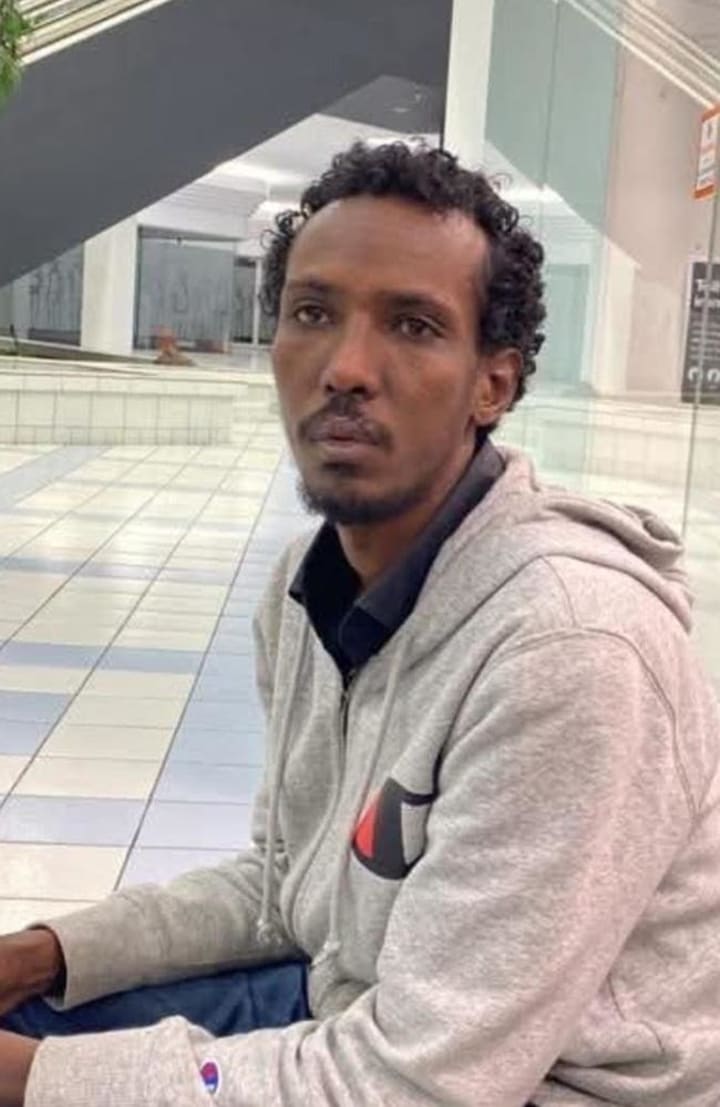
Let's get specific. Over the past decade, Victoria Police have killed multiple people wielding knives. Yes, a knife can be deadly but so can fear, bias, and institutional inertia. The difference in response, depending on race or immigrant background, is an open wound in Australian law enforcement's record. Recall the name Abdi, a 35 year old man of Somali heritage, killed in Melbourne last week. His family says he was unwell. The police say he was a threat. But whose story gets believed? Whose pain is permitted to upend the script?
Let's imagine, for a moment, two parallel universes. In one, a white Australian man, clearly in distress, is waving a knife and shouting. The police circle him. Time slows down. They negotiate. Maybe a crisis negotiator arrives. Maybe the family is called. Maybe, as in almost every such case, the man is taken into custody alive. Headlines read: "Police Show Restraint in Mental Health Crisis."
In universe two, Abdi stands in the same street, knife trembling in his hand. The police shout commands. He is dead within minutes. The official statement: "Taser was ineffective. Officers feared for their safety." The subtext: "He was not like us."
The Knife as a Mirror
Truth is, the knife in these stories is not just a weapon. It's a mirror reflecting the biases, fears, and failures of our institutions. In the hands of an Anglo-Australian, it's a symptom; in the hands of an African immigrant, it's a crime. The police response is not just tactical but it's theatrical, a performance in which race and prejudice are undesired but indelible supporting actors.
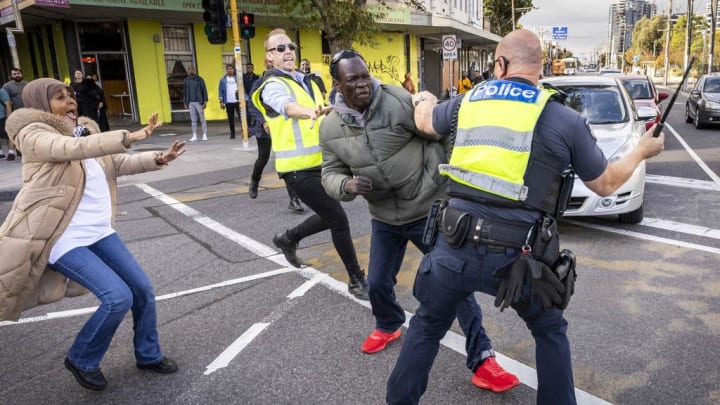
Let's be clear, knives "are" dangerous. But so is a badge without wisdom, or a gun without empathy. The world is full of viral videos showing officers, sometimes smaller, sometimes unarmed, disarming knife-wielding people without lethal force, all over Africa, Europe and even the USA. There are special tactics, shields, pepper spray, and negotiation units. When police don't use them, it's not because there isn't an option. It's because there isn't a "will" to explore those options.
Training or Tragedy?
Here's the million-dollar question: "Are Victoria Police really trained for this?" It doesn't take a dojo sensei or a Netflix true-crime binger to know that, in many parts of the world, it is basic protocol to disarm a person with a knife using restraint, shields, even teamwork. It often takes just two to bring down one person if you're willing to risk a bruise instead of a funeral.
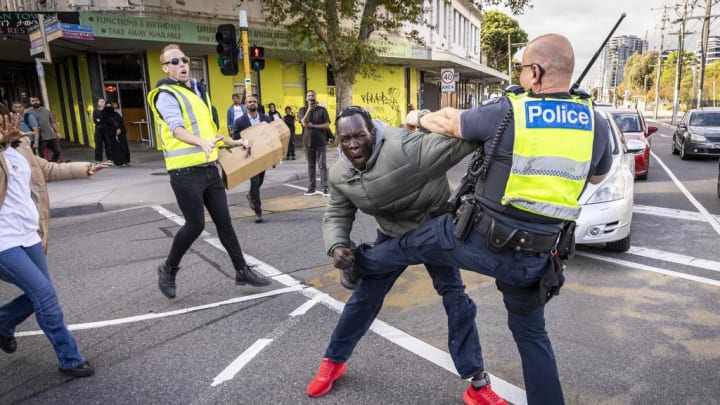
But in these tragic, too-frequent incidents, we don't get stories of courage, we get stories of convenience and cowardice. The police say they "feared for their safety"; the families are left fearing for their sons. Is the badge meant to protect the public, or just the person wearing it?
Let's be honest, when did bravery become optional in policing? When did the calculus flip so that protecting life, even the life of someone distressed, became less important than "going home safe," no matter the cost to the community?
The Elephant in the Squad Car
The unspoken part, the bit that never makes it into the press release, is race. Australia, for all its multicultural gloss, still has an ugly underbelly: the presumption that black and brown bodies are inherently more dangerous. The Knight in Shining Armour is only ever white, it seems. The "threat" is so often the "other."
When Abdi died, police quickly cited their standard refrain: "We tried the taser, it didn't work." But is it the taser that failed or the system that only ever sees some people as "threats" and others as "patients"?
One can't help but laugh, darkly, at the scene, a dozen officers, body armour gleaming, guns drawn, facing a lone man with a knife. The numbers alone should have tipped the scales toward mercy. Instead, it's like a Monty Python sketch gone tragically wrong. Picture this: "We had to shoot, guv'nor, he was coming at us with a butter knife!" Except nobody's laughing. Especially not Abdi's mother.
The Viral Question: When Will We Learn?
If the police are so quick to shoot, so slow to learn, what hope do we have of preventing the next tragedy? How many more must die before "mental health crisis" means the same thing for all, not just some?
The truth is, every time Victoria Police pull the trigger in these circumstances, they're not just ending a life. They're rewriting the rules for everyone: eroding trust, fuelling fear, deepening the divide.
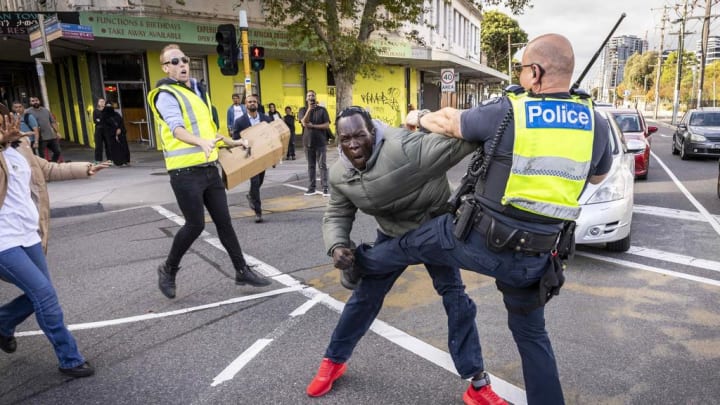
So, here's the provocative question for every reader: "Would you feel safer if your child, lost in a crisis, found a police officer or would you worry if their skin was just a little too dark?" That question is not just rhetorical. It's the one we all must answer, if we're ever going to live up to the myth of Australia's "fair go."
Where Do We Go from Here?
It's tempting, in the face of such stories, to despair. But if Australia is to stay the land of mateship, we need a policing culture that values "all" lives not just the ones who look like the ones in charge. We need:
- Better training in non-lethal restraint.
- Real accountability for excessive force.
- Community engagement with immigrant and minority groups.
- A culture shift in how police view "threat" and "mental health.
Until then, the tragic comedy will play out again and again: blue lights, a body, a press conference, a family's grief. We'll hear about "protocols" and "officer safety," but what about public safety? What about justice? What about the mothers and fathers, sons and daughters who live with the fear that any mistake could become a death sentence?
Let's not wait for another viral video or another funeral. Let's demand, together, an Australia where the colour of your skin doesn't change the outcome when you need help the most.
Because in the end, the real threat to society isn't a knife in the hand of a desperate man, it's the indifference in the hearts of those sworn to protect us all.
About the Creator
Majok Wutchok
Health Educator | AI Educator | Research | Emerging Tech | Book Writing Consultant | Editor | Media Buying Expert | PhD Candidate | I am here to give you you good read. Follow Me.
Keep reading
More stories from Majok Wutchok and writers in Criminal and other communities.
The Ripple Effect on Families: What Happens When Women Suffer?
When my cousin's wife Achol's phone number flashed up on my screen at 7:28 a.m., I knew something was wrong. She never called before 9am, she is a mother of five under 10, and mornings in her house are an Olympic event. I braced myself, and sure enough, the line opened to a staccato lullaby of children shrieking, the toaster popping, and Achol's breathless voice:
By Majok Wutchok9 months ago in Families
Inside the 2001 Scottsdale Family Murders
On April 10 2001 a quiet neighborhood in Scottsdale, Arizona, became the scene of one of the most disturbing family murder cases in modern American history. What initially appeared to be a tragic house fire quickly unraveled into a calculated act of violence that left three people dead and one man missing—a mystery that remains unresolved more than two decades later.In the early hours of the morning, Scottsdale firefighters and police were dispatched to the home of Robert and Mary Fisher after reports of a massive fire and explosion. The blast was later determined to have been caused by natural gas that had accumulated inside the house before ignition. Flames engulfed the structure, suggesting at first glance a devastating accident. However, once firefighters extinguished the blaze and investigators entered the home, the reality proved far more sinister.
By Kure Garba2 days ago in Criminal
Miss Persephone's Manual to a Seemingly Ordinary Life
Miss Persephone was found at the dining table, her blue eyes swollen, her tears arriving and retreating like the tides of the ocean. Earlier that day, her family had visited her in the retirement home where she had lived for eight years. It was her eightieth birthday.
By Imola Tóth4 days ago in Fiction


Comments
There are no comments for this story
Be the first to respond and start the conversation.