
The Ripple Effect on Families: What Happens When Women Suffer?
The Myth of the "Strong Mom" and the Unseen Weathers

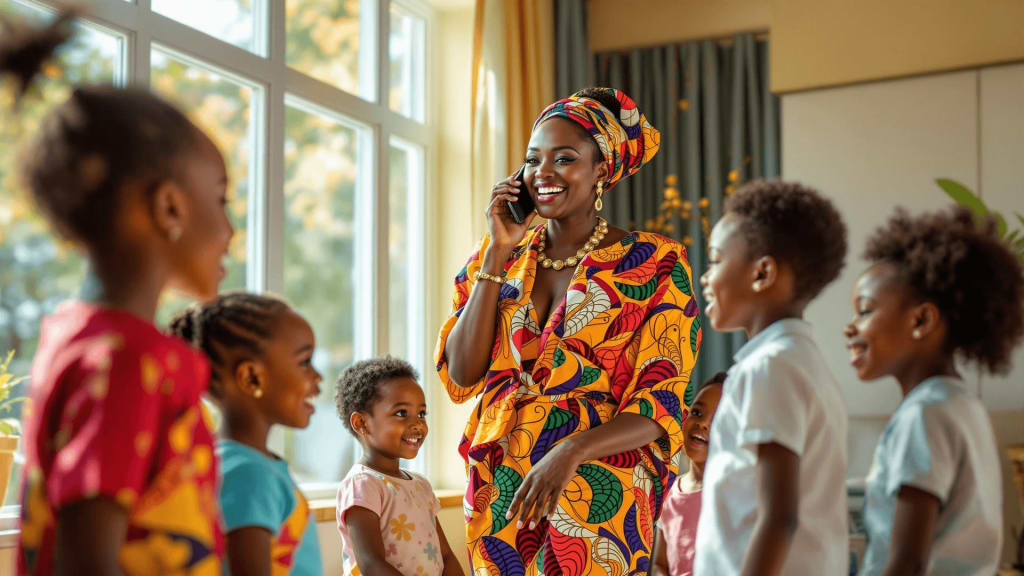
When my cousin's wife Achol's phone number flashed up on my screen at 7:28 a.m., I knew something was wrong. She never called before 9am, she is a mother of five under 10, and mornings in her house are an Olympic event. I braced myself, and sure enough, the line opened to a staccato lullaby of children shrieking, the toaster popping, and Achol's breathless voice:
"Can you talk? Or are you swamped?"
As it turned out, we both were. But the universe was about to give us a surprising crash course in the ripple effect, how the smallest pebble of a mother's struggle can send tsunamis through her family.
The Myth of the "Strong Mom" and the Unseen Weathers
Achol, like so many women I know, is that rare breed: part-time working, full-time worrying, perpetually apologising, self-flagellating supermom. The world expects her to bounce back from anything, sleep deprivation, postpartum blues, impossible work deadlines, the existential crisis of "what's for dinner?", with a perky smile and a gluten-free muffin.
The truth, beneath the surface, is trickier. When women suffer quietly, bravely, and sometimes in utter silence, the effects don't just stay inside their own minds. They ripple outward, like a stone dropped in a still pond, disturbing everyone in their circle.
Kids: The First Responders
Dr. Justin Jain, a clinical psychologist, once told me: "Children are emotional barometers. They sense shifts in the emotional weather at home before anyone else."
It's science, but it's also heart-breaking. When a mother is overwhelmed, emotionally draining herself to keep the family afloat, kids often become first responders, sometimes literally, with a glass of water at 3 a.m., but also in more subtle ways.
Take Achol's daughter, Agok, who is just six, began tiptoeing around the house, shushing her baby brother and offering her mother her stuffed bunny "for comfort." Cute? Sure. But that's the sound of a child absorbing stress, learning to become a caretaker before she's ready.
Kids in such homes may suddenly become "perfect," afraid of adding to mom's burden. Or they may melt down, acting out the chaos they sense but don't understand. Either way, the message is clear: mom's pain isn't hers alone.
The Inheritance Nobody Wants
Here's a twist, mental health issues aren't just contagious in the sense of moods matching moods. There is actual data showing that maternal depression and anxiety can affect children's brain development and stress responses for years.
A 2018 study found that children of mothers with untreated depression were more likely to struggle with focus, impulse control, and their own mental health sometimes well into adulthood. In other words: emotional suffering is an inheritance that compounds interest.
But let's not get too gloomy because, as I promised Achol that morning, "If pain can ripple, so can healing."
Husbands, Partners, and the "Invisible Atlas" Syndrome
Let's not forget the partners. The ripple doesn't stop at the kids; it washes over spouses too.
Imagine the classic scene: Dad walks in, sees the carnage, cereal on the floor, toddler in mid-meltdown, wife's eyes rimmed red. He wants to help, but doesn't know what to say. The room is a minefield; one wrong word and kaboom.
Men are often bewildered by their partners' struggles. They want to fix things ("Have you tried yoga?"), but sometimes all their wives want is for them to see how hard it is to carry the emotional weight of an entire household. Clinical psychologists call this the "Invisible Atlas" syndrome, the mom who shoulders the world, unseen.
If dad remains oblivious, or worse, dismissive ("You just need to be more positive!"), the ripple becomes a tidal wave, washing out communication, intimacy, and, sometimes, the marriage itself.
The Multigenerational Plot Twist
Now for the plot twist that would make even Netflix jealous:
When mothers suffer, their mothers often re-enter the scene. Grandma comes to help, or, in some families, to criticise. "In my day, we raised six kids and churned our own butter!" she declares heroically.
But she carries her own invisible wounds, a legacy of stoicism, perhaps, or the memory of never having her feelings validated either.
Thus, the cycle continues. Unaddressed maternal pain morphs into generational tradition, a pass-the-parcel of guilt and suppression, beautifully wrapped in "good intentions."
Breaking the Cycle: The Ripple Reversed
But here's the good news: if suffering can ripple, so can healing.
When Achol finally decided to seek therapy, her decision sent a shockwave of courage through her family. Her husband, Deng, started doing more bedtime stories, and less screen-time scrolling. Agok stopped apologising for being sad and started drawing pictures, her favourite, a family of otters holding hands.
Therapy didn't solve everything. Achol still had hard days, they all did. But vulnerability became contagious. Her family learned it was okay to ask for help, to admit fear, to sometimes eat cereal for dinner and call it gourmet.
How to Start a Positive Ripple
Here's what the viral stories don't always say:
Saving one mother isn't just about her. It's about saving her children, her partner, maybe even her mother. You're not just breaking a cycle, you're launching a revolution.
Here are five ways to spark a positive ripple:
1. Be Honest With Your Feelings:
You may think you're protecting your kids when you hide your pain, but children smell secrets like sharks smell blood in the water. Honesty (in age-appropriate doses) breeds trust and resilience.
2. Ask for Help, Loudly:
Normalise therapy, support groups, or just coffee with a friend. If you're struggling, ask for help with chores, a night off, or a hug that lasts longer than three seconds.
3. Model Self-Compassion:
Let your family see you take breaks, set boundaries, and sometimes fail. This teaches your kids that perfection isn't the goal, wellness is.
4. Educate Your Circle:
Share articles, memes, or personal stories about maternal mental health. The more people know, the more they can understand and support.
5. Celebrate Small Wins:
If you got dressed today, that's a win. If you fed your kids and especially if you fed yourself, that's a win. Celebrate together, no matter how small.
Ending the story, Starting a Movement
In the end, the story of one mother's struggle is never just about her. It's about the silent ripples that shape her family, her legacy, and her community.
So, the next time a tired mom calls you before sunrise, answer. Listen. Show up. Because when we help one woman heal, we create ripples that just might change the world.
And, if you need me at 7:28 a.m.? I'll answer. Cereal in one hand, phone in the other, ready to help you weather the wave.
About the Creator
Majok Wutchok
Health Educator | AI Educator | Research | Emerging Tech | Book Writing Consultant | Editor | Media Buying Expert | PhD Candidate | I am here to give you you good read. Follow Me.
Keep reading
More stories from Majok Wutchok and writers in Families and other communities.
Silence and Stigma: The Perfect Storm
The sun sets over Juba, South Sudan’s bustling capital, casting a golden hue over the patchwork of urban and rural lives now intertwined. In a nation where traditions and modernity converge, where rural customs meet urban realities, the dynamics of relationships, particularly polygamous ones, take centre stage. Beneath the surface of these relationships, however, lies a less discussed but critical issue: the prevalence and management of sexually transmitted diseases (STDs). What happens when trust, silence, and cultural norms collide with the stark realities of public health?
By Majok Wutchok9 months ago in Families
Wise~Guys
— Look Behind what's in Front of You ~ Make Good Choices — Hey, So how you Doin'..! Made~Men — Mobster Movies romanticise a distinctive, elegant appearance, impeccable attire style, along with the 'Families' expressive lingo. Making their 'Bones' gave them Panache — with vintage fedoras, tailored pin-striped suits, mirror-polished wing-tip shoes adorned with tassels; with their 'Gun Moll' gorgeous dates on their arms.
By Jay Kantor18 days ago in Families
My Mother And George Michael
On Christmas Day 2016, news broke that George Michael had died. It was late in the evening, and my mother and I were sat in front of the TV. Our friends and family had gone home, we had eaten way too much food and we were tired. My mother was asleep, in fact. I wasn’t. I was scrolling, looking for anything to watch. It was Christmas Day, surely something good would be on. But what I got were reruns, repeats, Christmas specials from the year before that I had already seen… I sort of gave up and logged onto Facebook just to pass the time. That’s when I saw it. George Michael had died. I immediately jumped out of the sofa. That couldn’t be. Or maybe it could. It was 2016, after all. I put on Sky News because who can believe anything they see on Facebook these days? And there it was. The man I had grown up with had died. My mother didn’t know. Not for another minute, when I had to gather the courage to wake her up. I was crying and I knew she would immediately know something was wrong. I gently woke her up and pointed at the TV…
By Carol Saint Martin7 days ago in Families




Comments
There are no comments for this story
Be the first to respond and start the conversation.